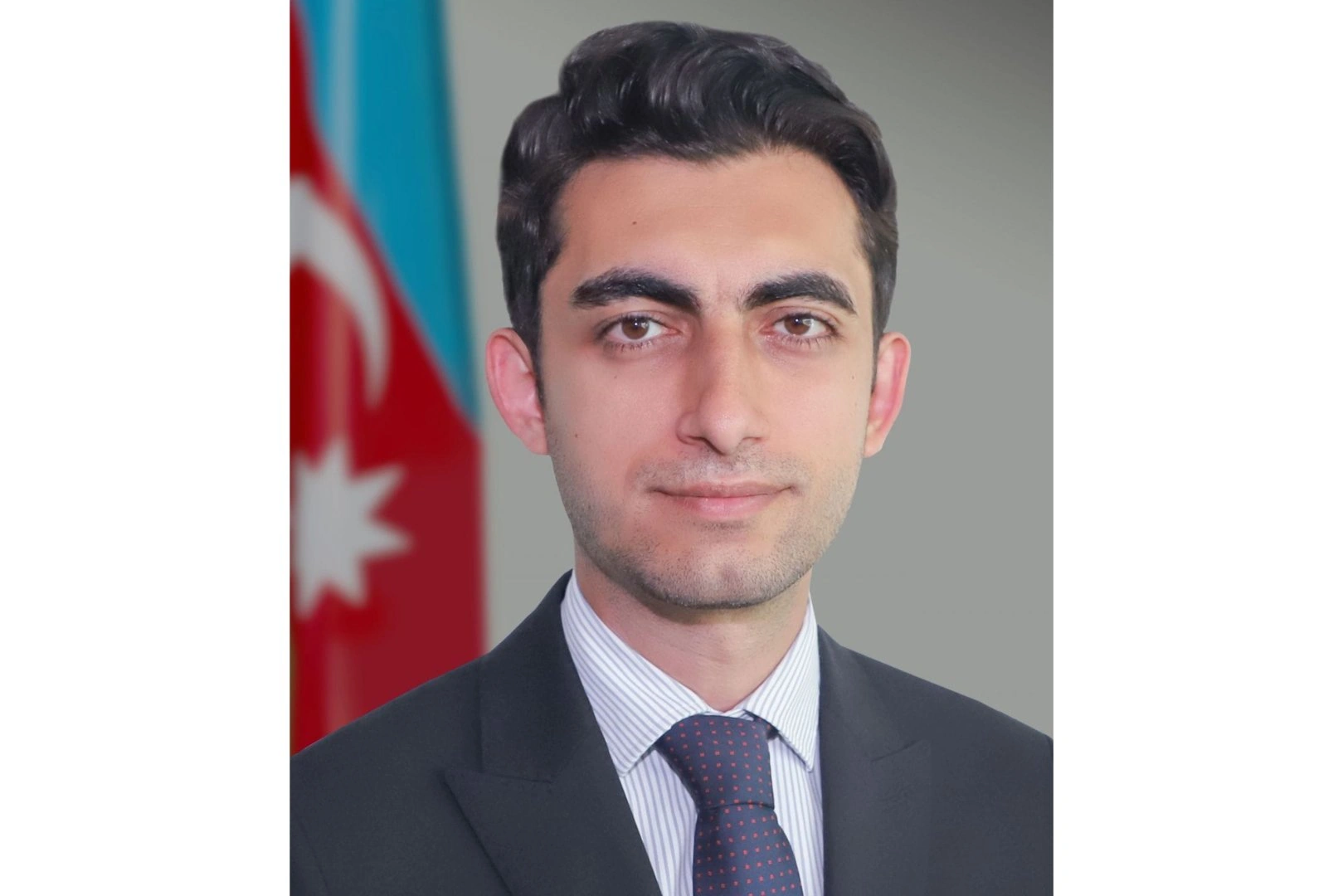
BAKU, Azerbaijan, July 10. Both the number of
banks offering Islamic banking products and the range of products
offered are expected to expand in Azerbaijan through the
enforcement of relevant legislative amendments in the country,
Executive Director of the Central Bank of Azerbaijan (CBA) Shahin
Mahmudzade told Trend in an exclusive interview.
In his interview, he first spoke about the results of the 2026
Annual Meeting of the Islamic Development Bank (IsDB) Group held in
Baku, as well as the main contributions of this event to the
development of the financial sector of Azerbaijan, especially
Islamic finance.
"The annual meetings of the Islamic Development Bank Group serve
as an important platform for establishing dialogue and partnerships
among member countries, as well as for exchanging knowledge. The
agreements signed within the framework of the meeting held in our
country this year demonstrated that the event has significant
economic and strategic importance for both the IsDB region and the
country's economy.
The forum also had a high impact on the development of the
financial sector. We believe that the event made a significant
contribution to strengthening cooperation with international
financial institutions, establishing new partnerships, and
recognizing Azerbaijan as a regional financial center. That meeting
was a significant impetus, especially in terms of intensifying
institutional cooperation in the field of Islamic finance and
building an Islamic finance ecosystem," the CBA official said.
Agreements worth a total of $6 billion were signed within the
framework of the Annual Meeting of the IsDB Group. The executive
director also spoke about the importance of these agreements for
the region and the impact of the documents signed regarding
Azerbaijan on the development of the country's financial market.
Mahmudzade said that the agreements signed with other countries and
regional institutions within the framework of the meeting are
mainly aimed at financing energy security, food systems, and social
projects in member countries.
"These documents support the socio-economic development of those
countries and the strengthening of economic cooperation in the IsDB
region.
Within the framework of the meeting, a financing agreement worth
approximately $436.7 million was signed for the reconstruction of
the Karabakh Irrigation Canal. This document is of particular
importance in terms of its impact on the relevant economic sector
of the country.
Meanwhile, the impact of the signed documents on the financial
sector is related more to the increase in the availability of
long-term development finance and the strengthening of financing
opportunities for large infrastructure projects than to the
deepening of financial markets," he explained.
Mahmudzade also shared his views on the regulatory, legal, and
institutional measures taken by the CBA towards the development of
Islamic finance. In addition, he spoke about the stage of
preparatory work for the introduction of Islamic banking products
from 2026, and which products will be launched on the market in the
first stage.
"For the purpose of implementing Islamic banking, a draft of
amendments to the Civil Code, the Tax Code, the laws of Azerbaijan
"On banks", "On non-bank credit institutions", "On state duty", "On
credit bureaus" and "On privatization of state property" has been
prepared and submitted to the relevant state bodies.
The draft amendments have been prepared taking into account
international experience and have been adapted to local
legislation. The goal is to implement international standards in a
consistent and sustainable manner with the local legal environment.
In the near future, the implementation of Islamic banking is
envisaged within the framework of the 'Islamic windows' model.
After the amendments to the legislative acts on Islamic banking
enter into force, the following products are envisaged to be
provided by banks within the framework of the 'Islamic window'
model:
Order-based contract type for production or construction —
Exemption;
Sale-based, that is, purchase-sale financing type —
Murabaha;
Lease-based financing type — Ijara. This product is considered
an analogue of financial leasing in traditional banking
activities;
Financing and deposit type based on profit and loss sharing
between the bank and the client — Mudaraba;
Deposit-based product similar to demand deposit — Wadia.
Non-bank credit institutions are expected to provide only
Exception, Murabaha, and Ijara products.
At the same time, two commercial banks are currently testing
Islamic financial products under the special regulatory regime
under the supervision of the CBA. International Bank of Azerbaijan
OJSC is testing the Murabaha product for financing movable and
immovable property registered in official legal registers, and
Rabitabank OJSC is testing both Mudaraba and Murabaha products. The
testing period of the products is until February 2, 2027," the
executive director noted.
In his interview, the CBA official, in response to a question
about the interest of banks operating in Azerbaijan in the
introduction of Islamic banking products, said that there is
currently a certain interest in Islamic banking products by
banks.
"As we noted, two banks are currently offering Islamic banking
products to customers within the framework of the special
regulatory regime.
In addition to measuring the interest of the population in
Islamic banking, the introduction of these products within the
framework of the pilot regime creates an institutional basis for
banks to introduce Islamic banking on a wider scale in the
future.
With the entry into force of legislative changes at the next
stage, it is expected that both the number of banks offering
Islamic banking products and the range of products offered will
increase," he said.
According to the relevant report, according to the base
scenario, Islamic banking assets in Azerbaijan are projected to
reach $2.7 billion by 2035, and $3.6 billion under the optimistic
scenario. Mahmudzade spoke about the main conditions that must be
met to achieve these goals, as well as the role of the CBA in this
process.
"In order to achieve the goals set out in the report of the
Islamic Development Bank Institute and the International Islamic
Trade Finance Corporation, an appropriate ecosystem must first be
established.
In this direction, the Central Bank, in accordance with its
mandate, is expected to perform regulatory and supervisory
functions, monitor financial stability, and, if necessary,
implement appropriate regulatory interventions.
At the same time, measures to increase the financial literacy of
market participants and consumers will also play an important role
in this process," the CBA official emphasized.
In conclusion, Mahmudzade pointed out that the development of
Islamic finance in Azerbaijan and the emergence of new Islamic
finance products can contribute to the diversification of the
financial sector.
"This mainly creates new opportunities in terms of attracting
financial resources from the Gulf countries, integration of the
population and business subjects who don't use traditional
financing products due to their religious beliefs into the
financial sector.
Concurrently, the development of Islamic finance can serve to
expand the range of financial market participants, increase
financial inclusion, and strengthen the financing of the real
sector. It should be taken into account that since Islamic
financial products are asset-based, this model enables further
strengthening of the relationship between the real sector and the
financial sector.
In this regard, the development of Islamic finance can
strengthen the prospects of Azerbaijan becoming a regional hub of
Islamic finance," the official said.