BAKU, Azerbaijan, March 10. The blocking of the
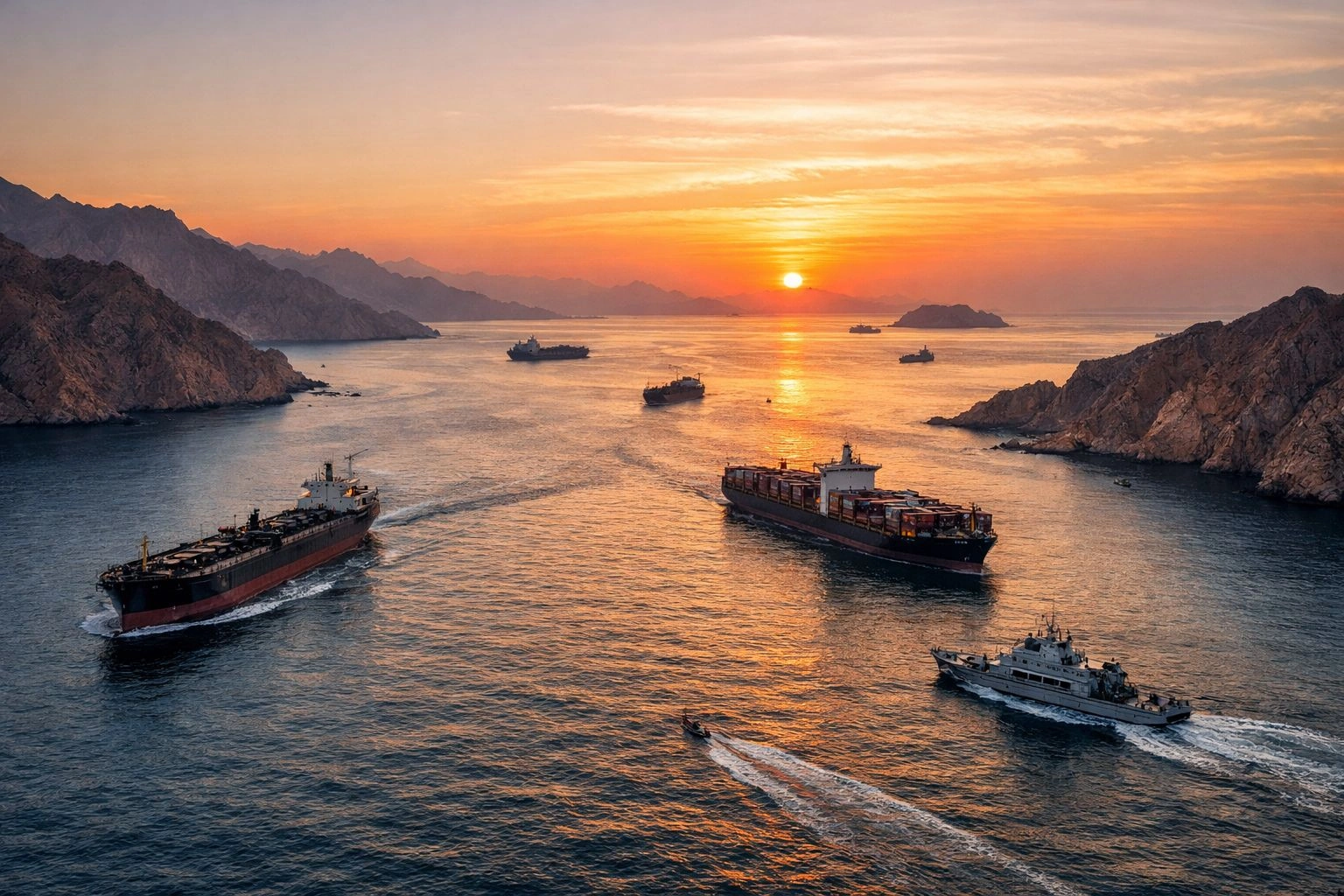
Strait of Hormuz by Iran amid military escalation in the Middle
East has increased risks for Uzbekistan, a landlocked country
dependent on transit routes through neighboring states.
The country’s foreign cargo transportation is carried out
through nine international transport corridors, with the southern
route via Iranian seaports remaining one of the key directions. A
significant share of exports and imports passes through this
corridor, accounting for up to 60 % of total cargo flows.
The southern corridor through Iran remains one of the main
routes for Uzbekistan’s foreign trade, as it provides access to the
ports of the Persian Gulf and further to the markets of the Middle
East, South Asia, and Europe. A large portion of cargo is delivered
to the Iranian port of Bandar Abbas by rail and road through
Turkmenistan, after which it is shipped by sea. In the future,
Uzbekistan also considered expanding transportation through the
port of Chabahar, which was expected to provide an additional
outlet to the Indian Ocean and reduce dependence on a single route.
Other important directions for the region include the Central
Asia–Iran–Türkiye route, projects within the framework of the
International North–South Transport Corridor, as well as the
Ashgabat Agreement, which ensures access to global markets through
Iranian territory.
The main difficulty lies in the fact that Uzbekistan has relied
on the southern route through Iran as one of the shortest and most
cost-effective ways to reach seaports. In the event of a prolonged
military conflict around the Strait of Hormuz, the country is
forced to redirect cargo flows to alternative routes, but their use
requires time and may lead to higher costs and reduced efficiency
of foreign trade.
Even before the current escalation, the Uzbek authorities had
begun working on alternative logistics schemes for each foreign
trade direction. In June 2025, options were discussed to redirect
cargo through Pakistani seaports, as well as to expand the use of
the Trans-Caspian International Transport Route passing through
Kazakhstan, the Caspian Sea, Azerbaijan, and Georgia.
“If difficulties arise in Iran, cargo can be redirected through
Pakistani seaports. Goods from Türkiye can be delivered through the
Middle Corridor, as well as via the Georgian-Russian border and
further through Russia and Kazakhstan,” Minister of Transport
Ilkhom Makhkamov previously noted.
However, diversification of routes inevitably leads to higher
costs. According to preliminary estimates, the redirection of cargo
flows may increase transportation expenses by about 30 percent,
which could put pressure on import prices and reduce the
profitability of export operations. For a landlocked country, such
changes directly affect production costs, price levels, and
competitiveness in foreign markets.
At the same time, alternative routes also face limitations. The
southern route through Pakistan is complicated by the unstable
situation on the Pakistan–Afghanistan border, while the northern
corridor through Kazakhstan, Russia, and Belarus is affected by
sanctions pressure and overall geopolitical tensions. In these
conditions, the Middle Corridor is considered one of the most
stable options, although its current capacity is still limited and
cannot fully replace transportation through Iran.
Trade and economic ties with Iran itself also remain a risk
factor. The country is among Uzbekistan’s twenty largest trading
partners, and over the past five years bilateral trade has grown
from about $250 million to around $500 million. The sides had
previously announced plans to increase trade turnover to $2 billion
per year, but the ongoing conflict and possible transit
restrictions through Iran may complicate deliveries and slow down
the implementation of these plans.
According to statistics, Uzbekistan’s imports from Iran amounted
to about $421 million in 2025. The main goods include industrial
equipment, polymers, chemical products, and food supplies. Possible
disruptions in transportation through the Iranian route may lead to
higher import prices and increased logistics costs, which would be
particularly sensitive for the domestic market.
The situation also has an indirect impact through global energy
markets. China, Uzbekistan’s largest trading partner with turnover
exceeding $17 billion, imports significant volumes of oil from
Iran. Escalation of the conflict could lead to higher oil prices
and slower economic activity in the region, which may reduce demand
for Uzbek exports and increase pressure on transport and production
costs.
Thus, the current situation in the Middle East has increased the
importance of diversifying transport corridors for Uzbekistan,
whose foreign trade largely depends on stable transit through
neighboring countries. Growing risks around Iran and the Persian
Gulf are increasing the role of alternative routes and accelerating
efforts to expand logistics capabilities, including the Caspian
direction and other international corridors.
In the short term, the redirection of cargo flows may lead to
higher costs, but in the long term the development of new routes is
seen as a necessary step to improve the resilience of foreign trade
and ensure stable access for Uzbekistan to global markets.