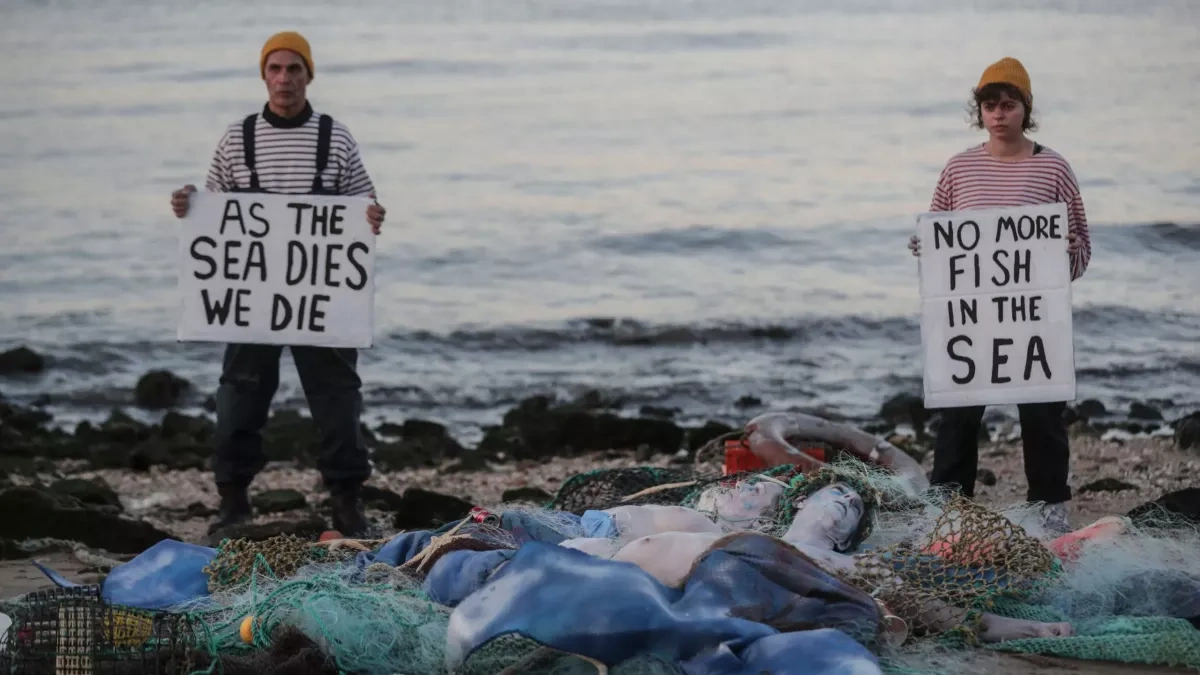
For centuries, humans have treated the world’s oceans as an inexhaustible resource. The reality, however, is that illegal fishing — once viewed mainly as a regulatory nuisance — has become both a driver of climate change and an overlooked contributor to human migration.
The United Nations Convention on the Law of the Sea attempted to impose order through the creation of Exclusive Economic Zones, or EEZs, granting coastal states control over nearby marine resources. Yet enforcement has remained weak in many developing countries, creating conditions in which illegal, unreported, and unregulated fishing — commonly referred to as IUU fishing — has flourished.
While this method accounts for as much as 20 percent of the global catch and costs coastal economies billions of dollars each year, an analysis published by Modern Diplomacy stresses that the real damage extends far beyond economics.
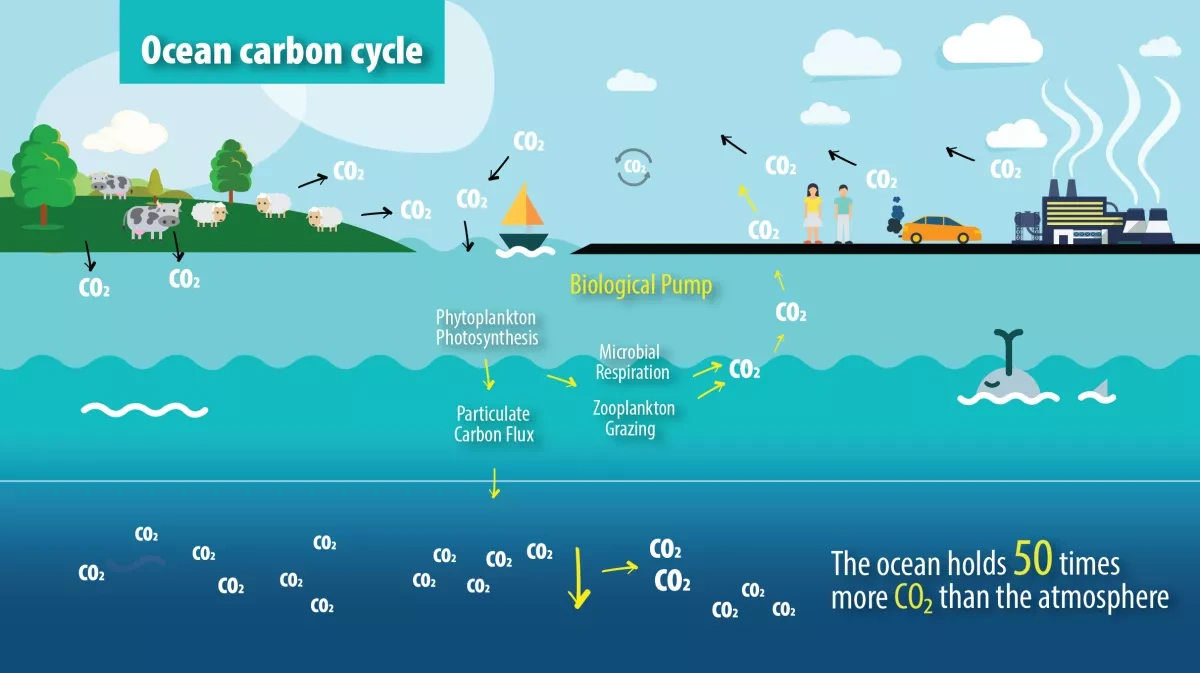
The world’s oceans serve as the planet’s largest natural carbon sink, absorbing roughly one quarter of all human-generated carbon dioxide emissions. That role depends on complex marine ecosystems remaining balanced and healthy.
Illegal fishing disrupts those systems by targeting large predatory species such as sharks, tuna, and billfish — animals that play a crucial role in maintaining stable ocean food webs.
Climate scientists increasingly argue that ocean health and climate stability cannot be separated. The concept of “blue carbon” — carbon captured and stored by marine ecosystems — has become central to international climate policy, with both the United Nations Environment Programme and the Intergovernmental Panel on Climate Change recognizing the importance of oceans as long-term carbon reservoirs.
Research suggests seagrass meadows can store carbon up to 35 times faster than tropical forests, while phytoplankton accounts for nearly half of all carbon fixation across the biosphere.
However, those systems rely on functioning food chains. When large predators disappear because of overfishing or illegal harvesting, marine ecosystems can destabilize rapidly.
Sharks, often feared or misunderstood, are one example. As apex predators, they regulate populations lower in the food chain. Their removal can trigger what scientists call trophic cascades — chain reactions that alter entire ecosystems.
Without predators, mid-level species can multiply uncontrollably, overgraze seagrass habitats, and disrupt phytoplankton cycles. Those habitats — including mangroves, seagrass beds, and plankton-rich waters — are among Earth’s most effective natural carbon sinks. As a result, illegal fishing indirectly weakens the ocean’s ability to absorb and store carbon dioxide.
According to the article, some researchers describe this process as a form of “carbon leakage,” arguing that climate change is driven not only by industrial emissions but also by the degradation of ecosystems capable of storing carbon naturally.
Not just crime against marine life
The outlet cautions that the consequences extend well beyond the oceans themselves. Communities across regions such as South Asia, West Africa, and the Pacific depend heavily on healthy fisheries for both food and income. When fish stocks collapse, economic pressure intensifies rapidly. Boats return with smaller catches, local markets shrink, and debt rises.
What often begins as temporary labour migration can eventually become permanent displacement. Analysts increasingly describe this pattern as a form of climate migration — not driven by dramatic disasters like floods or hurricanes, but by the slow erosion of livelihoods over time.
The outlet cites data from the World Bank, which predicts that climate change could displace more than 200 million people globally by mid-century. Researchers argue illegal fishing may become one of the quieter forces contributing to that trend, particularly in coastal regions where the sea functions as both a food source and an economic lifeline.
Despite these broader consequences, illegal fishing is still often treated narrowly as a fisheries enforcement issue rather than a climate or security challenge.
The article argues that this fragmented approach has allowed the problem to persist. Unless illegal fishing is recognized as a wider environmental, economic, and human security threat, its effects on both climate systems and migration pressures are likely to intensify in the coming decades.
By Nazrin Sadigova