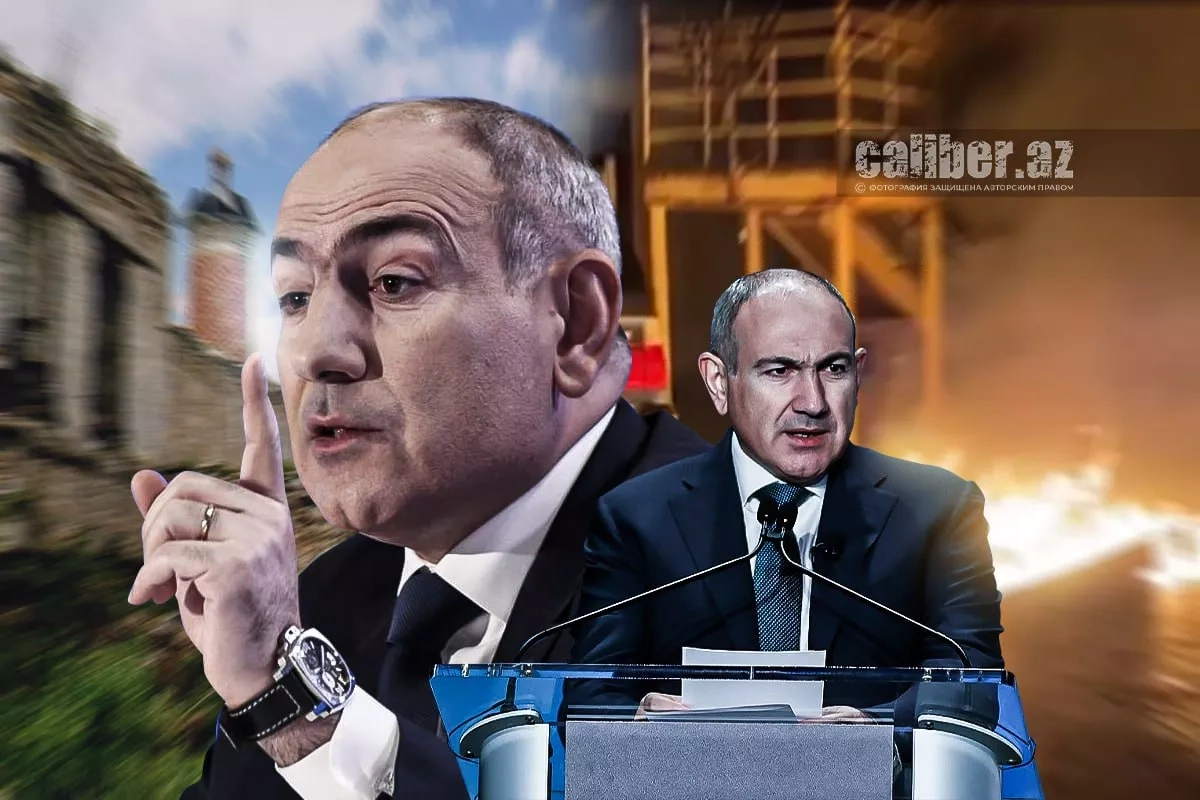
Thirty-nine seconds of footage and nine remarks by one man over the course of eight years — with this compact chronicle, Armenian expert Tatevik Hayrapetyan illustrated how political language changes under pressure. The premise of the video is simple: statements by Nikol Pashinyan on the Karabakh issue, arranged chronologically — from the first months of his time in office to the 2026 election campaign. On the surface, it is merely a compilation of clips. In essence, however, it is a timeline of retreat — leading to the point to which the Armenian prime minister was forced back by the “Iron Fist.”
In May 2018, having just come to power after the revolution, Nikol Pashinyan declared from the podium of the National Assembly that “Karabakh must return to the negotiating table.” The new team in Yerevan had not yet decided how to position itself on the Karabakh track and was still testing its tone.
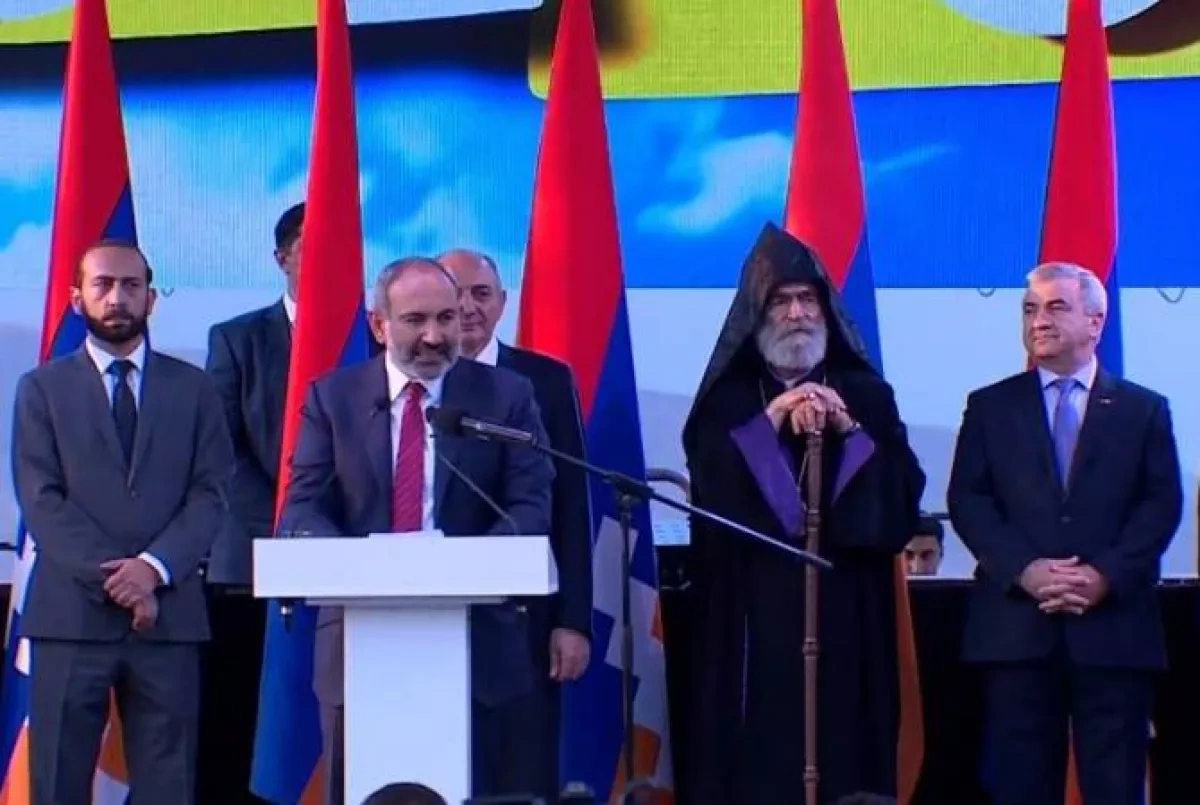
A little over a year later, in August 2019, standing in the central square of Khankendi, the same man shouted from the stage: “Artsakh is Armenia — period.” It was a direct rejection of negotiations as such. A bid to legitimise annexation, made on Azerbaijani territory, surrounded by separatists.
Between May 2018 and August 2019, nothing happened that could explain such a dramatic shift in rhetoric — except for one thing: inside Armenia, the framework of a populist government was taking shape, one that needed cheap foreign-policy capital. Karabakh was chosen as that capital. Nikol Pashinyan was playing with fire, clearly failing to understand the price such a gamble would ultimately demand.
The bill was presented to him in the autumn of 2020. The Forty-Four-Day War became the Armenian prime minister’s first direct encounter with what is referred to in Baku as the “Iron Fist.” On October 6, 2020, in an interview with BBC World News, Nikol Pashinyan once again repeated the formula from 2019: “Artsakh is Armenia, the land of Armenians.”
What followed was a long and painful process of rewriting his own rhetoric. In March 2021, he declared: “Our boys died so that today we could tell Azerbaijan that the Karabakh issue remains unresolved.” It was the final remark of the old era — no longer any talk of “miatsum,” no longer even the emphatic “period,” yet still an attempt to keep the Karabakh issue open. After that came only contraction.
In April 2022, speaking from the podium of the National Assembly of Armenia, Nikol Pashinyan delivered what would later be described in Yerevan as a moment of public capitulation:
“In 2018 and 2019, I did not tell the people that all our friends, near and far, expected us in one configuration or another to hand over the so-called seven districts (around Nagorno-Karabakh) to Azerbaijan and to lower the bar we had set regarding the status of Artsakh.”
The shift in emphasis spans two and a half years and one lost war.
In May 2023, at a press conference, Nikol Pashinyan uttered a phrase that in Yerevan many would later try to consign to the archives:
“Yes, the 86,600 square kilometres of Azerbaijan include Karabakh as well.”
This was a recognition of the territorial integrity of Azerbaijan within its internationally recognised borders. Four months later came the 2023 Azerbaijani offensive in Karabakh, the voluntary departure of Armenians from the region, and the end of the “grey zone.”
From here begins a stage that can hardly be described as anything other than the rewriting of one’s own biography.
In April 2025, Nikol Pashinyan tells parliament that the continuation of the “Karabakh movement” is destructive for Armenia’s statehood. The man who six years earlier had shouted “miatsum” now declares that very “miatsum” a threat to the country.
In May 2026, already in the midst of the election campaign, he states: “And was that land even ours? Did we live there? In what sense was it ours? It was not ours.”
And from here comes the final frame of Hayrapetyan’s chronicle — a remark dated May 18, 2026, addressed to a Karabakh Armenian who had left voluntarily:
“You should have gone there and died. Why are you alive? Get lost, you scum.”
That phrase is not a momentary outburst of political emotion. It is the logical culmination of an eight-year trajectory.
The chronicle by Hayrapetyan is powerful precisely because it contains no commentary. It presents the same man saying nine different things about the same subject — and leaves it to the viewer to see the force that was reshaping his language. That force has a name. It is the Armed Forces of Azerbaijan in September–November 2020. It is the establishment of the Lachin border checkpoint in April 2023. It is September 2023. It is, more broadly, a consistent strategy of Azerbaijan in which military, diplomatic, and economic pressure operate in synchrony at every stage, leaving Yerevan no room for grandstanding rhetoric.
One can take different views of Nikol Pashinyan. One can see him as a naive populist trapped by his own promises. One can see him as a cynical pragmatist constantly shifting positions to retain power. Or one can see a politician who, belatedly by a decade, finally articulated what any Armenian leader should have said back in 1994. All these interpretations rest on some empirical basis. But behind all of them lies a fact of a different order: none of Pashinyan’s nine statements were made in a vacuum.
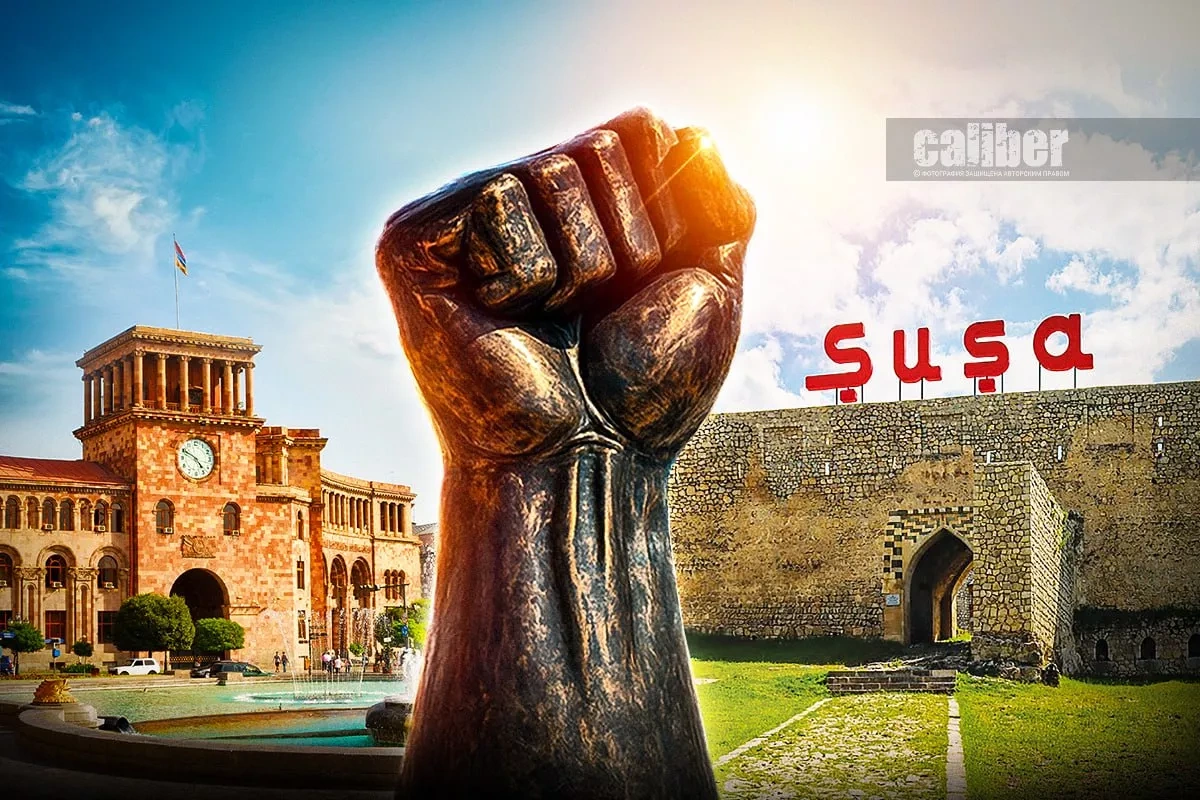
Tatevik Hayrapetyan does not state this explicitly. Yet in her 39-second chronicle, this is precisely what is readable: Pashinyan’s evolution is not an intellectual biography, but a cardiogram of pressure. The fist struck — the language changed. The fist paused — the language stretched. The fist struck again — the language tightened once more. It was not Pashinyan who travelled the