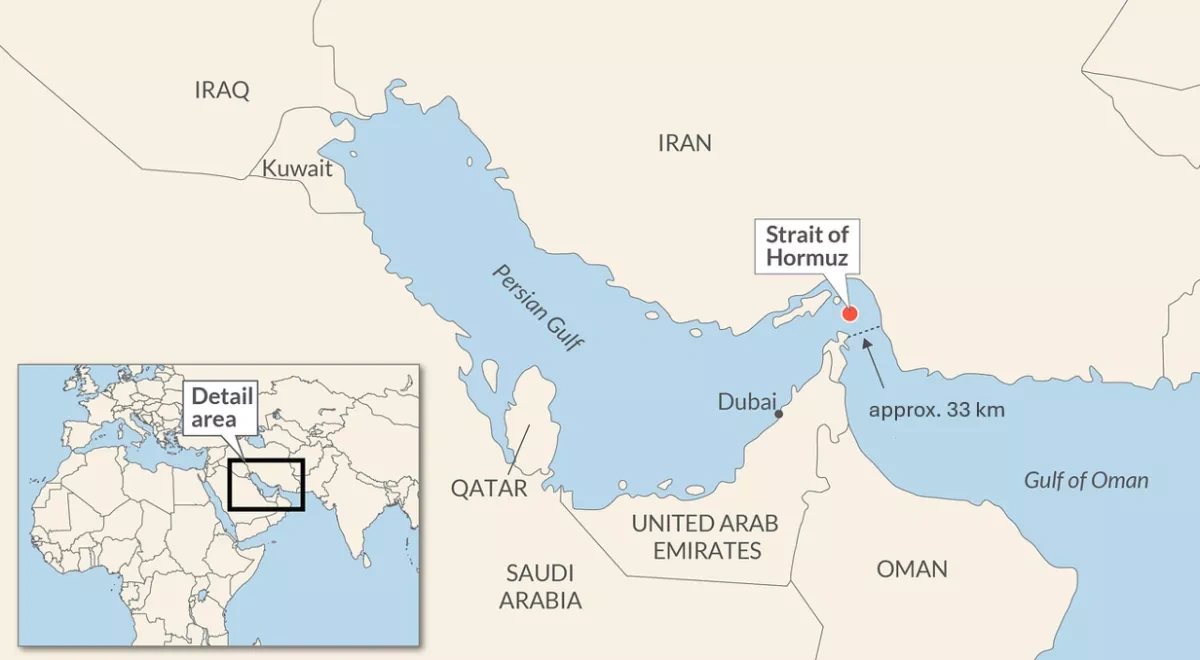
Since a temporary ceasefire between the United States and Iran was announced in April, Tehran has reportedly been working to formalize a system for charging transit fees to ships passing through the Strait of Hormuz. Although critics argue such charges would violate international maritime law, others say shipping companies may still view the payments as less costly than the economic damage caused by a prolonged closure of the strategically vital waterway.
As reports have emerged suggesting Iran has already been charging some vessels transit fees of up to $2 million since fighting began, Al Jazeera has analyzed the economic impact of tolling the narrow passage, which serves as the only maritime route connecting Gulf energy producers to the open ocean.
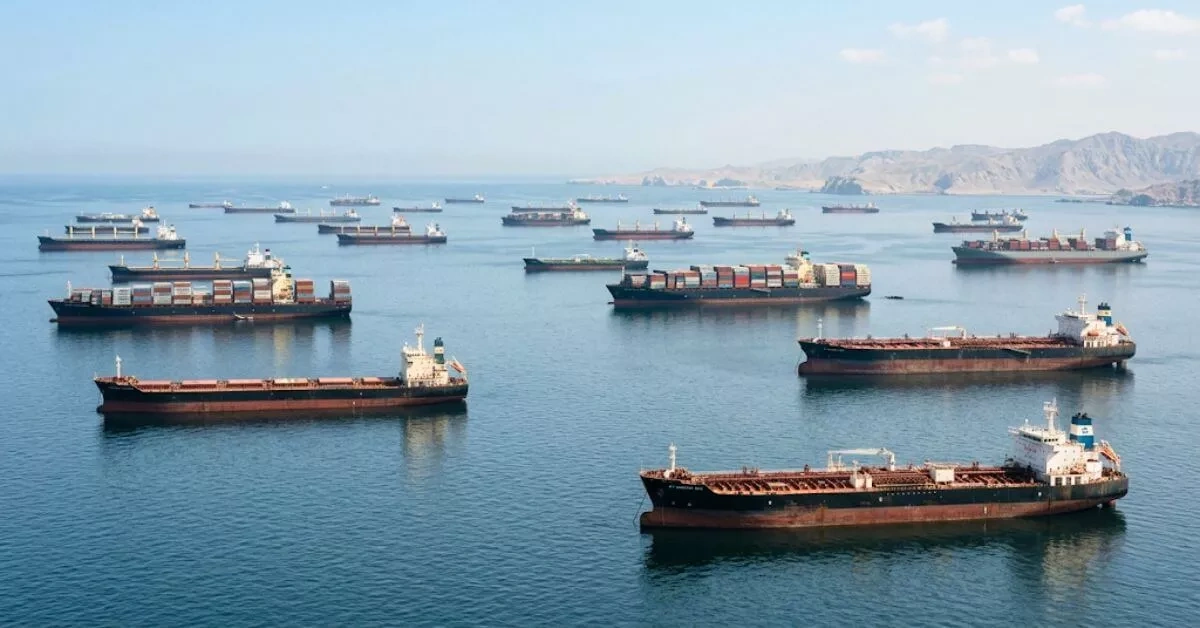
As their article recalls, Brent crude — the global benchmark for oil prices — closed at $72.48 per barrel the day before the launch of US-Israeli strikes on Iran. After Tehran shut the strait on March 4 and attacks on commercial vessels halted most maritime traffic, roughly 2,000 ships became stranded on either side of the passage.
In peacetime, approximately 20.3 million barrels of oil pass through the Strait of Hormuz each day. According to the analysis, that translates into roughly $114.8 billion in daily revenue linked to oil shipments. An additional 10 billion cubic feet of liquefied natural gas also moved through the strait daily before the blockade, worth another estimated $7.8 billion.
Since the disruption began, less than 4 percent of normal shipping traffic has reportedly crossed the strait, excluding so-called “shadow fleet” operations involving vessels that disable their tracking systems.
“From an economic perspective, a negotiated transit arrangement [with Iran] now makes more sense than continued closure,” Mohammad Reza Farzanegan of Germany’s University of Marburg told the outlet.
“The geography gives Iran significant leverage, and the recent crisis has shown that Tehran can use control over the Strait of Hormuz in practice,” he said.
Farzanegan added that Iran is unlikely to abandon that leverage without receiving political or economic concessions acknowledging its strategic position.
For the hundreds of vessels still stranded in the Gulf, the financial burden continues to mount. Costs include crew wages, loan repayments, maintenance expenses, and sharply rising war-risk insurance premiums. As a result, some companies may see paying Iran’s transit charges as economically preferable to remaining idle.
“There is no doubt that paying Iran is cheaper than a continuous blockade because a sitting tanker bleeds money,” said Nader Habibi, an American-Iranian economist. Habibi cautioned, however, that the issue extends beyond simple economics.
“The companies are under pressure from the US sanctions and not to make arrangements with Iran,” he said. “This is not just a purely economic cost-benefit analysis, but long-term considerations that are taken into account.”
Legal precedent
Under international law, countries generally cannot impose passage tolls on ships moving through strategic natural waterways such as the Strait of Hormuz, even when those waterways lie within territorial waters.
However, governments can charge for associated services such as navigation management, inspections, rescue operations, and security measures. Similar arrangements already exist in waterways such as the Bosporus Strait, Suez Canal, and Panama Canal.
Türkiye, for example, charges ships for lighthouse operations, rescue preparedness, medical support, and traffic coordination while tightly regulating vessel movement through the Bosphorus.
Farzanegan suggested Iran could attempt to justify a similar model by framing transit fees as compensation for maintaining safe passage, reducing environmental risks, and ensuring stability in one of the world’s most critical trade arteries.
The strait remains essential not only for global energy flows but also for supply chains linked to food, manufacturing, and technology markets worldwide.
By Nazrin Sadigova