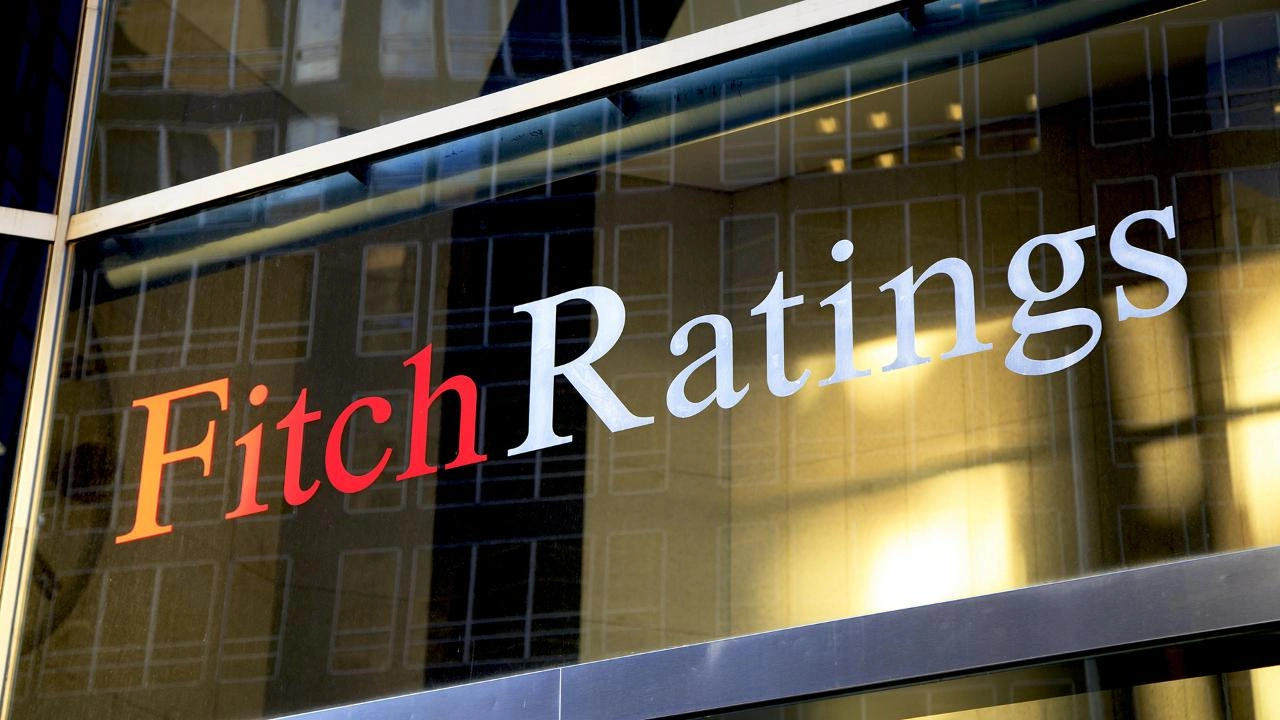
BAKU, Azerbaijan, March 10. The Iran conflict
could raise additional challenges for some emerging market
sovereigns, through such channels as energy imports, remittances,
fiscal subsidies, exchange rates and access to international
finance, Fitch Ratings says, Trend reports.
“Hydrocarbon exporters could see positive effects. Under our
baseline, in which the effective closure of the Strait of Hormuz
lasts less than a month and major damage to the region’s oil
production infrastructure is avoided, risks to emerging market
ratings should be contained, but a longer closure or more sustained
effects could lead to a more substantial impact,” reads the latest
report by Fitch.
The rating agency analysts believe that oil and gas imports are
the most direct channel for contagion from the conflict, given its
effect on global energy prices.
“Net fossil fuel imports are large as a share of GDP for many
small emerging markets. Among the larger economies, we estimate
they are equivalent to 3% or more of GDP for Chile, Egypt, India,
Morocco, Pakistan, the Philippines, Thailand and Ukraine.
Vulnerabilities to higher import costs will be most acute in
markets with already stretched financing capacity, such as
Pakistan, or with significant current account deficits. In December
2025, Fitch had anticipated a significant current account deficit
this year in Ukraine (15.4%), with moderate deficits for the
Philippines (3.4%) and Egypt (3.0%).”
Fitch notes that there are also idiosyncratic vectors through
which the crisis could affect some countries; Azerbaijan, Iraq and
Turkiye could be affected if instability in Iran leads to a major
outflow of refugees.
“For emerging market net hydrocarbon exporters outside the Gulf,
such as Angola, Argentina, Azerbaijan, Brazil, Colombia, Ecuador,
Gabon, Kazakhstan, Nigeria and Republic of Congo, a prolonged
period of higher energy prices could lead to an export and fiscal
windfall. The durability of the improvement in external and public
finance positions would be a consideration in our rating
assessments,” the report says.
On February 26, the 3rd round of talks between Iran and the
United States regarding Iran’s nuclear program took place in
Geneva. Conducted under the administration of U.S. President Donald
Trump, the meeting was seen as the last opportunity to resolve the
escalating situation through diplomatic channels. However, no
concrete agreements were reached.
Two days later, on February 28, the United States and Israel
launched a coordinated military campaign targeting Iran’s
strategically significant military facilities and key state
leadership. Israel named the operation “Operation Lion’s Roar,”
while the United States called it “Operation Epic Fury.” The
strikes covered broad swaths of Iran, including major cities such
as Tehran, Isfahan, Tabriz, and Qom.
In retaliation, Iran initiated “Operation True Promise 4,”
striking back at Israel and U.S. military bases across the region,
including Jordan, Kuwait, Bahrain, Qatar, and Iraq, using ballistic
missiles and unmanned aerial vehicles (UAVs).
The February 28 airstrikes killed Iran’s Supreme Leader Ayatollah
Seyyed Ali Khamenei and his family. Senior officials, including the
Chief of Staff of the Iranian Army, Major General Abdul Rahim
Mousavi, the Commander-in-Chief of the Islamic Revolutionary Guard
Corps (IRGC), Mohammad Pakpour, the Supreme Leader’s advisor and
Secretary of the Defense Council, Ali Shamkhani, and Defense
Minister Aziz Nasirzadeh, were also killed.
From March 1 through 5, the conflict escalated further, drawing
in multiple countries across the Middle East. Iran launched
hundreds of missiles and UAVs, while the United States and Israel
targeted additional military sites within Iran. According to U.S.
Central Command, Iran deployed approximately 500 ballistic missiles
and 2,000 UAVs in the initial days of the confrontation.
The conflict extended to the naval domain on March 4, when a
U.S. Navy nuclear submarine torpedoed the Iranian frigate IRIS Dena
in the Indian Ocean, signaling a new phase of hostilities at
sea.
On March 8, Iran’s Assembly of Experts unanimously elected
Seyyed Mojtaba Khamenei, son of the late Supreme Leader, as the
country’s third Supreme Leader.
Recent reports indicate that at least seven U.S. service members
were killed and several others injured in Iranian strikes on U.S.
and allied facilities. Six fatalities occurred in a drone attack on
a U.S. base in Kuwait, and one service member succumbed to injuries
sustained in Saudi Arabia.
The ongoing conflict has significantly threatened the region’s
energy infrastructure and maritime transport. Oil prices have
surged on global markets due to heightened security tensions around
the Strait of Hormuz, prompting several countries to advise their
citizens to leave the region.