BAKU, Azerbaijan, March 6. The oil market likes
to project an air of cynical calm. It has lived through
revolutions, sanctions wars, pandemics, and shipping disruptions.
But there is one nerve you cannot touch without consequences: the
Persian Gulf and the Strait of Hormuz. When a major war erupts
there, the issue is no longer price volatility. It becomes the risk
of a systemic breakdown - one that can morph within days into
inflation spikes, logistical paralysis, widening budget gaps, and
political crises.
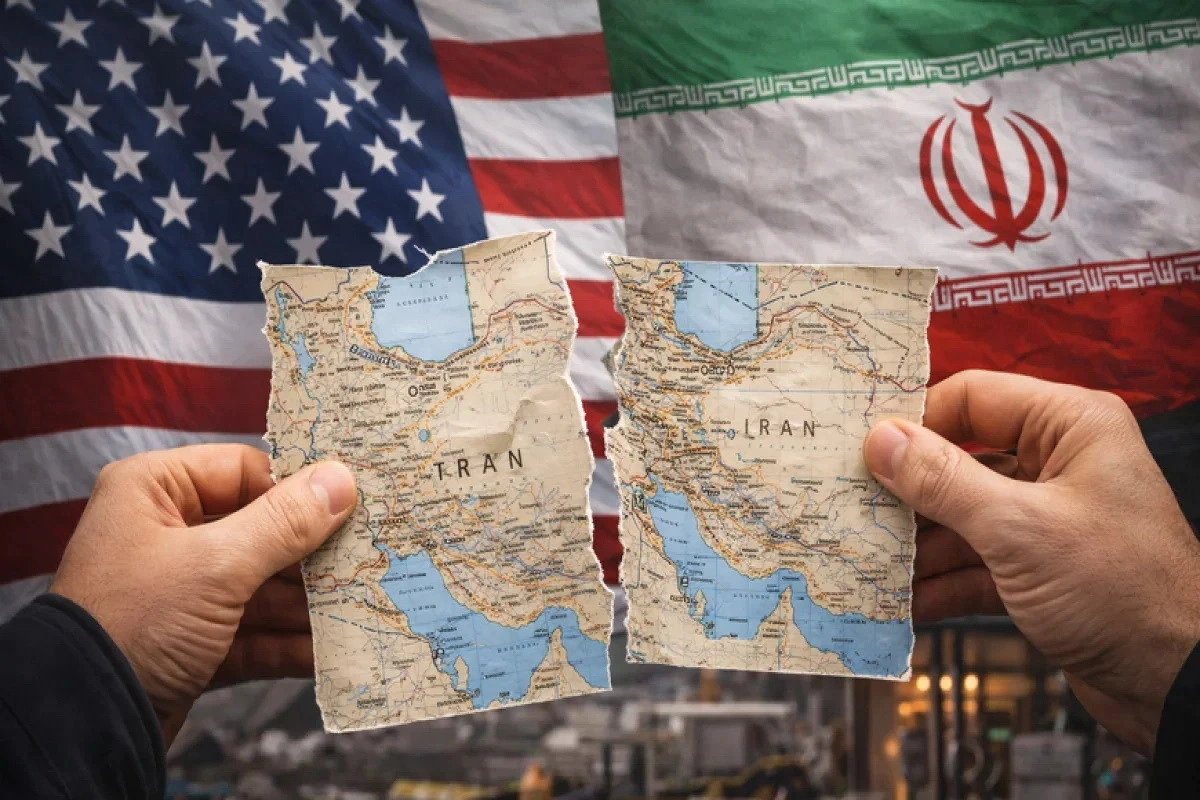
Right now, that scenario is no longer theoretical. Escalation
around Iran has already struck two pillars of the global economy:
energy and transportation. Market charts may still show pauses and
pullbacks out of sheer inertia. But in the physical world of supply
chains, there are no pauses. Either everything moves - or
everything stops.
Below is a fully reworked and expanded version of the analysis:
no cuts, but a much harder line of reasoning, grounded in numbers,
cause-and-effect linkages, and a clear conclusion about why this
war is more dangerous than many crises that came before it.
Why the Market Hasn’t “Exploded” Yet - Despite the
Massive Risk
At first glance, the market reaction seems oddly restrained.
With war brewing around Iran, oil prices have not instantly shot
into the stratosphere the way they did during earlier shock
moments. In 2022, after Russia launched its military operation in
Ukraine, crude quickly surged past $100 a barrel, triggering a
politically sensitive spike in U.S. fuel prices. Millions of
barrels of supply were at risk - but the deeper driver was fear.
Markets didn’t know where sanctions would stop, how far escalation
might go, or how quickly panic could spread.
Today the fear is still there. But it’s cushioned by several
“shock absorbers.”
First, global production has grown. In 2025, world output rose
noticeably, and in 2026 global supply could expand by another
2.4–2.5 million barrels per day, according to estimates from the
International Energy Agency - assuming no prolonged or major
disruptions. Psychologically, the market is clinging to one idea:
there is enough oil in the world overall. The real question is how
quickly it can reach the places where it’s needed.
Second, demand growth is more moderate than during the
post-pandemic rebound, when economic recovery pushed consumption
sharply higher. The IEA describes 2026 as a year of relatively
modest demand growth - measured in hundreds of thousands of barrels
per day rather than explosive surges.
Third, the United States still holds strategic reserves and
maintains a high level of production. That’s not a magic wand, but
it does dampen speculative hysteria. Traders understand that
Washington has tools - even if they’re limited. According to the
U.S. Energy Information Administration, the Strategic Petroleum
Reserve held roughly 415 million barrels as of February 2026.
But these shock absorbers only work up to the moment when a
crisis shifts from expectations to a physical shortage.
Hormuz: Not a Symbol, but a Critical Artery
In discussions of geopolitical crises, the Strait of Hormuz is
often described metaphorically as a “chokepoint.” In reality, it’s
a literal technological constraint. The volume of oil and fuel
flowing through this narrow corridor is so vast that it cannot be
quickly rerouted.
According to the U.S. Energy Information Administration, in 2024
and the first quarter of 2025 more than a quarter of global
seaborne oil trade passed through the strait - along with roughly
one-fifth of total global consumption of oil and petroleum
products. About one-fifth of global LNG trade also transits Hormuz,
much of it tied to shipments from Qatar.
That is why partial disruption in the strait can be more
dangerous than a single strike on infrastructure. A refinery can be
repaired. A terminal can be rebuilt. But when insurers raise
premiums, shipowners pull their fleets away, and captains receive
warnings that safe passage cannot be guaranteed, shipments collapse
- not because facilities are destroyed, but because the system
refuses to take the risk.
And signs of that shift are already emerging. Reports of sharply
reduced traffic and soaring insurance costs suggest that the
physical market is sliding into a “more expensive and slower” mode.
In energy logistics, “more expensive and slower” quickly turns into
“more scarce.”
Why This Crisis Is More Dangerous Than 2022
In 2022, the oil market absorbed a shock from sanctions and war
risks surrounding Russia. But the structure of that threat was
fundamentally different.
Russia was - and remains - a major supplier. Yet its export
geography is relatively diversified: Baltic ports, the Black Sea,
pipelines, and eventually a reconfiguration toward longer routes
using the so-called shadow fleet. Painful, yes - but adaptable.
Hormuz is far harder to reconfigure.
If traffic through the strait falls sharply or becomes unstable
for weeks, the damage spreads simultaneously across several
sectors:
exports from the Persian Gulf
LNG supplies from Qatar
petrochemical feedstocks and refined products
the energy security of Asia, historically dependent on Middle
Eastern volumes
In 2025, Asia imported roughly 14.74 million barrels per day
from Middle Eastern producers out of total purchases of about 25
million barrels per day - close to 60 percent. For Japan and South
Korea, dependence is even more pronounced: about 95 percent and
roughly 70 percent of oil imports respectively.
When such a system takes a hit to its primary delivery corridor,
the consequences ripple outward - from refining and electricity
generation to inflation, exchange rates, and government
budgets.
A huge share of seaborne oil and LNG passes through Hormuz,
making Asia the most vulnerable region. Even when inventories
exist, industrial activity and prices respond quickly.
Oil, Gas, and the “Second Wave” of
Inflation
The issue is not just the price of crude. Energy functions as a
multiplier across the entire economy.
Oil determines transportation costs embedded in almost
everything - from food to pharmaceuticals. Natural gas and LNG
shape electricity and heating costs, influencing the production
costs of industry.
When risk around Hormuz rises, the shock spreads along three
simultaneous channels:
Brent and WTI crude benchmarks
tanker freight and insurance costs
gas prices, especially in regions where LNG acts as the balancing
supply
Even if exchanges don’t swing violently every minute, higher
insurance premiums, freight rates, and delivery delays create real
supply-chain inflation. That inflation eventually lands in consumer
prices.
In the United States under President Trump, that dynamic carries
obvious political risk. Voters don’t watch freight charts - they
watch the numbers on gas station signs. If fuel prices surge, the
issue quickly turns into a domestic political battle in which
foreign policy decisions are judged less by geopolitics than by the
cost of living.
America’s “Margin of Safety”: Large but Not
Endless
There’s a persistent illusion that the United States can simply
flood the market with oil at will. The reality is more
complicated.
Yes, U.S. production remains extremely high. According to EIA
data, monthly output in 2025 fluctuated roughly between 13.1 and
13.9 million barrels per day. Toward the end of the year there were
signs of easing. Reuters, citing EIA figures, reported that
production in December 2025 was around 13.66 million barrels per
day - the lowest since June of that year.
Yes, the country holds strategic reserves. But several
constraints remain:
The SPR is finite and was never designed to offset systemic
Persian Gulf disruptions for months at a time.
Releasing reserves influences the market but does not eliminate the
problems of shipping routes, insurance costs, or physical delivery
risk.
Reserve levels in 2026 are not near historic highs, making any
large draw politically contentious.
Meanwhile, operational data from the U.S. domestic market
suggests the system is already operating close to a delicate
balance: refinery throughput, gasoline and diesel stocks,
commercial crude inventories, and import flows all interact
tightly.
In its Weekly Petroleum Status Report for the week ending
February 27, 2026, the EIA recorded refinery utilization around
89.2 percent, crude processing at 15.8 million barrels per day,
commercial crude inventories at 439.3 million barrels, and total
petroleum product demand averaging about 21.0 million barrels per
day over four weeks - 4.2 percent higher than a year earlier.
The implication is straightforward. The United States can
cushion the shock. But it cannot neutralize a global energy crisis
if it evolves into a genuine physical disruption.
OPEC+, “Excess Oil,” and the Problem of
Time
The comforting narrative about an “oversupply of oil” only holds
if that surplus can quickly turn into available barrels exactly
where they are needed.
The problem with the Strait of Hormuz is not just volume - it’s
geography. On paper, the market can appear oversupplied. In
reality, there may not be enough tankers, insurance coverage, or
secure shipping lanes to deliver that oil to its destination.
There is also the issue of time. Spare capacity and OPEC+
decisions always lag behind events. Even if producers are ready to
increase output, the process must first be negotiated, then
implemented in the field, then shipped, then refined before it
reaches consumers.
OPEC itself acknowledges in its reports that some voluntary
production cuts - about 1.65 million barrels per day - could
gradually return to the market depending on conditions. Even under
normal circumstances, that is a managed, step-by-step policy. In
wartime conditions, its effectiveness depends on a single factor:
whether those barrels can physically leave the region and reach
buyers.
Logistics: When War Strikes the Sky Instead of the
Port
Logistics is critical - and often underestimated. In modern
supply chains, aviation and maritime transport operate like
communicating vessels.
When sea routes become slower and more dangerous, part of the
cargo shifts to air. When airspace closes, the pressure returns to
the sea. But when both systems are disrupted at the same time,
supply chains begin to degrade: component shortages emerge,
contracts fail, production lines halt, and prices climb.
Right now, aviation has taken a hit as well.
Reuters has reported that the closure of airspace and the
suspension of flights through major regional hubs sharply reduced
global air cargo capacity. Estimates varied, but the drop reached
double-digit percentages within just a few days. The Asia–Middle
East–Europe corridor was hit especially hard, with capacity falling
by several tens of percent.
Industry sources also cited roughly an 18 percent decline in
global available capacity, noting that the disruption stems not
only from canceled flights but also from forced rerouting and fleet
redeployment.
Why does that matter?
Because a significant share of air cargo does not travel on
dedicated freighters. It flies in the belly holds of passenger
aircraft. When passenger flights disappear, so does that cargo
capacity. For decades, the hubs of the Persian Gulf served as a
bridge between Asia and Europe - fast, frequent, highly organized,
and predictable. When such a node shuts down, logistics does not
simply become more expensive. Its rhythm collapses.
And then the domino effect begins:
urgent shipments - pharmaceuticals, electronics, industrial
parts - become more expensive
delivery times stretch
companies begin building precautionary inventories, creating
additional demand for transport
alternative airports and routes become overloaded
freight rates rise even for shipments unrelated to the region,
because aircraft and airport slots are finite
It is the same mechanism the world witnessed during the pandemic
- not because there was suddenly more cargo, but because there was
less capacity and it became far harder to manage.
Maritime Trade: Containers Can Bend, Tankers
Cannot
Container shipping is generally more flexible. Routes can be
redirected, detours can be made, voyages can be lengthened. It
costs more, but it can be done.
Oil and LNG tankers are far less adaptable. Their operations
depend heavily on safe transit corridors. A single attack,
accident, seizure, or fire in a narrow strait is not merely an
incident - it instantly raises insurance costs for the entire fleet
operating in the region.
Industry psychology matters here. A cargo owner may be willing
to tolerate higher oil prices. What they are not willing to accept
is the risk that their tanker becomes a burning spectacle on the
front pages of the world’s media. In moments like these, the market
is driven not only by the price of crude but also by the price of
risk.
Three Scenarios for the Weeks Ahead: From Nerves to
Catastrophe
Scenario 1: Rapid De-escalation, the Risk Premium
Fades
Conditions:
air and maritime corridors partially reopen
insurance and freight costs begin to decline
the market returns to the familiar logic of “adequate supply”
What remains:
a lingering risk premium for several months
faster diversification of supply strategies across Asia
greater interest in long-term LNG and oil contracts outside the
Persian Gulf
Scenario 2: Prolonged Instability, “More Expensive and
Slower” Becomes the New Normal
Conditions:
the strait remains formally open, but traffic is constrained
periodic strikes, threats, and incidents keep insurance premiums
high
air routes reopen partially but require long detours
Consequences:
persistent increases in logistics costs
accelerating inflation in goods heavily dependent on transport
mounting pressure on the budgets of energy-importing countries,
especially in Asia
Scenario 3: A Genuine Breakdown of Flows Through
Hormuz
This is the catastrophic scenario. It is precisely what makes
the confrontation around Iran potentially the largest supply
disruption in years - not because of dramatic headlines, but
because of the hard mathematics of energy flows through a narrow
corridor.
The consequences would unfold on multiple levels:
oil and gas prices surge not as a brief spike but as a sustained
shortage trend
global inflation gains a second wind
central banks are trapped between rising prices and slowing
growth
developing economies face growing debt risks due to more expensive
energy imports
advanced economies confront mounting political pressure as the cost
of living climbs
The Bottom Line
This war is dangerous not because oil prices might rise. Oil
prices have surged and collapsed dozens of times before.
What makes it dangerous is that the blow has landed on a node
where the cost of risk and the cost of delivery may become more
important than the price of the barrel itself. The Strait of Hormuz
and the Persian Gulf logistics hubs are not just points on a map.
They are the operating system of the global economy: short routes,
high frequency, reliable infrastructure.
When that operating system breaks down, the world does not
merely pay more dollars per barrel. It pays in percentage points of
inflation and weeks of delivery delays.
That is why even a limited military campaign could leave a long
shadow. Companies rewrite contracts. Governments rethink stockpile
strategies. Insurers overhaul their pricing models. Markets begin
to operate under a new baseline of anxiety.
If de-escalation does not come quickly, the world may face not a
temporary price spike but a new kind of energy crisis - one where
shortages are created not only at the wellhead, but along the route
itself.