BAKU, Azerbaijan, March 3. The Black Sea
Submarine Cable project, which envisages the transportation of
green energy from Azerbaijan and Georgia to Europe, will be an
important step towards strengthening connectivity between Europe
and the South Caucasus, Cristina Lobillo, Director of the EU Energy
Platform and International Relations Task Force (Directorate F) at
the European Commission's Directorate-General for Energy (DG ENER),
said, Trend
reports.
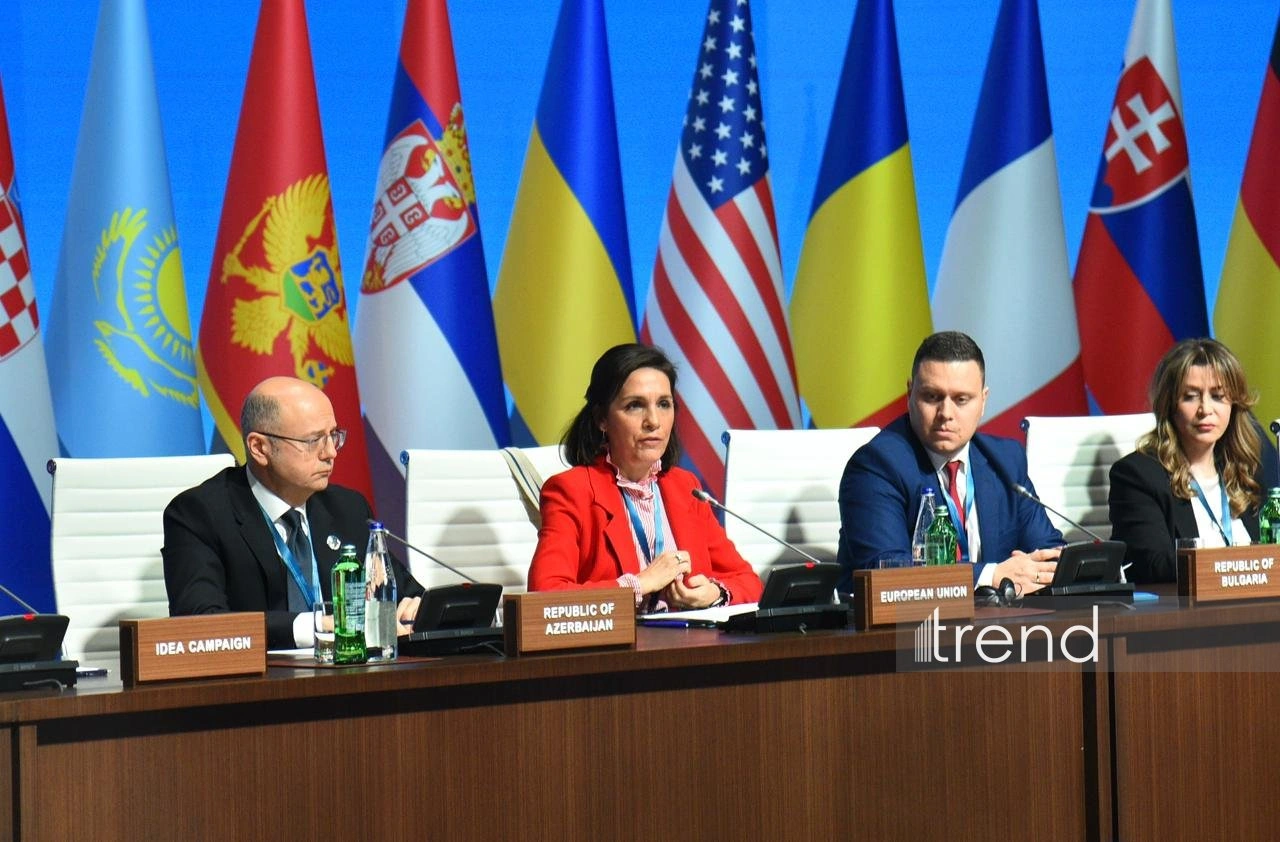
She made the remark at the 12th Ministerial Meeting of the
Southern Gas Corridor Advisory Council (SGC) and the 4th
Ministerial Meeting of the Green Energy Advisory Council (GEAC) in
Baku
According to her, the European Commission recently included the
Black Sea Submarine Cable project in the list of projects of mutual
interest (PMI). This status will allow it to apply for funding
under the Connecting Europe Facility program. The project will be
an important step towards strengthening connectivity between Europe
and the South Caucasus.
“We look forward to the outcome of the ongoing discussions to
link this project more closely to the Green Energy Corridor
connecting the Caspian Sea with Europe,” Cristina Lobillo said.
Meanwhile, on December 17, 2022, Azerbaijan, Georgia, Romania,
and Hungary signed a strategic partnership agreement providing for
the construction of a 1,000 MW submarine power cable across the
Black Sea with a length of 1,195 kilometers. The cable is designed
to transmit green electricity generated in Azerbaijan and Georgia
to Romania, with subsequent transportation to Hungary and other
European countries, which will expand Europe's access to renewable
energy sources in the Caucasus region.
In September 2024, Romanian electricity transmission system
operator Transelectrica, Georgian operator Georgian State
Electrosystem, Azerbaijani energy company AzerEnerji, and Hungarian
energy company MVM established a joint venture to lay the submarine
cable across the Black Sea.