BAKU, Azerbaijan,
March 3. Baku is set to take center stage once
more in crafting the Eurasian energy narrative today: the
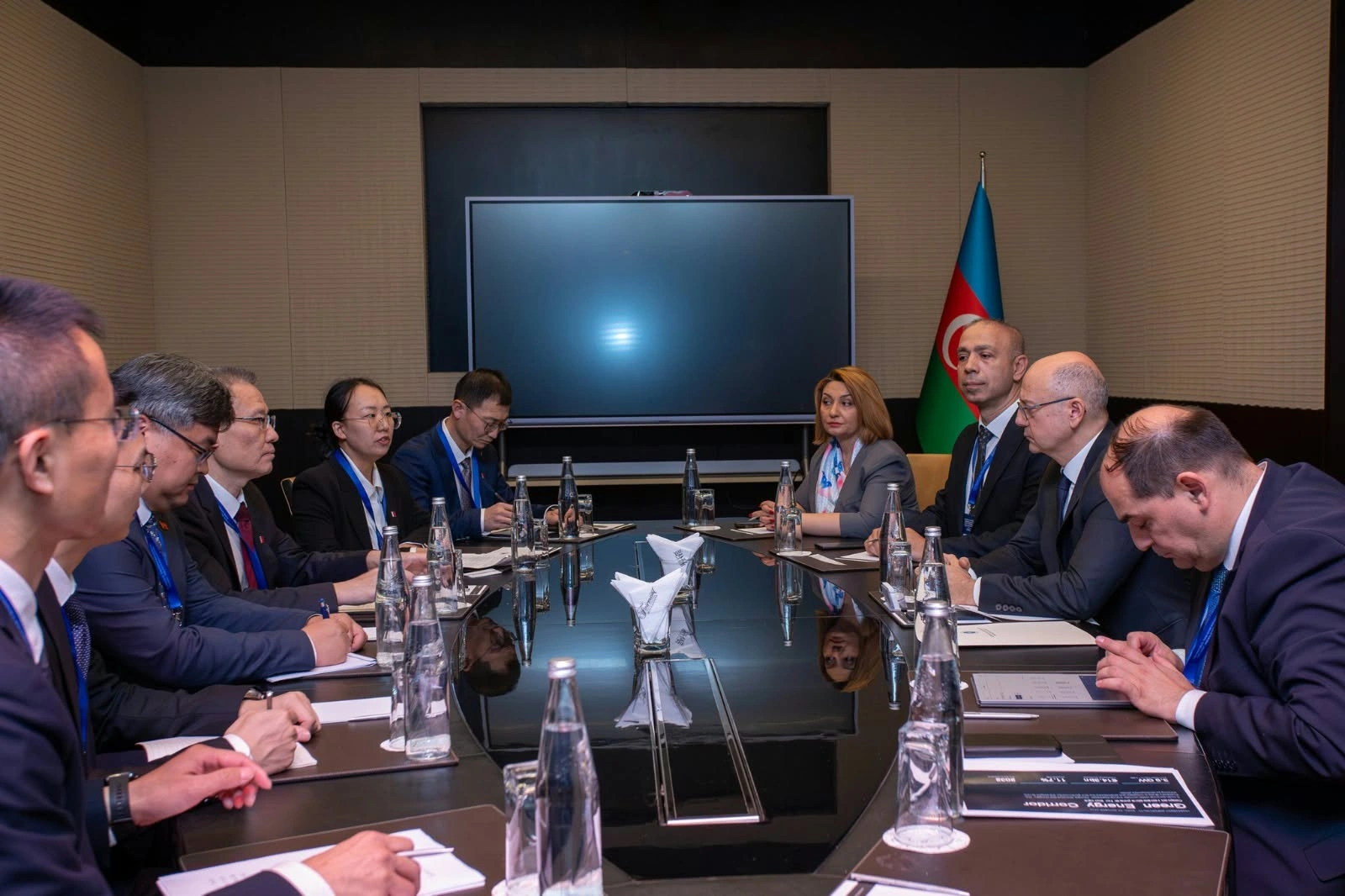
Azerbaijani capital will host the 12th ministerial meeting of the
Southern Gas Corridor Advisory Council and the 4th ministerial
meeting of the Green Energy Advisory Council. The very fact that
they are being held simultaneously reflects the strategic
transformation of the country's role—from a traditional hydrocarbon
exporter to an integrated pan-European energy supplier, capable of
simultaneously supplying the market with both natural gas and clean
electricity.
The relevance of the Baku meetings is underscored by the swiftly
shifting geopolitical landscape. The war in Ukraine in 2022 marked
a turning point for the European energy architecture, forcing the
EU to accelerate the diversification of its supply sources.
However, the current escalation in the Middle East has once again
demonstrated the vulnerability of global energy routes. The risk of
disruptions through the Strait of Hormuz—a critical artery for oil
and liquefied natural gas supplies—has brought supplier reliability
and logistics resilience back into the spotlight. Under these
circumstances, the importance of partners capable of guaranteeing
predictable and long-term supplies is clearly increasing, and such
players are few in the market.
This is why the upcoming meetings in Baku are perceived not
simply as an annual industry dialogue but as a golden opportunity
to take stock of energy priorities. The parties can discuss
accelerating the expansion of the Southern Gas Corridor,
demonstrate a clearer understanding of the role of long-term
contracts, and reconsider unilateral approaches to limiting funding
for fossil fuel projects, which, in the current environment, are
increasingly facing pragmatic reassessment.
Back at the 11th Southern Gas Corridor Advisory Council
Ministerial Meeting held in April 2025, President of Azerbaijan
Ilham Aliyev, in fact, outlined the philosophy of the current
stage.
"It is clear today, more than ever before, that energy security
is an integral part of the national security of countries. I would
also say that today we can also talk about industrial security,
because in order to develop industries, we need energy resources,
we need petrochemicals, and we need fertilizers. And Azerbaijan is
a producer and exporter of crude oil, natural gas, oil products,
petrochemicals, and fertilizers," the head of state emphasized.
The ongoing volatility renders this evaluation particularly
pertinent, and it's noteworthy that an analogous signal is
emanating from Brussels.
European Commissioner for Energy and Housing Dan Jørgensen said
in an exclusive interview with Trend ahead of the Baku meetings that
Azerbaijan’s contribution to European energy diversification will
only grow in importance.
“My message in Baku will be one of continued partnership and
shared strategic interest. The European Union remains a steady and
reliable partner for Azerbaijan, and we deeply value our energy
cooperation. In these challenging times, Azerbaijan has played a
crucial role in helping Europe diversify away from Russian gas—and
that contribution will only grow in importance given that we now
have a full ban on Russian gas imports in the EU,” he said.
Jørgensen gave indicative dynamics that since the war in Ukraine
began, Caspian gas has been instrumental in slashing EU dependence
on Russian imports—from 45% of European gas supply to just above
10% this year.
“That’s not just a statistic; it’s a strategic success for
European energy security," he emphasized.
At the same time, the European Commissioner particularly noted
that the partnership goes far beyond the gas agenda.
"My message this week will be that this partnership isn’t just
about gas. It’s also about supporting the green transition, as both
the EU and Azerbaijan are accelerating electrification, modernizing
infrastructure, and remaining committed to the Paris Agreement.
This is a win-win for both our economies and our energy future,”
noted Jørgensen.
The factual basis for these statements has already been
established. In January 2026, the State Oil Company of Azerbaijan
(SOCAR) began supplying Azerbaijani natural gas to Austria and
Germany via Italy, marking a new milestone in the evolution of the
European gas market. In 2025, gas production in the country reached
51.5 billion cubic meters (bcm). Of this, 27.9 bcm came from Shah
Deniz, 14.1 billion from the Azeri-Chirag-Gunashli block, 1.6 bcm
from Absheron, and another 7.9 bcm from SOCAR. Total exports
amounted to 25.2 bcm, including 12.8 bcm to Europe, 9.6 bcm to
Türkiye (including 5.6 billion via TANAP), 2.3 bcm to Georgia, and
0.5 bcm to Syria.
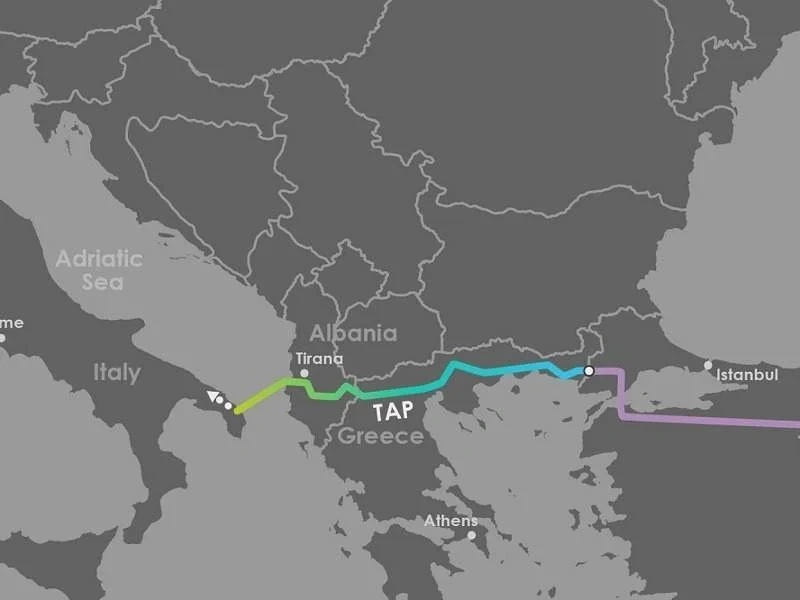
The European segment of the Southern Gas Corridor (TAP) has
delivered 56 bcm of gas to EU countries to date, significantly
strengthening its diversification. Moreover, in January of this
year, TAP underwent its first expansion by 1.2 bcm per year, which
will provide additional supplies to the European market as early as
2026. The economic impact is also significant: according to
Jørgensen, gas exports to Italy, Greece, and Bulgaria have
generated approximately 24 billion euros in revenue for Azerbaijan
by 2024, since the start of commercial deliveries via TAP.
However, the strategic peculiarity of the current stage is that
Azerbaijan is simultaneously accelerating its green transformation,
creating an energy synergy model. Two large renewable energy
projects with the participation of international investors have
already been implemented. The 240 MW "Khizi-Absheron" Wind Power
Plant, officially opened on January 8, 2026, and built by ACWA
Power, will generate approximately one billion kWh of electricity
annually, saving up to 220 million cubic meters of gas and
preventing the emission of over 400,000 tons of CO₂. The 230 MW
Garadagh Solar Power Plant, developed jointly with Masdar and
commissioned in October 2023, will generate approximately 500
million kWh annually, equivalent to saving 110 million cubic meters
of gas and reducing emissions by 200,000 tons of CO₂.
President Ilham Aliyev outlined an ambitious trajectory in
Davos.
"In the coming six years, we will dramatically increase our
capacity to generate energy from solar and wind. In other words, by
2032, we expect to have eight gigawatts of solar and wind energy,"
he said. According to industry forecasts, the share of renewable
energy in electricity generation will reach 25 percent by 2027 and
30 percent by 2030.
The development of trans-regional green energy corridors is
becoming a key element of the long-term strategy.
Deputy Energy Minister Elnur Soltanov told Trend that the Italian
CESI company has been selected as a consultant to prepare a
feasibility study for the Central Asia-Azerbaijan Green Energy
Corridor project, which is expected to be completed in early
2027.
"Selecting a consulting firm at this stage is crucial to ensure
the project is completed on time and to a high standard, as
advancing to the investment and construction phases is impossible
without a feasibility study," he stressed.
According to Soltanov, the project envisions connecting the
power systems of Azerbaijan, Kazakhstan, and Uzbekistan and
creating a new green energy supply route to Europe. The
Caspian-Black Sea-Europe corridor is also being developed, with a
joint venture between transmission system operators from
Azerbaijan, Georgia, Romania, and Hungary already established.
Completion of the feasibility study is expected in the first
quarter of this year, and the project's phased implementation is
scheduled to last until 2040. The offshore wind energy in the
Caspian Sea has a promising potential, with estimates reaching a
notable 157 GW.
Thus, the upcoming meetings in Baku are taking place at a time
when Europe is essentially rebalancing energy security and
decarbonization. The reality of recent years has shown that a rapid
abandonment of reliable energy sources without the creation of
sustainable alternatives is fraught with serious economic and
industrial risks. In this new configuration, Azerbaijan finds
itself in a unique position—as a supplier of gas, critical for
medium-term stability, and simultaneously as an emerging exporter
of green energy in the long term.
With the war in Ukraine casting a long shadow, the Middle East
in a state of flux, and traditional supply routes facing mounting
challenges, the need for dependable partners is becoming ever more
crucial. The Baku meetings on March 3 could, in fact, become one of
the crystallization points of a new Eurasian energy architecture,
in which Azerbaijan cements its status as a key, systemically
important, and predictable pan-European energy supplier.
Stay up-to-date with more news on Trend News
Agency's WhatsApp channel