KHOJALY, Azerbaijan, February 27. A mediatour
to the Khojaly district has been organized for the media
representatives after the Khojavend district, Trend's Karabakh bureau
reports.
During the mediatour, Sona Gati, a representative of the Heydar
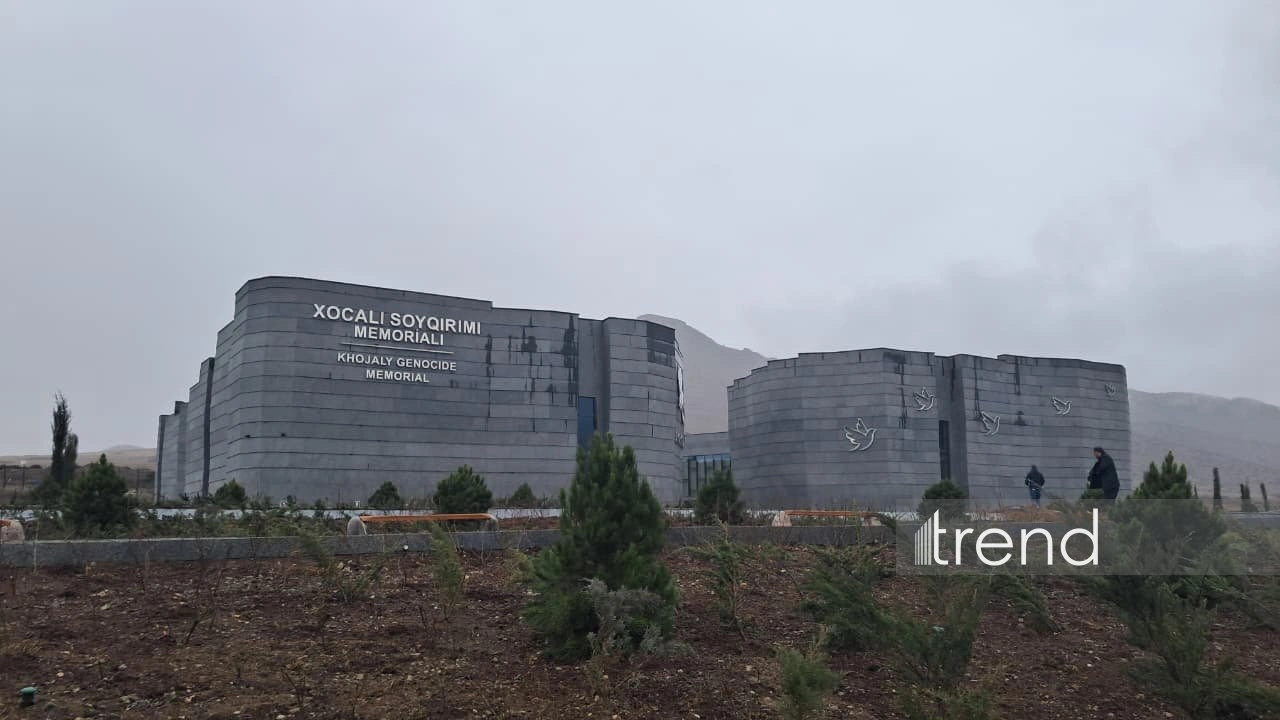
Aliyev Foundation, provided detailed information about the memorial
to the media representatives.
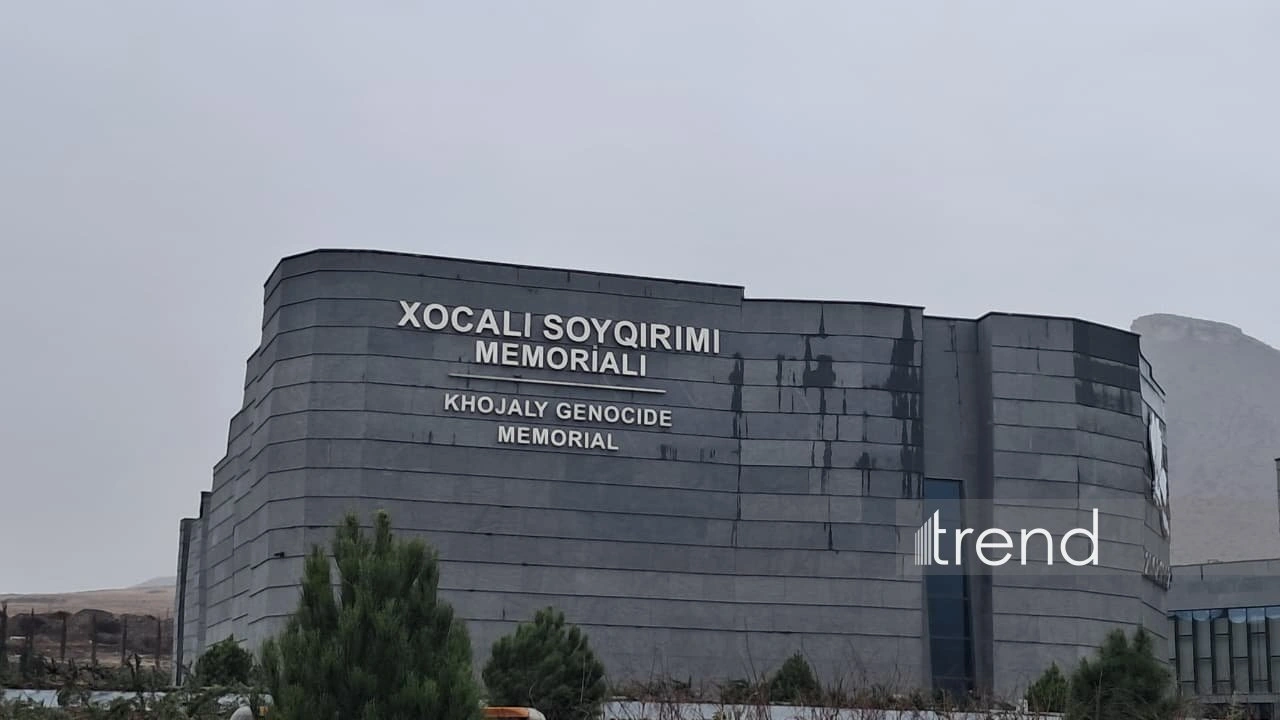
She noted that the memorial was established pursuant to the
Order signed by President of Azerbaijan Ilham Aliyev in February
2025, to eternally commemorate the memory of the victims of the
Khojaly tragedy, conveying historical truths to future generations,
and preserving national memory.
The project was implemented based on the concept prepared by the
Heydar Aliyev Foundation.
The monolithic structure surrounding the Memorial on four sides
is designed in the form of symbolic hands protecting the Khojaly
residents from genocide.
As a sign of respect for the memory of the victims of the
Khojaly genocide, almond trees, which bloom at the end of winter
and herald spring, have been planted in the courtyard of the
memorial. Over the years, the almond blossom has been chosen as the
symbol of the “Justice for Khojaly!” campaign, and this is no
coincidence. The almond blossom reflects the demand for justice
regarding the genocide committed in Khojaly in February 1992.
The memorial consists of four sections. The first two sections
feature an exhibition hall preserving the memory of the victims of
the Khojaly genocide.
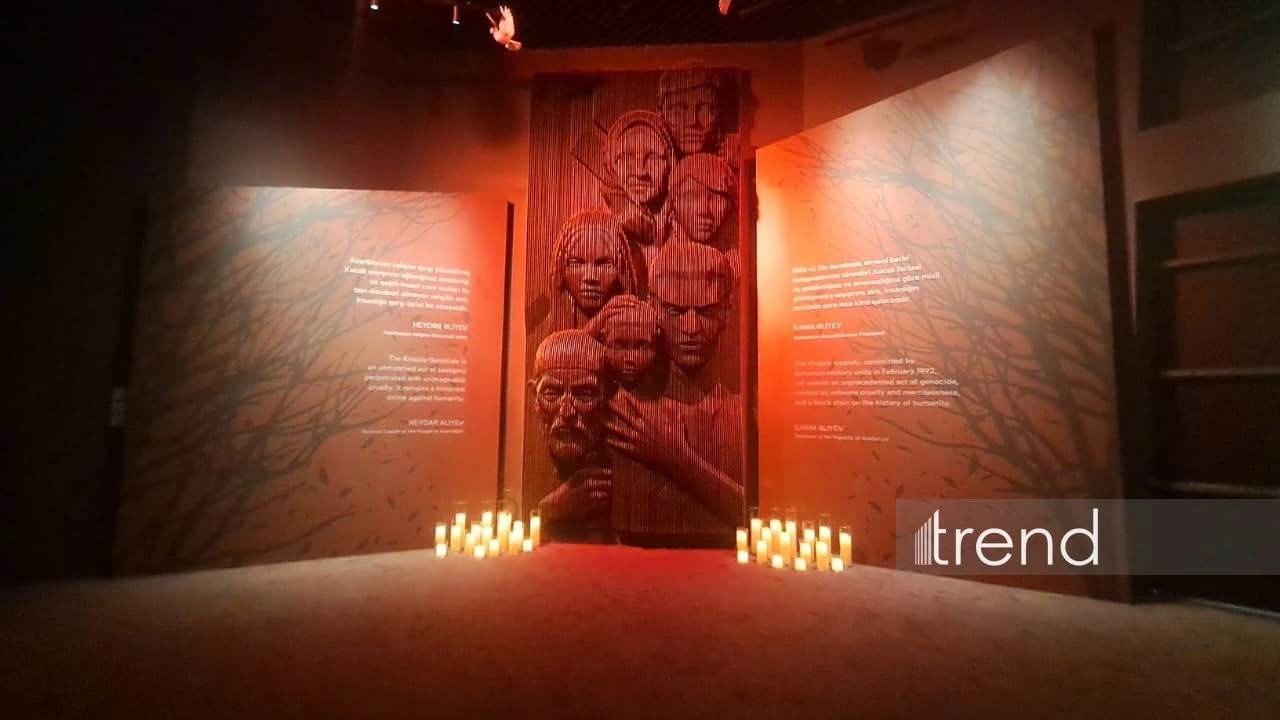
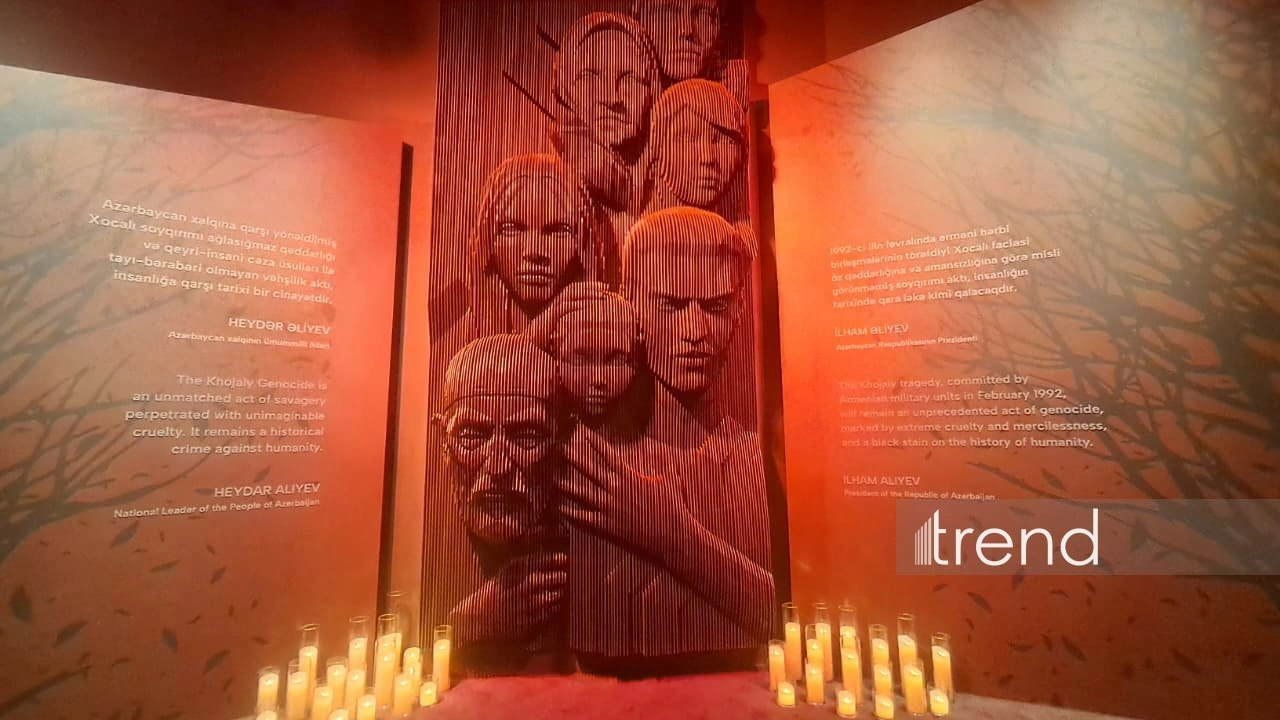
The exhibition greets visitors with the “Face of the Tragedy”
installation. Authored by Rashad Alakbarov and Azer Rustamov, the
installation depicts the victims of the genocide that occurred on
the night of February 25-26, 1992 – innocent civilians killed and
families destroyed.
Models of doves flying along the ceiling of the Memorial are a
tribute to the memory of the innocent residents of Khojaly who were
killed during the tragedy, while wishing peace to the whole
world.
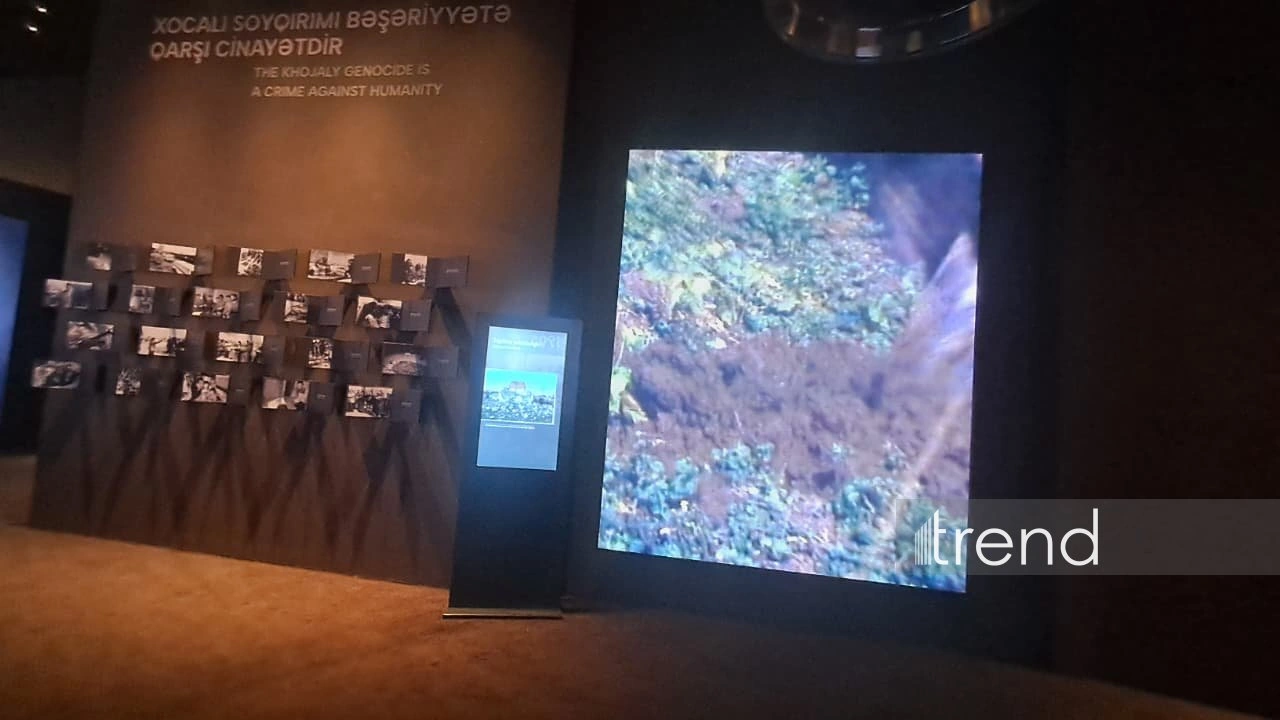
The exhibition dedicated to the Khojaly genocide – one of the
most horrific crimes against humanity in the 20th century –
presents the historical roots of the Armenia-Azerbaijan conflict,
the policy of occupation, and the consequences of Armenian
terrorism on Azerbaijani lands based on documents, maps, and facts.
Exhibitions titled “Khojaly – Traces of Ancient Civilization,”
“Khojaly Genocide is a Crime Against Humanity,” and “Do Not Forget
Khojaly!” provide information about Khojaly's history, the
geography of the occupation, the chronology of the conflict,
violations of international law norms, the Khojaly genocide as one
of the bloodiest crimes against humanity, and the political and
legal assessment given by National Leader Heydar Aliyev.
In the exhibition hall, information about the horrors
experienced on the day of the tragedy is presented interactively
via a Khojaly model.
In the second exhibition hall, Sarkhan Hajiyev's installation
“Houses Silenced in One Night” and the fates of eight families
completely destroyed during the tragedy – lives interrupted in one
night, unfulfilled dreams, silenced children's laughter as a result
of the crime against humanity – are presented through an
AI-generated video.
The exhibition hall reflects President Ilham Aliyev's consistent
policy to promote Khojaly truths at the international level, the
activities of the Heydar Aliyev Foundation under the initiative and
leadership of its President Mehriban Aliyeva to preserve the memory
of Khojaly genocide victims and establish justice, publications and
informational materials in various languages, as well as the work
carried out within the framework of the international “Justice for
Khojaly!” campaign initiated by Vice President of the Heydar Aliyev
Foundation Leyla Aliyeva and her active participation in related
events.
Models of monuments erected in several countries in memory of
the genocide victims within the “Justice for Khojaly!”
international campaign are also displayed here.
The exhibition concludes with information on the 44-day Second
Karabakh War and the restoration of state sovereignty, embodying
the ideas of the “Great Return” and “Devastated Khojaly will revive
again.”
Another section of the Memorial features an assembly hall
intended for official events and commemoration ceremonies.
The Khojaly Genocide Memorial serves as a space dedicated to
preserving national memory in architectural and conceptual
terms.
Stay up-to-date with more news on Trend News
Agency's WhatsApp channel