BAKU, Azerbaijan, February 25. The European
Bank for Reconstruction and Development (EBRD) signed 31
risk-sharing project agreements worth 28.5 million euros with 26
companies in Central Asia and Mongolia in 2025, setting a regional
record, Trend reports
via EBRD.
Under its Risk-Sharing Framework (RSF), the EBRD shares up to
50% of the risk on loans provided by partner financial
institutions, helping unlock financing for local businesses and
support private-sector development.
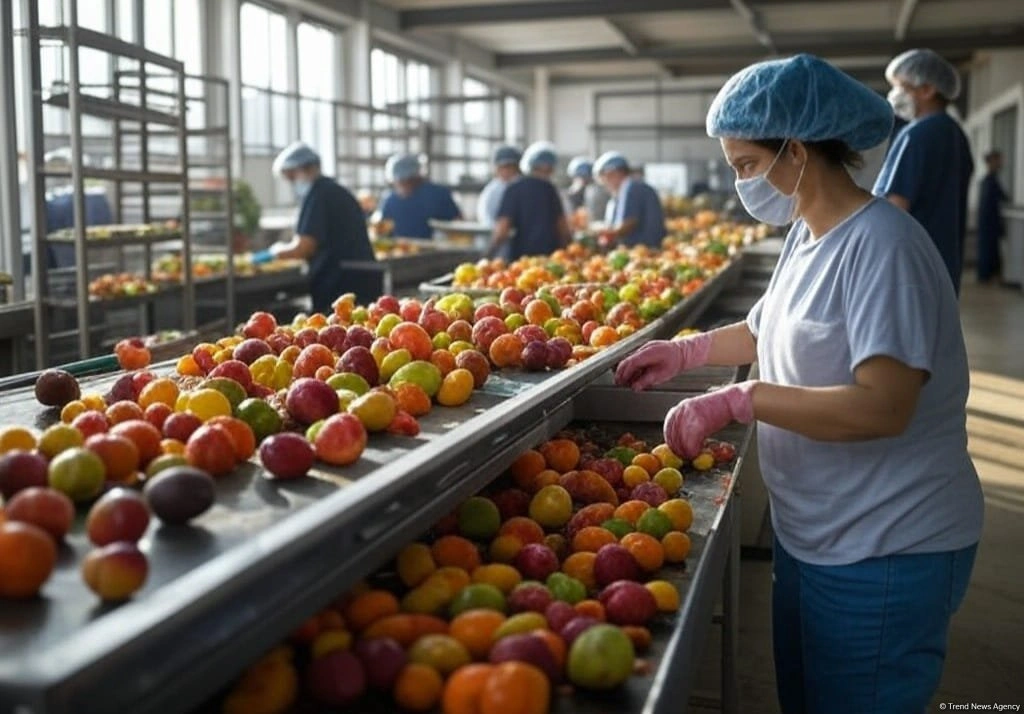
The transactions primarily supported privately owned small and
medium-sized enterprises (SMEs) operating in manufacturing, food
production, agribusiness and services. Many projects combined
financing with investment grants and advisory services aimed at
strengthening companies’ capacity to manage financial and
operational challenges, while improving social, environmental and
governance (ESG) standards.
In Kazakhstan, Temirservice Astana received a KZT 1.9 billion
(3.2 million euro) loan from Bank CenterCredit for the construction
of an 11,000-square-metre Class A warehouse complex.
In the Kyrgyz Republic, aluminium extrusion manufacturer Steelex
secured $4.8 million (4 million euro) from Demir Kyrgyz
International Bank to support vertical integration and expand
aluminium scrap recycling. The project includes the introduction of
inclusive human resources (HR) policies, flexible working
arrangements and a university internship programme. Additionally,
the EBRD and Kyrgyz Investment and Credit Bank provided a joint
$1.1 million (0.9 million euro) loan to plastic packaging producer
HTI Group to modernise equipment and reduce energy consumption,
supported by an investment grant for energy-efficient
solutions.
In Mongolia, the EBRD signed its first RSF transaction in the
telecommunications sector. A loan of up to $1.2 million (1 million
euro), extended jointly with Khan Bank, will provide working
capital to IT Zone, a leading ICT company and systems integrator.
The company will also receive a grant to strengthen HR capacity and
improve talent management practices.
In Tajikistan, Fortuna Co Group obtained a $1.2 million (1
million euro) loan from the Investment and Credit Bank of
Tajikistan to install a 218 kW solar plant, purchase electric
vehicles and modernise equipment.
In Uzbekistan, Trade Novatik, a producer of ready-made meals and
packaged food, received a 1.1 million euro loan from Hamkorbank to
expand production. The project includes a grant supporting
renewable energy adoption, enhanced waste management and digital
monitoring tools. Printing services provider Silkway Colour also
secured a $2.8 million (2.38 million euro) loan to purchase
energy-efficient printing equipment.
The EBRD has applied risk-sharing agreements since the early
2000s, expanding the framework to include unfunded risk
participations, first-loss guarantees and co-lending models. The
modern, scaled-up approach, particularly unfunded risk
participation widely used today, gained momentum in the mid-2010s
as part of the Bank’s strategy to mobilise private capital and
support SMEs and green transition projects.