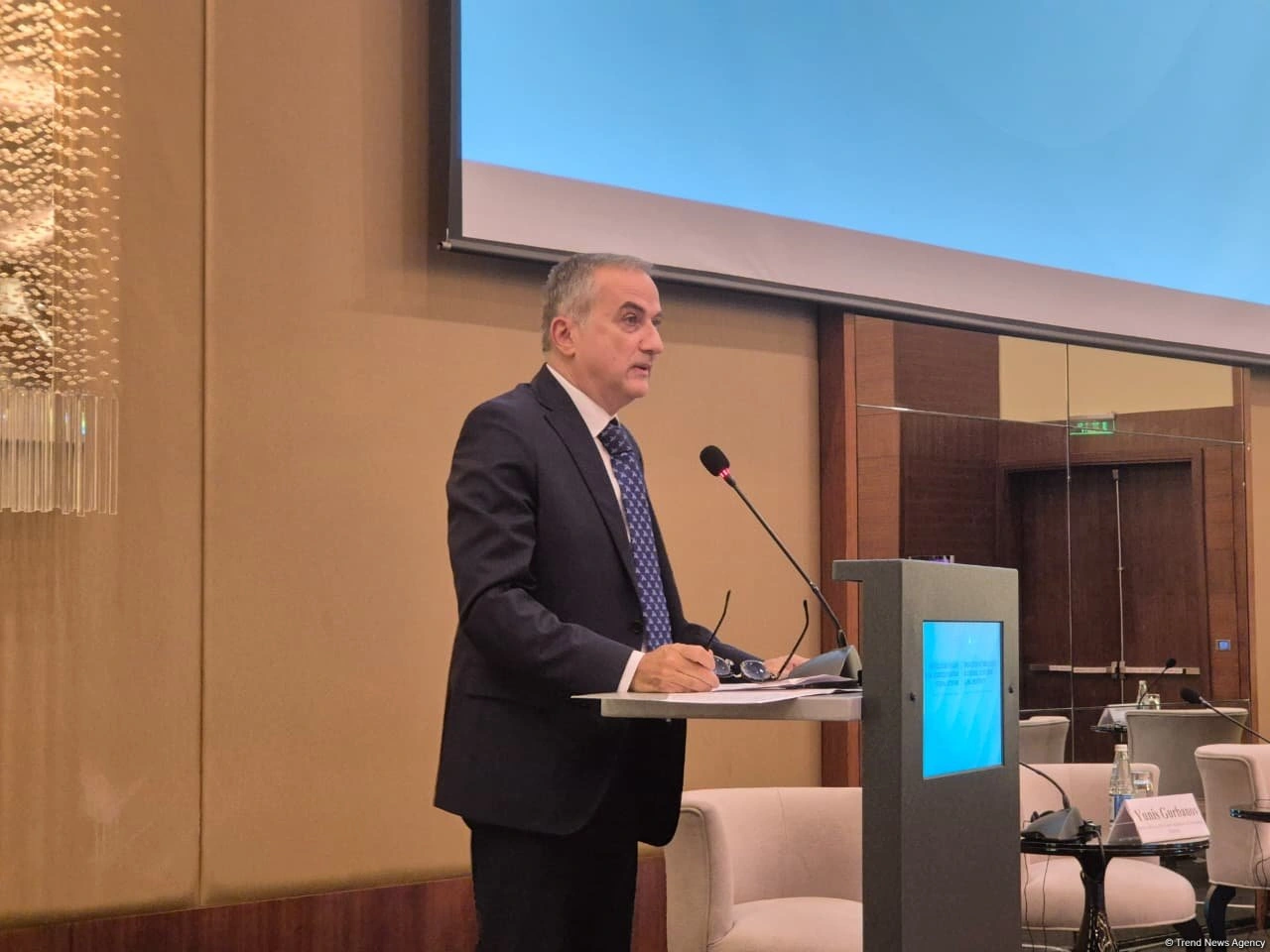
BAKU, Azerbaijan, February 18. C6 can serve as
a functional platform in the areas of energy and investment, the
Chairman of the Center of Analysis of International Relations
(CAIR), Farid Shafiyev, said at an international conference
entitled 'C6: One region, shared future – enhancing strategic
dialogue', Trend
reports.
He noted that C6 is a practical and purpose-minded initiative:
Kazakhstan, Uzbekistan, Turkmenistan, Kyrgyzstan, and Tajikistan,
together with Azerbaijan, can work through a six-state format that
improves the region’s connectivity and strengthens its ability to
act with greater independence.
According to Shafiyev, this proposal is timely.
"Deeper cooperation among the Central Asian states themselves
has made much of the momentum we see in the C5+1 format possible.
Thus, in December 2022, Kazakhstan and Uzbekistan signed a
significant cooperation agreement; in March 2025, Tajikistan and
Kyrgyzstan settled their border dispute; and Turkmenistan,
remaining neutral, has moved toward more active regional
engagement.
The region is increasingly ready for mechanisms that consolidate
progress and translate it into sustained capacity. Due to
Azerbaijan's location on the western Caspian Sea and our existing
transportation and maritime infrastructure, landlocked partners can
increase their options, including deeper connections to Turkish and
European markets via the Middle Corridor and trans-Caspian, as well
as access to Black Sea and Mediterranean routes. C6 expands the
range of options, and options are important in the modern
environment," he explained.
The analyst pointed out that C6 shouldn't be limited to just
transit corridors.
"In the areas of renewable energy, technology sharing, and
energy infrastructure modernization, where collaborative projects
and shared planning can yield measurable benefits, there is a great
deal of room for coordination.
The concept of cohesion is also crucial. The development of
trilateral formats and consultative mechanisms within Central Asia
is a positive trend. For instance, in January 2025, Azerbaijan,
Uzbekistan, and Kazakhstan signed a memorandum of understanding to
expand cooperation on energy transit, renewable energy development,
and technological collaboration. Crucially, the focus is not
limited to hydrocarbons: the partnership also prioritizes joint
research on renewables and new investment in solar and wind
capacity, supporting the region’s gradual shift toward a
lower-carbon economy.
This alignment strengthens regional energy security and helps
position the emerging six-state format as a credible energy bridge
between East and West. C6 can support those initiatives by
introducing a new anchor that increases resilience and reach
without replicating existing ones," Shafiyev said.
He noted that C6 must be practical and inclusive to endure.
"Because of the diversity in our area, collaboration is most
effective when it remains adaptable and results-oriented. A durable
regional format is one that respects differences, is focused on
deliverables, and is in line with shared strategic needs.
Turning proximity into partnership, geography into advantage,
and shared challenges into solutions is the basic strategic logic
reflected in C6. Investing in tangible mechanisms, collaborative
projects, and infrastructure instead of symbolic investments will
allow our six states to accomplish more than any one of us could on
our own," the analyst added.
Stay up-to-date with more news on Trend News
Agency's WhatsApp channel