BAKU, Azerbaijan, January 29. Azerbaijan is
confidently moving towards the model of a country that turned from
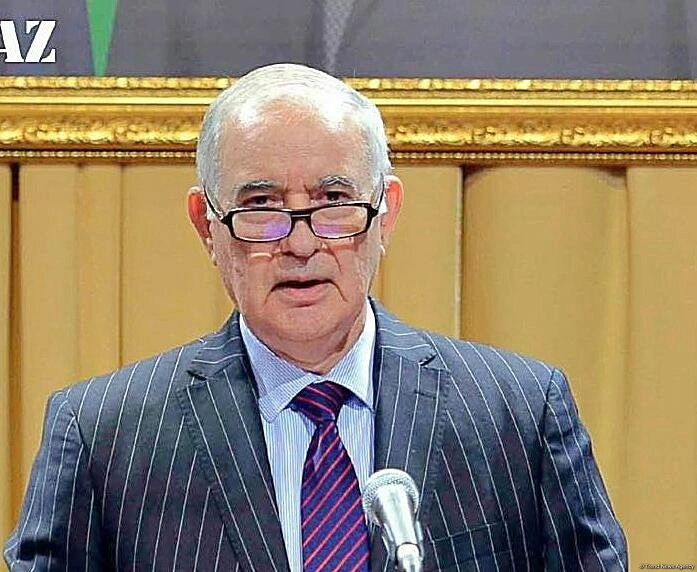
consumer into producer, the political analyst Azer Garayev told
Trend.
According to him, in recent years, one of the top economic
directions in Azerbaijan has been the policy of industrialization
and expansion of the non-oil sector.
He said that amid volatility in global energy markets,
geopolitical risks, and growing uncertainties in the world economy,
it has become a vital necessity for countries to move away from a
model based solely on natural resources and towards a sustainable
and diversified economic structure.
The analyst noted that Azerbaijan has correctly assessed these
challenges promptly and entered a new stage of development based on
production, industry, and an export-oriented economy.
"In this context, the new enterprises commissioned and laid the
foundations in the Sumgayit Industrial Park this month are not just
individual economic projects, but a concrete expression of the
future economic model of the country as a whole. Sectors such as
mirror production, the cardboard and packaging industry, and
polypropylene bags may seem small at first glance. However, in
fact, these sectors constitute the main pillars of the industrial
ecosystem and give impetus to the development of hundreds of other
sectors.
The concept of industrial parks and industrial districts has
been formed as a strategic tool in the country's economic policy.
The state applies not only an incentive, but also a systematic
approach to this area: it establishes infrastructure, provides
concessions, and financial and institutional support. As a result,
risks for entrepreneurs are reduced, and the investment environment
becomes more predictable," he mentioned.
The analyst explained that the real results of this approach are
already clearly visible.
"The industrial parks covering the territories of Sumgayit,
Garadagh, Pirallahi, Mingachevir, Balakhani, Hajigabul, Aghdam, and
Jabrayil have become not only production sites, but also economic
centers where new technologies, professional personnel, and
export-oriented business models are concentrated. The enterprises
established there operate in an interconnected manner, forming an
added value chain within the country. Mirror production plants,
cardboard and packaging enterprises, and polypropylene bag
factories - all of these are of great importance in terms of
reducing dependence on imports. For many years, the majority of
such products were imported from abroad. This meant both a loss of
currency and dependence on supply chains. With the establishment of
new production areas, Azerbaijan gains the opportunity to meet the
needs of the domestic market with local products. This is
especially important in times of crisis.
Against the backdrop of disruptions in global trade, logistics
problems, and price increases, domestic production becomes the
mainstay of economic security. At the same time, these enterprises
are not only for the domestic market. Their products are now
exported to dozens of countries. This means an increase in non-oil
exports, strengthening of the national currency, and strengthening
of the country's international economic positions," he said.
Garayev emphasized that the opening of new factories means jobs
for thousands of people.
"This is not just a statistical indicator - each job means the
well-being of a family, the confidence of a young person in the
future, and the social stability of society. Industrial districts
created in the regions, in particular, play an important role in
preventing migration to the capital and in the economic activation
of local communities. The jobs created in industrial parks are not
only physical labor, but also include areas such as engineering,
technology, logistics, marketing, and management. This incentivizes
the expansion of the professional personnel base in the country and
the orientation of young people towards modern specialties.
Most of the new enterprises are built on the basis of advanced
technologies from countries such as China, Germany, and Türkiye.
This means that the industry in Azerbaijan is moving to a
qualitatively new stage. Automation, digital management, energy
efficiency, and environmental standards are now becoming an
integral part of production. This increases the competitiveness of
the country's products in international markets. In other words,
it's about manufacturing not just many, but also high-quality and
standard-compliant products," he said.
According to him, one of the main distinguishing features of
Azerbaijan's industrial policy is the partnership model formed
between the state and business. The state establishes
infrastructure, provides concessions, and provides financial
support, while the entrepreneur builds production, generates jobs,
exports, and pays taxes.
"Tax and customs concessions, cheap loans, and ready-made
industrial sectors are the main pillars of this model. As a result,
the interest of both local and foreign investors in the country is
increasing. Industrial parks are no longer perceived as a 'risky
project', but as a place of 'forecasted revenue'. The establishment
of industrial parks, especially in liberated areas, marks the
beginning of a new stage. The Araz Valley Economic Zone, formed in
the direction of Aghdam and Jabrayil, is not only an economic
project, but also an important element of socio-political
rehabilitation. The establishment of production in these regions
creates the basis for the return of internally displaced persons,
the revival of the regions, and the restoration of economic life,"
he noted.
The analyst pointed out that every new factory opened in
Azerbaijan today, every new line built is an investment in the
future of the country.
"This is not measured only by economic indicators. This means
independent decision-making capabilities, social stability,
regional strength, and global competitiveness. The mirror,
cardboard, and polypropylene enterprises opened in Sumgayit are
only part of this grand strategy. The main issue is that Azerbaijan
is confidently moving towards the model of a country that is no
longer a consumer, but a producer, and this path is the most
reliable guarantee of long-term prosperity, economic security, and
national development," Garayev added.