BAKU, Azerbaijan, January 27. Relations between
Azerbaijan and Israel are considered one of the rare and unique
examples of strategic partnership in the post-Soviet space,
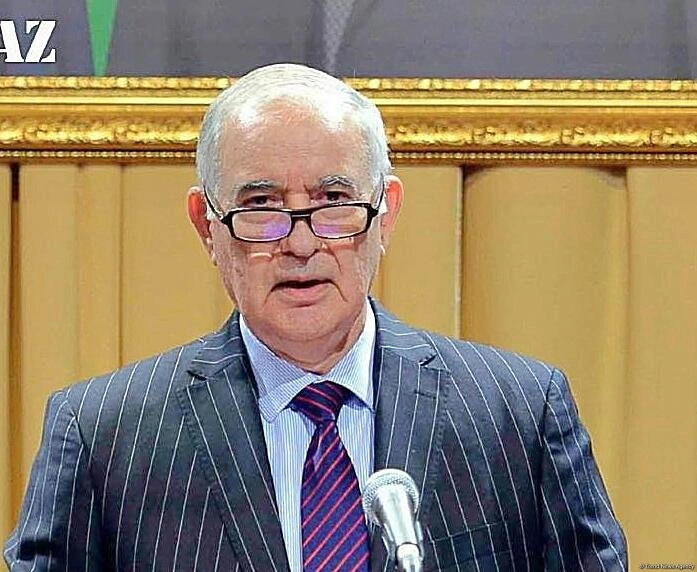
political analyst Azer Garayev told Trend.
"Despite being geographically distant and culturally different,
the two countries are united by pragmatic interests, mutual trust,
and a long-term cooperation strategy. In recent years, the
deepening of ties in political, economic, and military-technical
areas demonstrates that these relations are built at a strategic
rather than tactical level.
President Ilham Aliyev’s reception of Israel’s Foreign Minister
Gideon Sa'ar on January 26, 2026, reflects the continuation of this
strategic line. During the meeting, the recent encounter between
the presidents of Azerbaijan and Israel in Davos was positively
recalled, and discussions covered a wide spectrum of bilateral
issues, sending an important diplomatic signal that relations are
being strengthened institutionally. One of the cornerstones of
Azerbaijani-Israeli relations is the mutual trust established in
the political sphere. Israel was among the first countries to
recognize Azerbaijan’s sovereignty after independence, and official
diplomatic relations, established in 1992, have steadily
strengthened since then," he said.
According to Garayev, Israel remains a vocal supporter of
Azerbaijan’s territorial integrity, with its stance during the
44-day Patriotic War and consistent political support in previous
years highly valued in Baku. Simultaneously, Azerbaijan has
maintained a balanced, pragmatic, and principled approach to Middle
East affairs, preserving its ties with Israel amid regional
geopolitical risks. The recent meetings of leaders from both
countries underscore the sustainable and long-term nature of this
political dialogue.
The analyst emphasized that the economic sector is one of the
most practical areas of Azerbaijan-Israel cooperation.
''Israel has long been one of Azerbaijan's key trade partners,
with the energy sector forming the backbone of their cooperation. A
substantial portion of Israel’s oil needs is met by Azerbaijani
supplies, making this partnership vital not only economically but
also for strategic energy security. Beyond energy, Israel brings
advanced technologies, agricultural innovations, and expertise in
water management, solutions especially relevant for Azerbaijan,
given its water scarcity. Drip irrigation, smart agricultural
models, and digital management systems are promising areas of
collaboration. Gideon Sa'ar’s visit to Baku, accompanied by
business leaders, and the Azerbaijani-Israeli business forum signal
that economic relations are now deepening beyond state-level ties,
extending into private sector engagement.
Politically, one of the most strategic aspects of
Azerbaijani-Israeli relations is military-technical cooperation.
Israel has been a key supplier of weapons and high-tech military
systems, including UAVs, reconnaissance tools, and electronic
warfare equipment, which played a crucial role in modernizing
Azerbaijan’s armed forces and proved decisive during the 2020
Patriotic War. This demonstrates that bilateral relations are
anchored not only in diplomacy and trade but also in tangible
security collaboration.
Azerbaijani-Israeli ties are further strengthened by a shared
humanitarian and social foundation. The Jewish community in
Azerbaijan has historically been protected by the state, with full
support for their religious, cultural, and social life. Communities
in Guba, Baku, and elsewhere exemplify Azerbaijan’s multicultural
model. Saar’s acknowledgment of these efforts underscores the moral
and political value of this partnership. By showcasing real
achievements in multiculturalism, religious tolerance, and ethnic
diversity, Azerbaijan has turned these strengths into political
capital, enhancing its international image and reinforcing the
strategic depth of its relationship with Israel.
It is no coincidence that Gideon Sa'ar expressed his gratitude
to President Ilham Aliyev on this issue. For Israel, the security
and well-being of Jewish communities worldwide are a highly
sensitive matter. Showcasing Azerbaijan as an exemplary country in
this regard adds significant moral and political weight to
bilateral relations,” Garayev said.
He noted that this also enhances Azerbaijan’s international
image. By demonstrating real achievements in multiculturalism,
religious tolerance, and ethnic diversity, Azerbaijan has turned
these values into political capital in its relations with a country
like Israel.
“In recent years, artificial intelligence and digital
technologies have emerged as a new focus in Azerbaijani-Israeli
cooperation. Israel is recognized as a global leader in these
fields, with its startup ecosystem, integration of military and
civilian technologies, and digital innovations forming the backbone
of its economy. Azerbaijan, for its part, has made digital
transformation, along with the 'smart city' and 'smart village'
concepts, a priority of state policy. Projects in Karabakh and East
Zangezur could serve as practical platforms for this collaboration.
Implementing Israeli technologies in these regions adds a new
strategic dimension to bilateral cooperation,” he said.
Garayev emphasized that Azerbaijani-Israeli relations are guided
by pragmatic interests, mutual benefit, and long-term strategic
thinking rather than ideological alignment.
“These relations focus on tangible results and concrete projects
rather than emotional rhetoric, which is why they remain resilient
in the face of regional crises and geopolitical shifts,” he
added.
He concluded that the meeting between President Ilham Aliyev and
Gideon Sa'ar reaffirmed the systematic and planned nature of the
partnership.
“The fusion of political dialogue, economic cooperation,
military partnership, and humanitarian ties makes
Azerbaijani-Israeli relations a unique strategic model in the South
Caucasus and the Middle East. Its strength lies in balancing mutual
interests rather than ideological blocs, making this partnership
not only bilateral but also a key factor for regional stability and
security,” the analyst said.