BAKU, Azerbaijan, July 6. Kazakhstan aims to
attract $25.5 billion in foreign direct investment (FDI) in 2026,
up from more than $20 billion recorded in 2025. The country's
investment priorities were clearly reflected in the agenda of the
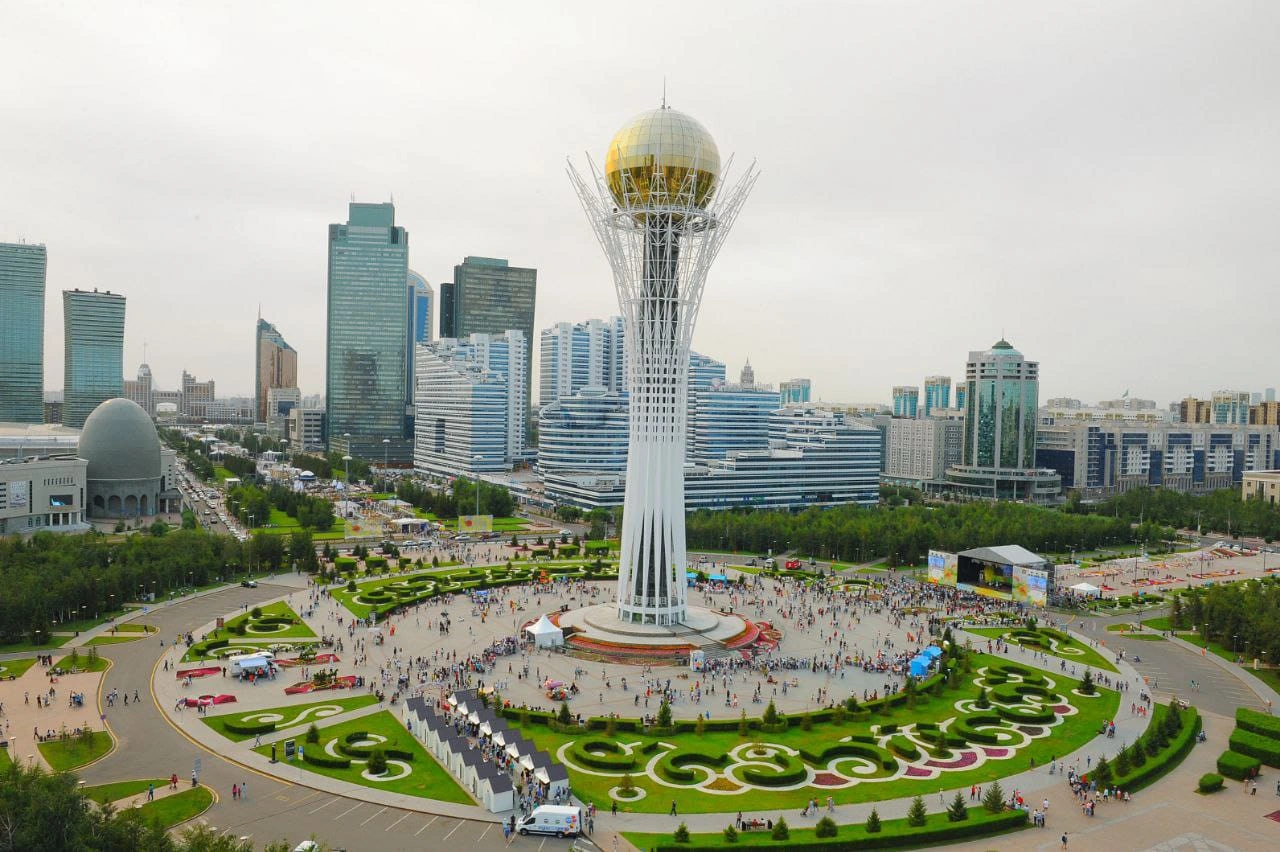
38th plenary session of the Foreign Investors' Council under the
President of Kazakhstan, held in Astana on July 2.
On the sidelines of the session, government officials and
representatives of Kazakhstan's quasi-public sector held a series
of meetings with executives from Eni, ExxonMobil, Baker Hughes,
Marubeni, the European Bank for Reconstruction and Development
(EBRD) and other international organizations. The agenda of these
talks provides insight into the sectors and projects Kazakhstan
considers priorities for attracting foreign capital.
It is evident that Kazakhstan is seeking more than just higher
FDI inflows. Priority is being given to investments that bring
technology transfer, production localization, infrastructure
development, and the creation of new domestic capabilities. These
types of projects are now at the core of Astana's investment
agenda.
During talks with Luca Vignati, Eni's Upstream Director, further
development of Kazakhstan's energy infrastructure was discussed.
One of the key topics was the construction of a 247-MW hybrid power
plant in Zhanaozen. The project is viewed as part of broader
efforts to introduce low-carbon technologies and strengthen the
resilience of the country's power system.
At a meeting with Lorenzo Simonelli, Chairman and Chief
Executive Officer of Baker Hughes, the parties discussed expanding
production localization, strengthening cooperation with Kazakh
enterprises, and introducing advanced technological solutions in
the oil and gas sector.
The focus of these discussions reflects broader shifts across
the global energy industry. Alongside traditional upstream
projects, international energy companies are increasingly investing
in gas processing, modernization of existing infrastructure,
digitalization, and technologies aimed at reducing carbon
emissions. Against this backdrop, Kazakhstan is seeking to attract
projects that go beyond natural resource development and contribute
to the technological modernization of the sector.
Baker Hughes provides a notable example of this approach. The
company said that around 95% of its service operations in
Kazakhstan are already carried out by Kazakh specialists and
confirmed plans to further expand localization and cooperation with
domestic enterprises. This points not only to higher local content
but also to the gradual development of the country's engineering
and service capabilities. As these competencies continue to grow,
Kazakh companies will be able to undertake more sophisticated
technological work, while a larger share of the value created will
remain within the domestic economy.
Infrastructure has also emerged as a major priority. According
to the EBRD, its investments in Kazakhstan could reach a record 1.3
billion угкщ in 2026. The bank reaffirmed its readiness to continue
supporting the development of the country's transport, engineering,
and social infrastructure. While such projects rarely generate
immediate financial returns, they create the conditions necessary
for sustained private investment. The quality of transport
networks, utility infrastructure, logistics, and municipal services
directly affects the cost of industrial projects and the investment
attractiveness of Kazakhstan's regions.
Another notable feature of Astana's discussions with
international partners is the growing emphasis on technology.
Artificial intelligence, industrial digitalization, equipment
monitoring systems, and industrial data analytics are increasingly
becoming standalone areas of cooperation with foreign companies.
For Kazakhstan, this means gaining access not only to financial
resources but also to technologies that are becoming essential for
industrial competitiveness.
At the same time, the government's expectations of foreign
investors are evolving.
During the meetings, Prime Minister Olzhas Bektenov repeatedly
stressed the need to increase the share of domestic goods, works,
and services in major investment projects. The government is
encouraging investors to integrate Kazakh companies more deeply
into production value chains—from supplying equipment and services
to participating in the construction and operation of new
facilities.
Judging by the substance of these recent negotiations,
Kazakhstan is seeking not simply more foreign capital, but a
different quality of investment. The emphasis is increasingly on
projects that combine advanced technologies, production
localization, engineering expertise, and modern infrastructure.
Such an approach allows foreign investment to serve not only as a
source of financing, but also as a driver of the country's economic
modernization.