BAKU, Azerbaijan, February 20. Azerbaijan plans
to launch Islamic banking products in 2026, with the first
offerings already entering the market under the Central Bank’s
special regulatory framework, while efforts continue to strengthen
the country’s legal and regulatory framework for these services,
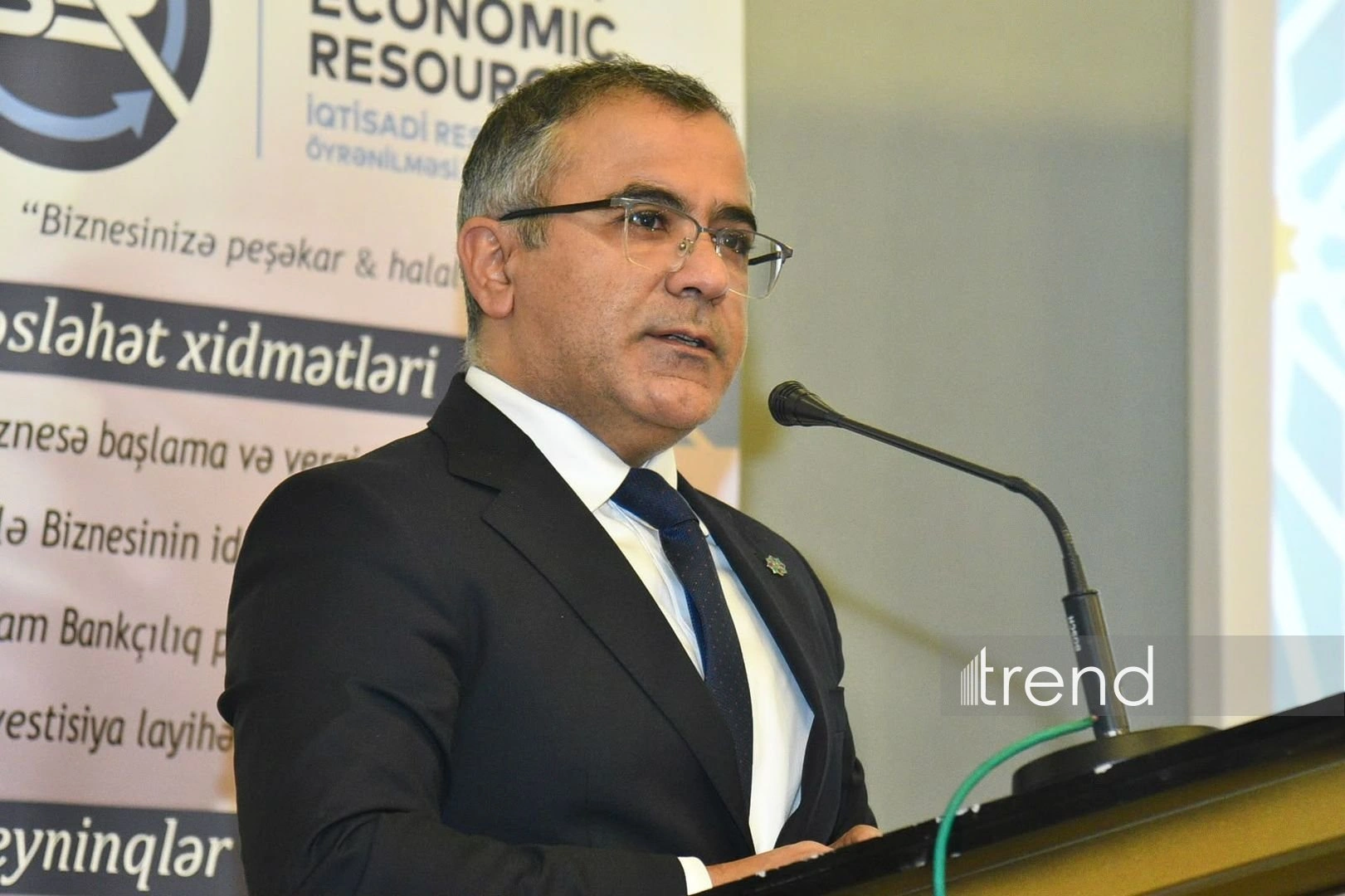
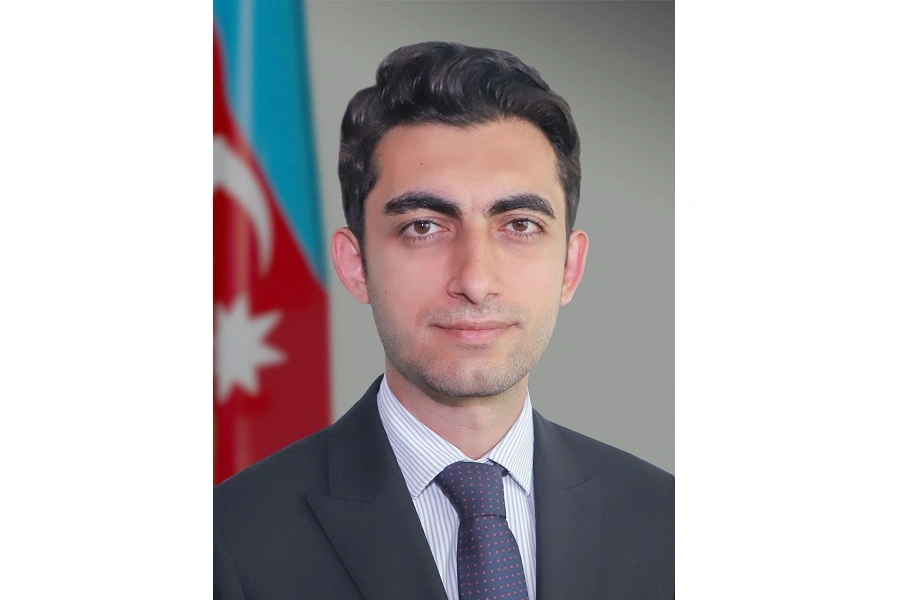
Shahin Mahmudzade, Director General of the Central Bank (CBA), said
in an exclusive interview with Trend.
He outlined the measures taken to introduce Islamic finance
products to the Azerbaijani market, including relevant legislative
amendments, incentive mechanisms, and international
cooperation.
Mahmudzade explained that under the special regulatory
framework, beginning from 02.02.2026 for a period of 1 year,
"Rabitabank" OJSC has begun offering products based on "Mudaraba,"
allowing legal and individual clients to invest funds, which are
then used to finance businesses through the "Murabaha" mechanism.
Additionally, starting this year, "International Bank of
Azerbaijan" will offer Murabaha-based financing for resident legal
entities and individual entrepreneurs for immovable and registered
movable property.
The Director General noted that once legislative changes on
Islamic banking take effect, banks will be able to offer various
financing models under an "alternative window" framework:
project-based contracts (Istisna), sales-based financing
(Murabaha), lease-based financing (Ijara, analogous to traditional
financial leasing), profit-and-loss sharing (Mudaraba), and
deposit-like products (Wadi’a). Non-bank credit organizations will
provide Istisna, Murabaha, and Ijara financing only.
The CBA had planned to submit amendments to legislation on
Islamic banking to the government by the end of 2025. The Director
General also elaborated on the ongoing work related to proposed
amendments to the Civil Code, the Law of the Republic of Azerbaijan
“On Banks,” and the Tax Code.
“This is one of the key priorities. The relevant draft
amendments to the Civil Code, the Tax Code, and the Laws of the
Republic of Azerbaijan ‘On Banks,’ ‘On Non-Bank Credit
Organizations,’ ‘On State Duty,’ ‘On Credit Bureaus,’ and ‘On
Privatization of State Property’ have been submitted for legal
review. The draft amendments are expected to be submitted to the
government in the near future. Following their adoption, the next
stage will involve establishing a prudential regulatory framework
to address the risks arising from the implementation of Islamic
financial products,” Mahmudzade emphasized.
The Director General also addressed the issue of value-added tax
(VAT) treatment for Islamic financial transactions. He noted that
financial services provided under alternative (Islamic) banking
operations are intended to be subject to the same tax regime as
conventional banking services, thereby ensuring tax neutrality
between conventional and Islamic banking activities. According to
Mahmudzade, this approach is reflected in the draft legislative
amendments currently under preparation and will be submitted to the
relevant state authorities shortly.
The introduction of Islamic banking products through the
“Islamic banking windows,” or “alternative window,” model is
expected to enhance financial inclusion, attract new customer
segments, and diversify product offerings, thereby generating
additional revenue streams for banks. The expansion of deposit
instruments is also anticipated to strengthen banks’ liquidity
positions.
Mahmudzade reiterated that no banks currently operate in
Azerbaijan in full compliance with Islamic banking principles and
clarified the prospects for establishing fully-fledged Islamic
banks. “Selecting the appropriate model requires a phased approach.
As noted, in the near term, Islamic banking will be implemented
through the ‘Islamic window’ model. The establishment of standalone
Islamic banks may be considered at a later stage, taking into
account the practical results of introducing Islamic financial
products and overall market development dynamics,” he said.
He also outlined steps being taken to establish a regulatory
framework for sukuk issuance. With the support of the Islamic
Development Bank, the CBA is implementing a technical assistance
project to develop the legal and regulatory framework for sukuk as
an Islamic financial instrument.
“Unlike conventional bonds, sukuk does not create a pure debt
obligation; rather, it represents an investor’s ownership interest
in a specific asset or project, directly linking financing to real
economic activity. This characteristic makes sukuk an instrument
that can provide additional financial resources for business
entities, strengthen investor confidence, and diversify access to
capital markets. For small and medium-sized enterprises (SMEs),
sukuk can facilitate resource mobilization and improve access to
long-term financing through structured mechanisms implemented via
financial institutions.
In the context of infrastructure development, sukuk can serve as
an alternative financing channel in capital-intensive sectors such
as energy, transport, industry, and real estate by providing
long-term and stable funding. International practice demonstrates
that project-based sukuk structures are widely used to finance
large-scale infrastructure projects and help diversify funding
sources while attracting investor interest,” Mahmudzade stated.
He added that the potential emergence of a domestic sukuk market
could further expand cooperation with international financial
institutions, particularly in strengthening regulatory and
institutional capacity and promoting technical knowledge exchange.
In the medium to long term, this approach could support the gradual
expansion of Azerbaijan’s capabilities in Islamic finance
instruments across the region and contribute to building foreign
investor confidence.
Additionally, the CBA has identified international cooperation
as a priority in developing Islamic finance. Mahmudzade noted that
Azerbaijan is studying regulatory models, Sharia supervisory
mechanisms, and capacity-building programs based on the experience
of countries such as Türkiye, Pakistan, and Malaysia, as well as
through cooperation with the Islamic Development Bank.
“Alongside establishing the necessary regulatory and
institutional framework for the implementation and development of
Islamic finance, building human capital with the required expertise
in this field is considered one of the main priorities. For this
purpose, advanced practices from Türkiye, Pakistan, and Malaysia
are being examined, and within the framework of cooperation with
the Islamic Development Bank, regular participation in knowledge
exchange and professional training programs is ongoing and will
continue in subsequent stages,” he emphasized.