ASHGABAT, Turkmenistan, February 19.
Turkmenistan and Russia’s Astrakhan region discussed the
development of the “North-South” international transport corridor,
Trend reports via the Astrakhan regional Ministry of External
Relations.
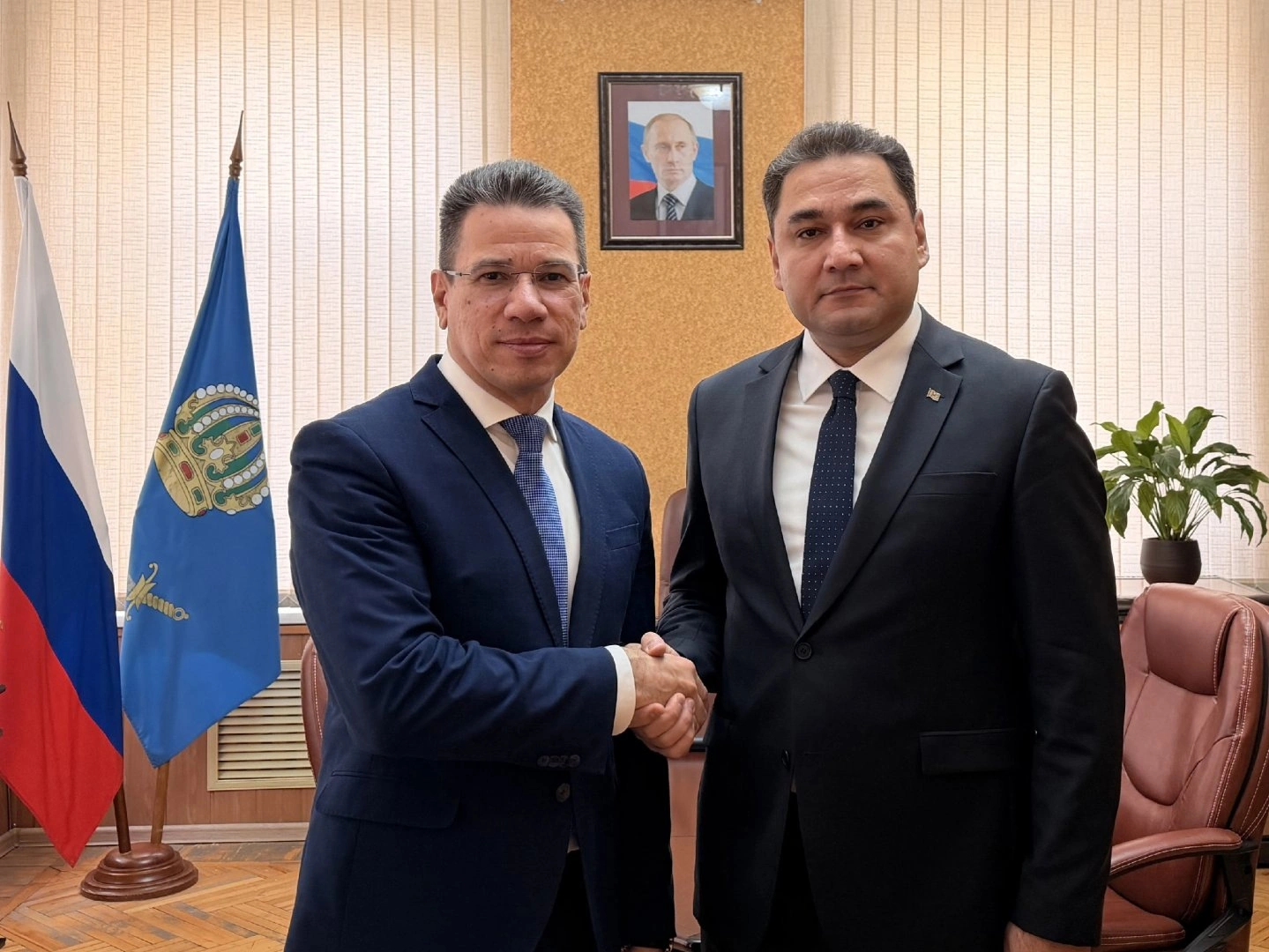
The talks were held during a meeting between Turkmenistan’s
Consul in Astrakhan Gadam Ilamanov and Astrakhan’s Minister of
External Affairs Vladimir Golovkov.
They also noted the cooperation between Astrakhan ports and
Turkmenbashi Port, shipbuilding and ship-repair enterprises, as
well as intermunicipal cooperation between the twin cities of
Astrakhan and Turkmenbashi.
During the conversation, the sides confirmed their mutual
commitment to strengthening bilateral ties. The parties also
discussed preparations for the upcoming session of the
Astrakhan-Turkmen joint council on entrepreneurship.
Cooperation between the Astrakhan Region and Turkmenistan has
been developing systematically since the late 2000s, after the
signing of an intergovernmental agreement on trade-economic,
scientific, and cultural cooperation in 2008.
A major boost came with the opening of Turkmenistan’s consulate
in Astrakhan in 2013 and the subsequent expansion of transport and
port interaction across the Caspian Sea. In recent years, ties have
deepened through cooperation between Astrakhan ports and the port
of Turkmenbashi, joint shipbuilding and ship-repair projects, and
coordination within the framework of the international transport
corridor North-South Transport Corridor.
Earlier, in January 2026, Russia’s Makhachkala Seaport also
expressed its willingness to strengthen cooperation with
Turkmenistan, Kazakhstan, and Kyrgyzstan in 2026 to redirect
Chinese cargo flows to the Trans-Caspian route.
The International North-South Transport Corridor (INSTC) is a
7,200 km multimodal network of ship, rail, and road routes
facilitating freight movement between India, Iran, Russia, and
Europe. It provides a 40% shorter and 30% cheaper alternative to
traditional routes like the Suez Canal, cutting transit times from
45-60 days to 20-25 days. Initially established by India, Iran, and
Russia in 2000, the corridor now includes several countries,
including Azerbaijan and Türkiye. It links the Indian Ocean and
Persian Gulf to the Caspian Sea via Iran, extending to St.
Petersburg and Northern Europe through Russia. The INSTC aims to
enhance trade connectivity and logistical efficiency, particularly
for containerized, grain, and textile shipments.
Stay up-to-date with more news on Trend News
Agency's WhatsApp channel