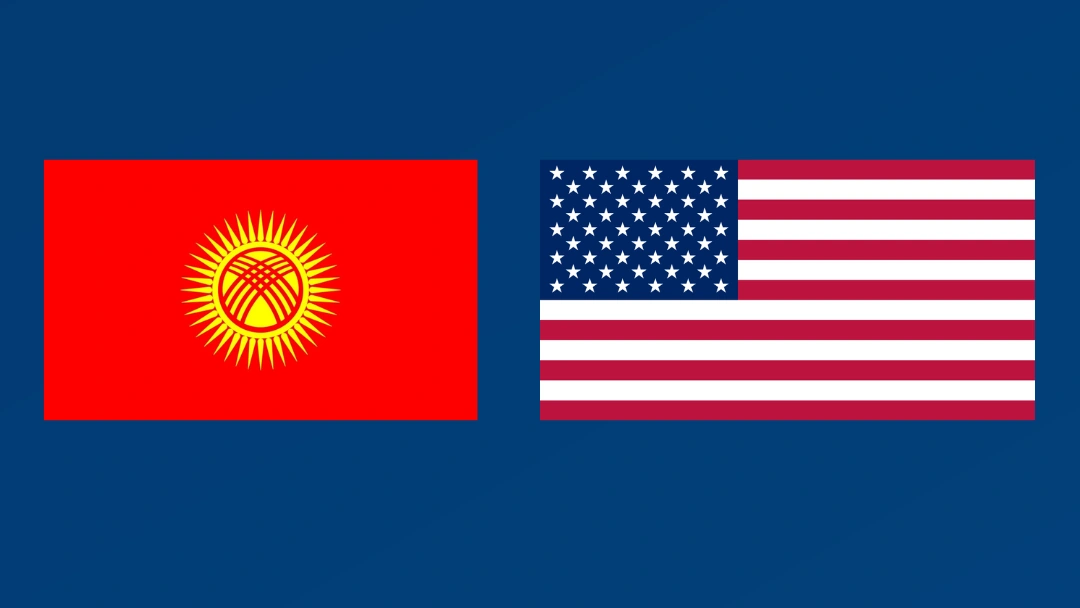
BAKU, Azerbaijan, February 19. In recent years,
the United States has steadily broadened its diplomatic, economic,
and institutional engagement with Kyrgyzstan, contributing to a
steady enhancement of its presence within the broader framework of
U.S. regional strategy in Central Asia.
Kyrgyzstan occupies a distinct position within this strategy.
The country exists within a complex regional landscape,
historically dominated by Russia’s influence, while China’s
economic footprint continues to grow, and the role of other
external and regional actors becomes increasingly significant.
Within this context, the U.S. approach toward Bishkek is not framed
by direct geopolitical competition but is instead driven by a
commitment to maintaining dialogue, fortifying institutional
resilience, and remaining actively engaged in shaping the region’s
long-term stability.
A recent meeting between Kyrgyz President Sadyr Japarov, U.S.
Special Envoy for South and Central Asia Ambassador Sergio Gor, and
representatives of American businesses highlighted Washington’s
growing economic and strategic interest in Kyrgyzstan.
President Japarov reaffirmed Kyrgyzstan’s commitment to a
multi-vector foreign policy and emphasized the country’s openness
to all investors. He noted that the arriving American delegation
was the largest in the history of Kyrgyz-American relations and
stressed the state’s readiness to provide comprehensive support to
business.
For his part, Special Envoy Sergio Gor noted that the United
States previously did not have the opportunity for such close
engagement with the region, and that new prospects for economic
cooperation are now opening up. He highlighted the importance of
the private sector, including major companies such as Boeing,
Coca-Cola, Franklin Templeton, GE Healthcare, and Mooney Group,
which intend to develop joint projects in Kyrgyzstan.
The sides in the meeting also discussed Kyrgyzstan’s strategic
position and its potential for regional cooperation. The United
States expressed its readiness to expand tools supporting
investment engagement, viewing the current discussions as a
launching platform for further cooperation.
A defining feature of current U.S. policy is its emphasis on
economic sustainability, human capital development, and support for
reform initiatives. These priorities are advanced through
diplomatic efforts, technical assistance programs, and
collaboration with international financial institutions.
In contrast to previous periods when security and logistics were
paramount, today’s engagement increasingly centers on economic
issues, energy, and water resources. Potential trajectories for the
evolution of bilateral relations include strengthening economic
ties through accelerated infrastructure projects and enhanced
trade, positioning Kyrgyzstan as a regional hub for collaborative
initiatives with neighboring countries, and expanding institutional
cooperation in areas such as governance, energy, and digital
infrastructure. However, it remains possible that U.S. involvement
could remain confined to select investment projects, without
leading to significant shifts in the region’s broader dynamics.
The meetings held in Bishkek underscore Washington’s strategic
approach to deepening its presence in Central Asia, where business
initiatives and institutional dialogue serve as central tools of
engagement.