BAKU, Azerbaijan, February 18. The Middle
Corridor is one of the key instruments for unlocking the potential
of Central Asia and presenting the region to the global community,
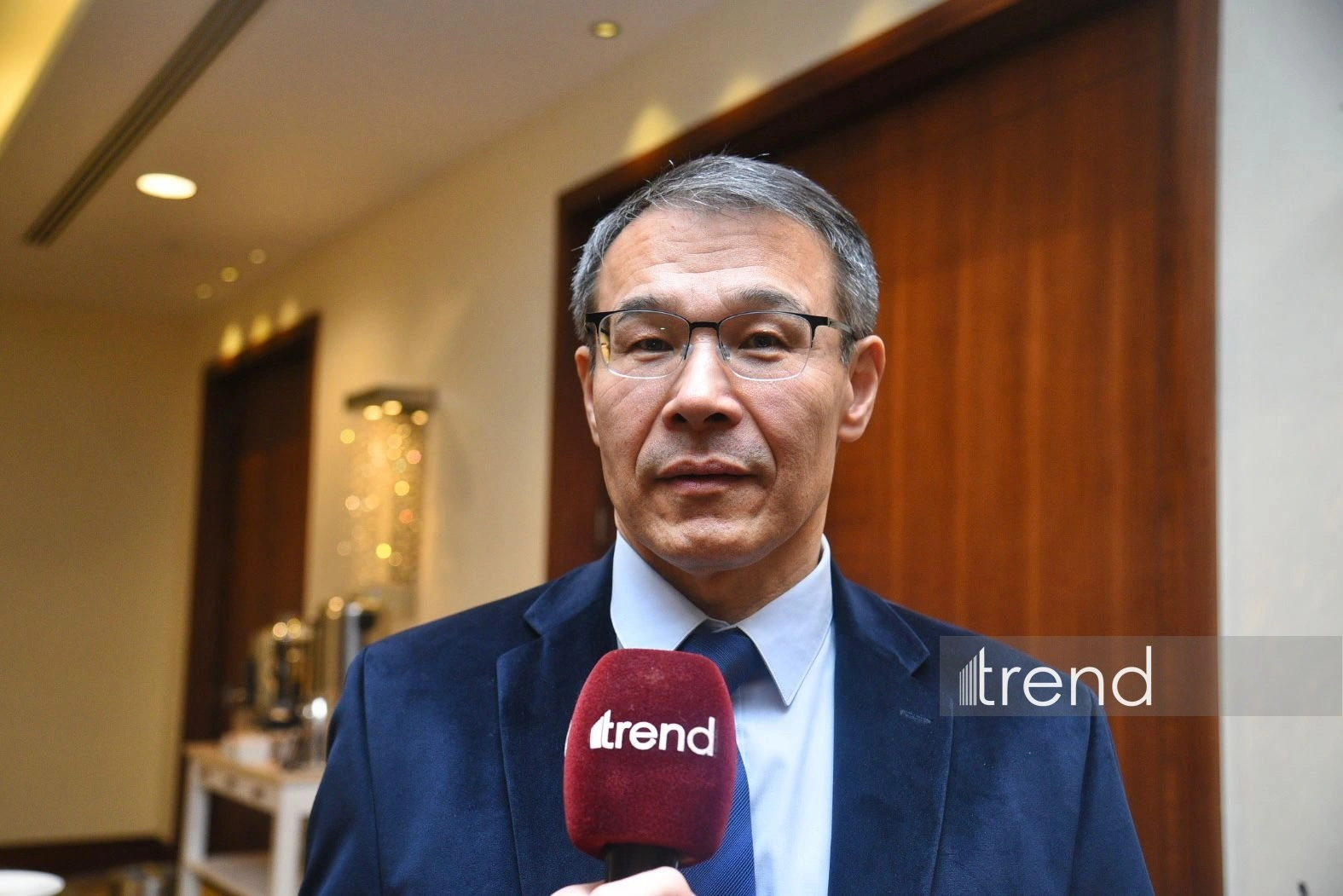
Kyrgyz political analyst and public administration expert Sheradil
Baktygulov said in an interview with Trend on the sidelines of the international
conference titled “C6: One region, shared future—enhancing
strategic dialogue” held in Baku.
According to Baktygulov, the Middle Corridor, winding its way
through Azerbaijan, opens up a world of unique opportunities for
all the countries involved.
“This is more than just territorial, political, economic, or
social convergence; it is a dynamic process already in motion and
set to grow further. The Middle Corridor’s primary mission is to
foster mutually beneficial business cooperation, driving prosperity
for the communities and nations along its route,” he noted.
He stressed that the creation and development of the route is a
logical continuation of efforts dating back to the 18th and 19th
centuries. While such ties existed previously within the framework
of the Soviet Union, the emergence of sovereign states introduced
borders, tariffs, and trade barriers.
Baktygulov added that the restoration of security and
constitutional order in Azerbaijan’s territories liberated from
occupation has opened new prospects for the corridor’s
implementation.
“The Russia-Ukraine crisis has become a trigger for accelerating
cooperation. The office of the Transport Corridor
Europe-Caucasus-Asia (TRACECA), which is part of the Middle
Corridor, is located in Baku, although its route initially passed
through existing cargo points. Since then, the transport and
logistics landscape in Central Asia and the South Caucasus has
changed significantly,” he said.
The expert emphasized that the Middle and Southern corridors
complement rather than compete with each other.
“The volume of cargo from China, Europe, and other countries is
enormous. The land route complements air transportation, which
usually passes through Istanbul with the participation of Turkish
operators. We are now talking about creating a mixed multimodal
corridor using rail, road transport, and Ro-Ro ferries across the
Caspian Sea. This opens up new opportunities to strengthen regional
connectivity,” Baktygulov stated.
He also noted that most Central Asian countries are landlocked.
For example, he says Uzbekistan faces the challenge of traversing
the land borders of two countries to access the ocean, underscoring
the strategic significance of developing alternative transport
routes, such as the Middle Corridor, for the entire region.
The Middle Corridor is a transport trade route passing through
several countries in the region and connecting Asia with Europe. It
serves as an alternative to the traditional Northern and Southern
corridors.
The route begins in China and passes through Central Asian
countries such as Kazakhstan, Uzbekistan, and Turkmenistan. It then
crosses the Caspian Sea, Azerbaijan, Georgia, and Türkiye before
reaching Europe. The Middle Corridor is a land-based route that
bypasses longer maritime paths, linking eastern parts of Asia,
including China, with Europe.
On February 18, Baku played host to the international conference
"C6: One region, shared future—enhancing strategic dialogue." At
the event, which was hosted by the AIR Center, the topic of
discussion was the potential expansion of the Central Asian
consultative platform from the current "C5" (Kazakhstan,
Kyrgyzstan, Tajikistan, Turkmenistan, Uzbekistan) to "C6" with the
addition of Azerbaijan.
Stay up-to-date with more news on Trend News
Agency's WhatsApp channel