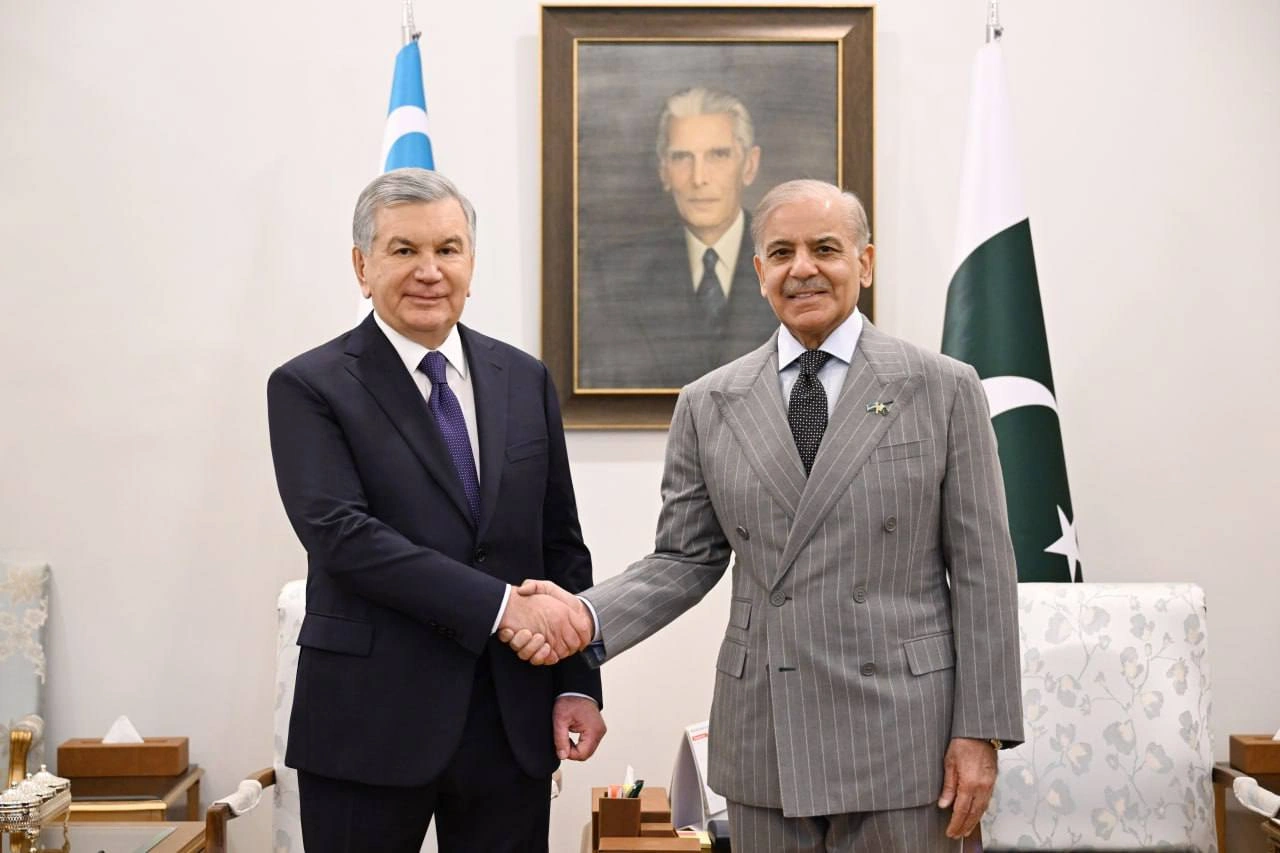
BAKU, Azerbaijan, February 10. The state visit
of President of Uzbekistan Shavkat Mirziyoyev to Pakistan, which
wrapped up on February 6, turned out to be a significant milestone
in the journey of bilateral relations in recent years. Following
the talks, the parties signed over 30 documents, signaling their
commitment to shift from mere political statements to tangible
steps in enhancing cooperation.
The importance of the visit is highlighted by the ongoing
reassessment of transport routes throughout Eurasia. Uzbekistan, a
landlocked nation, is keenly exploring innovative logistics
corridors to lessen reliance on conventional routes and enhance
access to global markets. Tashkent perceives Pakistan as a vital
southern gateway, leveraging the strategic ports of Karachi and
Gwadar.
For Pakistan, enhanced relations with Uzbekistan translate to
greater transit flows, improved use of port infrastructure, and a
more prominent position as a vital connector between Central and
South Asia.
A key element of the transport agenda was the
Uzbekistan-Afghanistan-Pakistan railway project, which is expected
to create a direct overland corridor between Central Asia and
Pakistan’s maritime terminals.
“The Trans-Afghan railway is of strategic importance for all of
Eurasia. This corridor will improve trade, support Afghanistan’s
economic recovery, and open new routes to global markets through
southern ports,” Uzbekistan’s Foreign Minister Bakhtiyor Saidov
stated after the signing of the document.
In July 2025, Uzbekistan, Pakistan, and Afghanistan signed a
framework agreement on preparing a feasibility study. In February
2026, Tashkent approved the corresponding international treaty.
The railway line, stretching approximately 647 km, will traverse
the Termez-Naibabad-Maidanshahr-Logar-Kharlachi route and
seamlessly connect to Pakistan’s network, ultimately reaching the
bustling port of Karachi. The initial estimate for the project's
cost stands at $4.6 billion.
Anticipated to revolutionize logistics, this route will slash
cargo delivery times from the existing 35-40 days down to an
impressive 3-5 days, all while significantly cutting transportation
costs. Uzbekistan’s Ministry of Transport projects that freight
volumes may soar to between 15 and 20 million tons annually by the
years 2035 to 2040.
However, the question remains whether the countries will be able
to turn their lofty ambitions into tangible infrastructure. Experts
note that the primary factor of uncertainty continues to be the
security situation in Afghanistan. Stability and guarantees for
protecting infrastructure will determine not only construction but
also the long-term operation of the corridor.
Securing funds is yet another hurdle to jump over. The project
requires billions of dollars in investment, the lure of global
investors, and safety nets to guard against political and business
pitfalls. Technical standards, tariffs, and customs procedures
among the three countries will also need to be harmonized;
otherwise, the expected benefits of shorter delivery times may
prove limited.
At the same time, the sides agreed to develop a new multimodal
route “Pakistan-China-Kyrgyzstan-Uzbekistan.” This corridor is
intended to connect the port of Karachi with Uzbekistan’s Andijan
region via China’s Kashgar and Kyrgyzstan’s Osh, providing Central
Asia with an additional outlet to maritime trade routes.
The parties announced that pilot shipments would begin as early
as February, demonstrating their desire to move quickly toward
practical steps. While the Trans-Afghan railway is seen as the most
direct access to southern ports, the route through China and
Kyrgyzstan could serve as an additional diversification option. At
the same time, it requires complex coordination among several
states, infrastructure development, and proof of economic
competitiveness in practice.
Beyond transport, the visit was also rich in economic
agreements. Uzbekistan and Pakistan set a goal of increasing trade
turnover to $2 billion within the next five years. Trade is already
showing growth: from around $300 million in 2023 to nearly $446
million by the end of 2025, with Uzbek exports expanding at a
faster pace.
To achieve new targets, a joint business forum was held during
the visit, attended by the leaders of both countries and more than
300 company representatives. For the first time, a Protocol of
Achieved Agreements was signed, outlining implementation timelines
and assigning responsibility to relevant agencies.
Key focus areas encompass agriculture, textiles,
pharmaceuticals, the chemical sector, construction materials,
logistics, and port services. The parties also decided to broaden
the range of products included in the preferential trade agreement
and to leverage Uzbekistan’s trade houses in Lahore and Karachi
more effectively.
Investment cooperation remains another driver of relations. Over
the past eight years, the number of enterprises with Pakistani
capital in Uzbekistan has grown 6.5 times, reaching around 230.
During the visit, a portfolio of joint projects worth $3.5 billion
was formed, along with an agreement to establish an Uzbek–Pakistani
Business Council and expand support for small and medium-sized
enterprises.
The regional agenda was also a key piece of the puzzle. The
sides supported the initiative to hold the first Forum of Regions
already this year, with the inaugural meeting proposed to take
place in Uzbekistan’s Khorezm region, which would accelerate the
launch of joint projects.
President Mirziyoyev’s visit to Pakistan demonstrated the
determination of both countries to strengthen cooperation and move
toward concrete joint initiatives. The spotlight was firmly on
forging fresh trade and transport pathways that could link Central
Asia with the southern ports of Pakistan. Meanwhile, the
fundamental concern is whether the parties can carry out these
massive projects in light of the ongoing financial and security
threats.