BAKU, Azerbaijan, January 19. The power of
states is no longer measured solely by political and economic
resources in the modern international relations system. The knack
for people to showcase themselves, the safeguarding and advancement
of national values on the world stage, and the rallying of diaspora
potential have emerged as the cornerstone of public diplomacy.
In recent years, Azerbaijan has been among the countries
implementing consistent and purposeful policies in this field. The
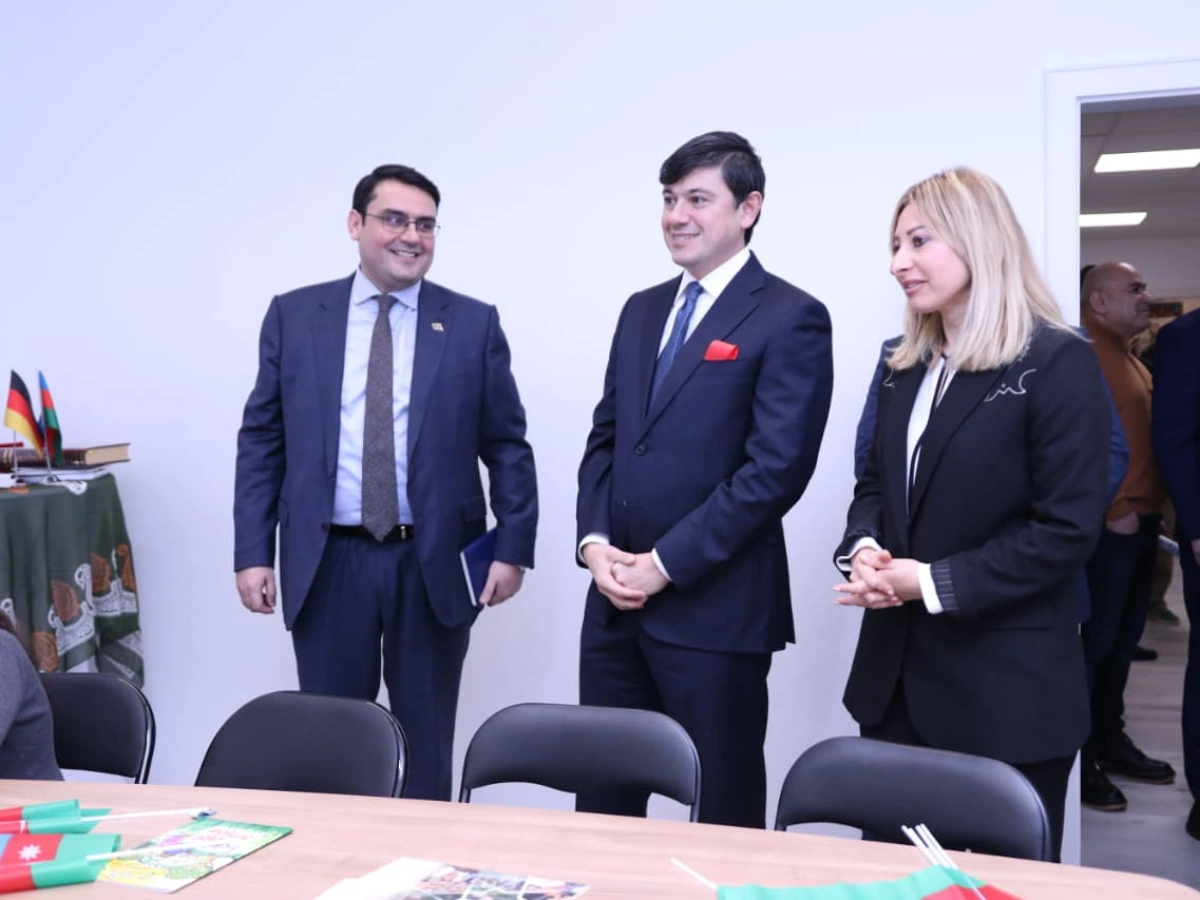
opening of the next Azerbaijan House and the Azerbaijani school
under its roof in Stuttgart, Germany, is an important example that
demonstrates the continuous and systematic nature of this
policy.
The establishment of the Azerbaijan House in a strategically
significant European city like Stuttgart is not just the opening of
a cultural center but a practical result of Azerbaijan's public
diplomacy line. This step shows that the Azerbaijani state does not
approach its relations with compatriots living abroad formally but
rather views these relations as part of a long-term national
strategy. If the main goal of public diplomacy is to influence the
formation of international public opinion, Azerbaijan Houses serve
as one of the most effective platforms for realizing this goal.
The activities carried out by the State Committee on Work with
Diaspora in recent years show that the concept of diaspora is not
merely an emotional connection built on nostalgic ties but is seen
as an active subject in protecting and promoting national
interests. The modern diaspora policy, formulated under the
leadership of President Ilham Aliyev, is based on this approach.
The organization of Azerbaijanis abroad, their unification around a
single idea, and their active participation in the public and
political life of the countries they live in are among the priority
areas of state policy.
In this regard, the Azerbaijan House in Stuttgart fulfills both
coordination and representation functions. Alongside safeguarding
the nation's culture, language, history, and traditions, it also
paints a picture of Azerbaijan's contemporary development model and
its significance in both the region and the global arena for the
local community. This demonstrates that the "soft power"
mechanisms, which are one of the most important elements of public
diplomacy, are functioning effectively in practice.
One particularly noteworthy aspect is the operation of weekend
schools under the Azerbaijan Houses. For third- and
fourth-generation diaspora representatives, not forgetting their
mother tongue and maintaining their national identity is no longer
just a cultural issue but a process of strategic importance. In an
era of accelerating globalization, these schools play a crucial
role in preserving national memory, especially for diaspora youth
facing the risk of assimilation. The application of this model in
Stuttgart, a place where Azerbaijanis live compactly, is no
coincidence and is the result of the planned activities of the
State Committee for Work with the Diaspora.
The attention and care shown by the Azerbaijani state to its
diaspora is not limited to organizational support. Teaching
materials, textbooks, methodological materials, and online
platforms ensure the uninterrupted operation of schools abroad.
These initiatives demonstrate that Azerbaijan is forging
connections with the diaspora not through the usual channels, but
by harnessing the power of modern technology.
The opening of the Azerbaijan House in Stuttgart is also an
important event in terms of strengthening unity within the
diaspora. The participation of compatriots from various countries
in Europe and from different cities of Germany in this event
demonstrates that the diaspora network has expanded beyond a
regional framework to a broader scale. Such platforms unite
individual initiatives around a common goal and systematize
diaspora activities.
Cultural diplomacy holds a special place in the activities of
Azerbaijan Houses. Azerbaijani culture is showcased through
exhibitions, concerts, and literary-artistic events, reaching not
just fellow countrymen but also the local community at large. This
helps eliminate stereotypes about Azerbaijan and forms an objective
and comprehensive understanding of Azerbaijan. The cultural events
organized in Stuttgart further prove that Azerbaijani culture is in
harmony with universal values and generates interest in the
international space.
Today, the 32 Azerbaijan Houses operating in 20 countries and
the more than 90 weekend schools in 24 countries demonstrate the
broad geographical reach of Azerbaijan's public diplomacy. Behind
these numbers lie not only statistical indicators but also a
well-thought-out state policy, consistent institutional support,
and reliable partnership with the diaspora. The expansion of this
network, as recommended by the head of state, indicates that the
diaspora policy of Azerbaijan will continue to be a priority in the
future.
In conclusion, the opening of the Azerbaijan House and weekend
school in Stuttgart is an event that goes far beyond a ceremonial
framework, carrying strategic significance. This step is a vivid
manifestation of the sustained success of Azerbaijan's public
diplomacy, the effective model formed in diaspora relations, and
the systematic care provided by the state for its compatriots
abroad. Such initiatives contribute to the strengthening of
Azerbaijan's international position, the more robust defense of
national interests in the global space, and the transfer of
Azerbaijani identity to future generations.
Stay up-to-date with more news on Trend News
Agency's WhatsApp channel