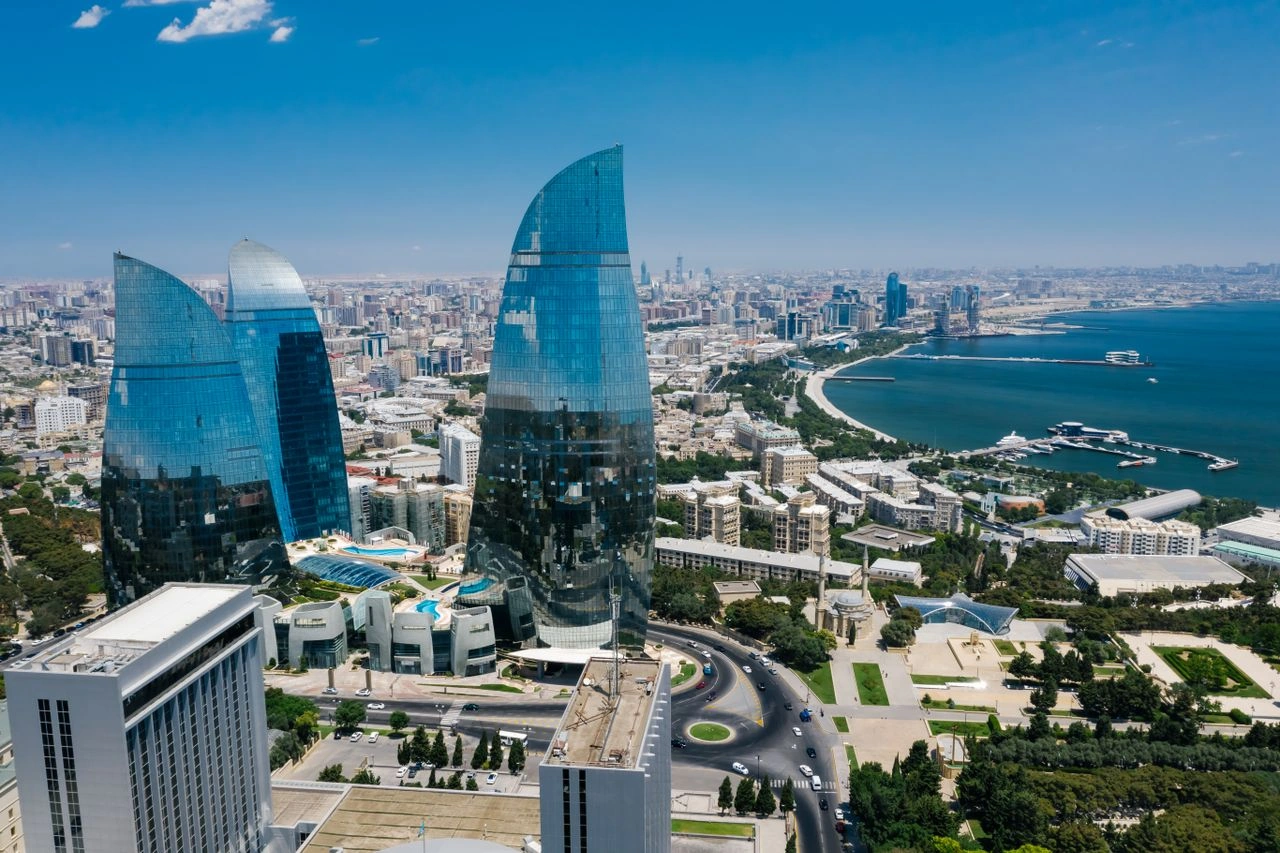
BAKU, Azerbaijan, September 21. Uzbekistan is
expanding its transport and logistics infrastructure around the
Caspian Sea and Baku as part of a broader effort to strengthen
access to European markets and develop the China-Central
Asia-Caspian Sea-Caucasus-Europe route.
This was stated by the press service of the Uzbek President
following President Shavkat Mirziyoyev’s review of a presentation
on major transport and logistics projects designed to increase
Uzbekistan’s transit capacity and expand its international trade
routes.
Particular attention was given to the development of logistics
infrastructure in which Uzbekistan participates at Baku, Aktau and
Turkmenbashi ports on the Caspian Sea, as well as at Poti and
Anaklia on the Black Sea.
The presentation noted that an agreement has already been signed
to establish a logistics center at the Port of Poti, with a
feasibility study currently being prepared. Uzbekistan is also
studying opportunities to participate in the development of the
Anaklia port.
The Caspian route is part of Uzbekistan’s efforts to diversify
access to international markets and strengthen connections between
Central Asia and Europe. Earlier Uzbek government planning
identified Alat, where the Port of Baku is located, as a gateway to
the Middle Corridor, with logistics infrastructure intended to
support China-Central Asia-Caspian Sea-Caucasus-Europe routes.
Uzbekistan has also emphasized the importance of using the
capacities of the Baku and Turkmenbashi ports and developing modern
logistics infrastructure and ferry services across the Caspian Sea.
The three-country cooperation between Uzbekistan, Azerbaijan and
Turkmenistan has included discussions on expanding transit
corridors, coordinating tariffs and improving cargo flows through
the Caspian.
The presentation in Tashkent said these projects are intended to
diversify routes for Uzbek exports, including textiles, chemical
products, agricultural goods and mining and metallurgical products,
while improving the country’s access to international markets.
Uzbekistan is also planning to expand its domestic network of
logistics centers and terminals to make more effective use of
international corridors. Seventeen projects are planned in Tashkent
city and the Tashkent, Andijan, Surkhandarya and Bukhara
regions.
“Uzbekistan has broad opportunities to become a major land
transport hub connecting East and West,” the presidential
administration said, emphasizing the strategic importance of
developing international transport corridors and logistics
infrastructure.
The broader transport program targets a doubling of transport
services by 2030, with $9.1 billion in investment planned for the
sector and transport-services exports expected to reach $5.7
billion.
For Uzbekistan, the development of the Caspian route offers an
additional channel to connect its landlocked economy with the South
Caucasus and European markets through Azerbaijan and the Port of
Baku, while strengthening the country’s role in transcontinental
supply chains.