BAKU, Azerbaijan, July 23. Kazakhstan produced
a record 99.6 million tonnes of oil in 2025, while ongoing refinery
expansion projects and efforts to optimize export routes are
shaping the country's long-term energy strategy.
This is reflected in the statement published by the government
of Kazakhstan.
Kazakhstan's 2026 oil production plan is set at 98 million
tonnes, slightly below the 2025 level. In the first half of 2026,
crude oil output reached 45.7 million tonnes, putting production on
a trajectory close to the annual target.
Gas production increased by 15% in 2025 to 68.2 billion cubic
meters, while the 2026 target is set at 62.8 billion cubic meters.
During the first half of 2026, Kazakhstan produced 31.9 billion
cubic meters of gas. The country also continues expanding renewable
energy capacity, with seven out of 10 planned renewable energy
projects for 2026 already commissioned, accounting for 212 MW of
the targeted 245.8 MW.
At the same time, Kazakhstan is accelerating efforts to increase
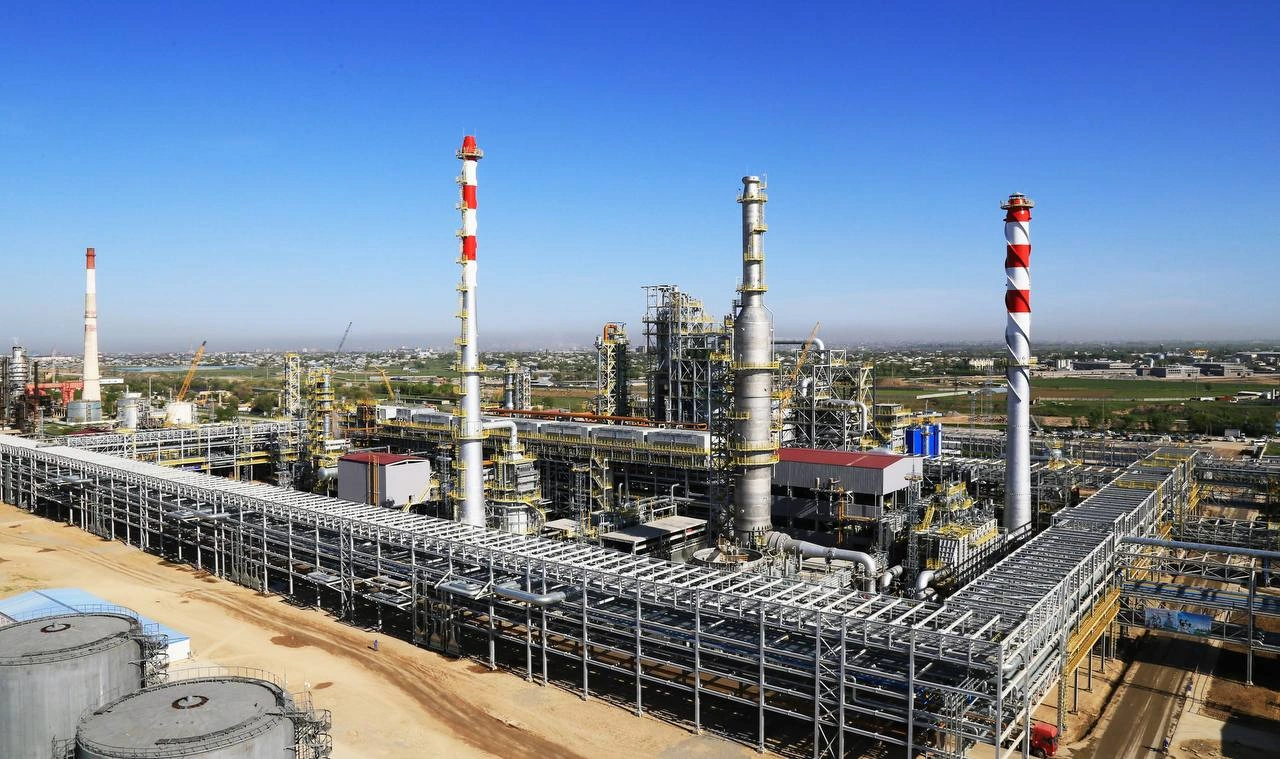
domestic oil processing capacity. Under the Concept for the
Development of the Oil Refining Industry through 2040, the country
plans to expand major refineries, including the Pavlodar
Petrochemical Plant from 5.5 million tonnes to 9 million tonnes per
year, the Shymkent refinery from 6 million tonnes to 12 million
tonnes, and the Atyrau refinery from 5.5 million tonnes to 6.7
million tonnes. A feasibility study is also being prepared for a
new refinery with a capacity of 10 million tonnes per year.
If implemented, these projects could increase Kazakhstan's total
refining capacity from around 17 million tonnes to approximately
37.7 million tonnes annually.
Trend's analysis
shows that Kazakhstan's energy strategy is increasingly focused on
balancing three priorities: maintaining oil production growth,
expanding domestic processing capacity, and improving the
flexibility of export logistics.
The record 2025 production figure reflects the impact of
expanded output at major fields, particularly Tengiz. However, the
slightly lower 2026 production target indicates a more moderate
growth trajectory as large-scale projects move from construction
and ramp-up stages toward stable operations.
The expansion of refining capacity represents a longer-term
shift toward greater domestic value addition. Kazakhstan currently
exports most of its crude production, while some refined products
remain dependent on imports. Increasing processing capacity could
reduce this dependence and strengthen the country's position in
regional fuel markets.
The logistics component is also becoming increasingly important
as Kazakhstan seeks to diversify export options. Deputy General
Director for Commercial Affairs at KMG Kashagan B.V. Kuanysh
Keskinbayev told Trend that Kazakhstan and Azerbaijan are working to
optimize oil supply chains and increase transit volumes through the
Caspian route.
"We have a general agreement under which we operate. Under this
agreement, we are constantly working to increase transit volumes.
However, frankly speaking, the most important issue is the
economics of the route. Because it's a very long, multimodal route,
we are currently actively working to resolve this issue,"
Keskinbayev said.
According to him, current supplies through Azerbaijan include
nearly 250,000 tonnes of oil annually from the Kashagan field and
around 1.5 million tonnes from Tengiz.
He also noted that the expansion of Tengiz production capacity
remains one of the key factors affecting Kazakhstan's future oil
balance. "As part of the expansion, a third-generation plant was
launched at Tengiz, which increased production by 10-11 million
tonnes per year," Keskinbayev said.