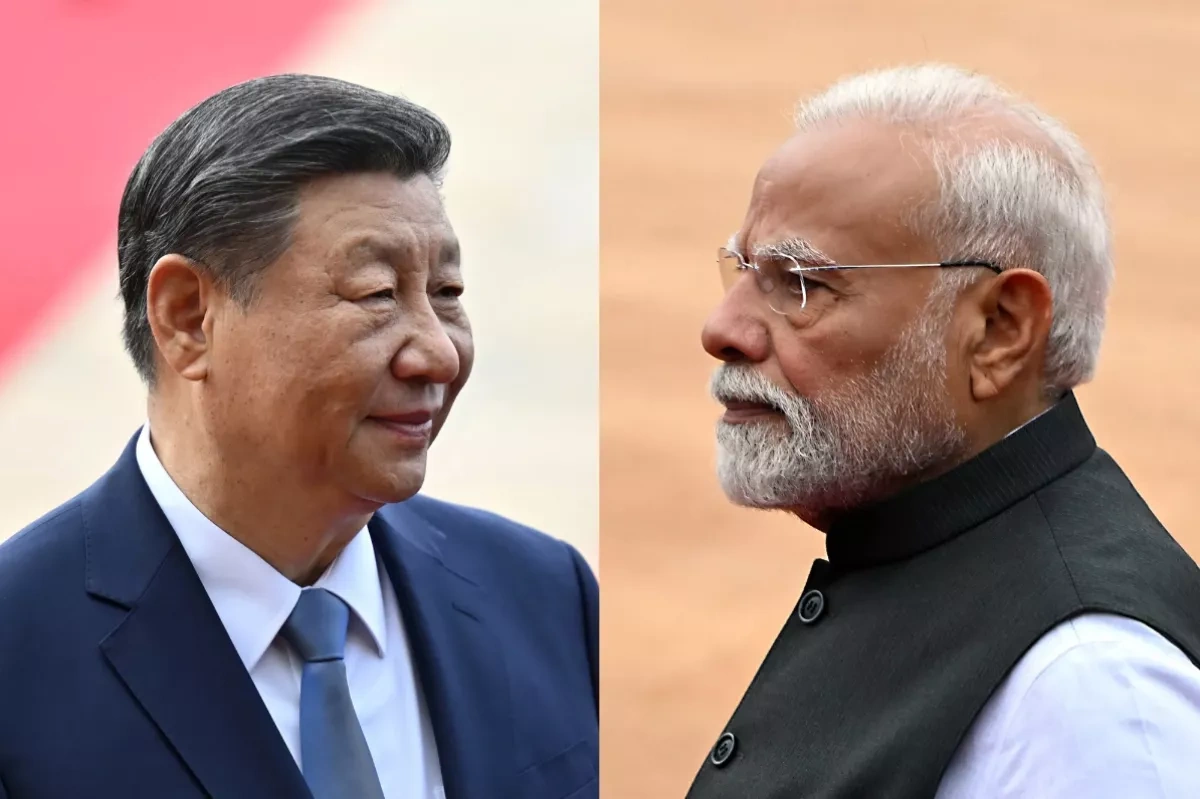
China and India have signaled a cautious rapprochement as Chinese President Xi Jinping and Indian Prime Minister Narendra Modi met on the sidelines of the BRICS summit in Delhi, while Beijing unveiled a series of initiatives aimed at deepening cooperation within the expanding bloc, The Independent reports.
Xi and Modi held talks on September 12, with the Chinese leader emphasizing Beijing's longer-term strategic approach to its relationship with New Delhi. He urged the two countries to capitalize on their respective strengths, provide mutual support and work together toward shared development goals.
The Chinese president further advocated “high-quality cooperation”, arguing that the two major Global South powers should work toward a multipolar international order while helping advance peace and stability worldwide.
For his part, Modi linked the future of bilateral relations to stability along the countries' disputed frontier, stressing the importance of maintaining peace and tranquillity there. India's foreign ministry said the two governments had again committed themselves to reaching a fair and mutually acceptable solution to the boundary dispute.
“Differences should not become disputes,” Modi said, stressing that “both sides must be guided by three mutuals: mutual respect, mutual sensitivity and mutual interest.”
The discussions also covered efforts to strengthen commercial and societal ties, with the leaders addressing trade imbalances as well as supply-chain challenges and access to each other's markets.
The renewed engagement between the two Asian powers unfolded alongside China's push to give BRICS cooperation a broader and more practical dimension. At the September 13 summit in Delhi, Xi presented proposals spanning artificial intelligence, trade and investment and introduced what he described as the “Greater Brics Initiative”, saying its success would rest on a strong foundation for practical cooperation.
As part of that effort, Beijing plans to lead the creation of a Brics AI Open Source Zone, designed to encourage collaboration in areas including large language models, AI training and the development of an open ecosystem. Xi additionally put forward a partnership focused on Brics Special Economic Zone and announced that China would organize a Brics Service Trade Forum next year to encourage closer commercial and investment relations.
The proposals reflect the bloc's broader ambition to develop cooperation not only in economic and financial affairs but also in political and security matters. India currently holds the BRICS chairmanship, with China set to assume the role in 2027.
The grouping initially brought together Brazil, Russia, India, China and South Africa. It has since expanded to include Egypt, Ethiopia, Indonesia, Iran and the UAE as full members, while Cuba, Belarus, Bolivia, Kazakhstan, Malaysia, Nigeria, Thailand, Uganda, Uzbekistan and Vietnam participate as partner countries.
The enlargement has significantly extended BRICS' presence across the Global South, although its members continue to have differing priorities and interests.
Modi had earlier argued at the summit that solutions emerging from BRICS should have a wider reach and benefit developing countries beyond the bloc itself.
Xi's participation was particularly significant given that it marked his first trip to India since 2019. His visit came after a prolonged period of strained relations between Beijing and New Delhi following a deadly military confrontation along their disputed Himalayan border in 2020.
By Jeyhun Aghazada