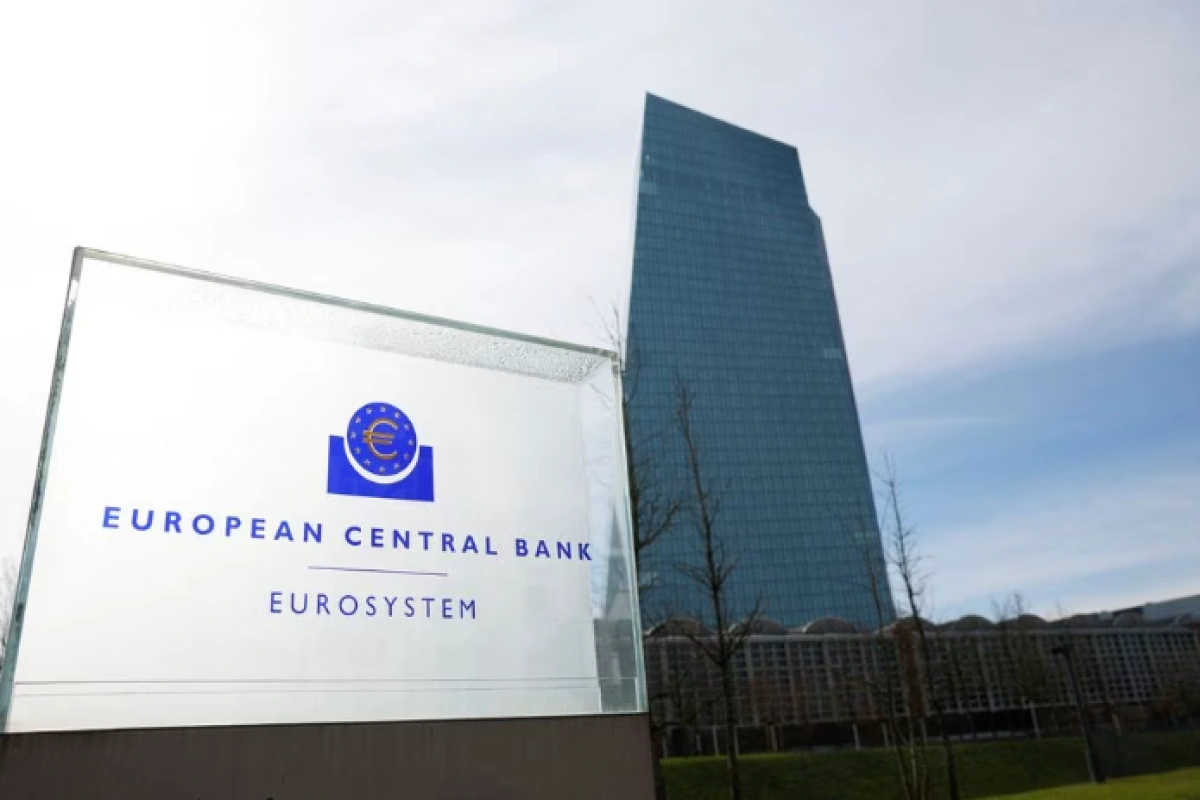
BAKU, Azerbaijan, October 29. The European
Central Bank (ECB) decided to keep its three key interest rates
unchanged at its meeting on October 29, 2026.
This was announced by the ECB.
Under the decision, the interest rate on the deposit facility
remains at 2.5%, the rate on the main refinancing operations at
2.65%, and the rate on the marginal lending facility at 2.9%.
According to the ECB, the continued rise in energy prices
increases inflation risks and creates downside risks for the
economic growth outlook. While the full impact of the energy shock
has yet to materialize, core inflation has remained generally
stable so far, and no significant changes in wages have been
observed at this stage.
The bank believes that a more severe and prolonged energy shock,
along with its indirect impacts and second-round effects, could
lead to higher inflation and weaker economic growth.
Furthermore, financing conditions have tightened since the last
meeting of the ECB’s Governing Council. This factor is expected to
have a negative impact on both inflation and economic growth.
ECB prioritizes reaching 2% inflation
target
The ECB’s Governing Council has expressed its commitment to
adjusting monetary policy to ensure that inflation stabilizes at
the 2% target level in the medium term.
The institution noted that, despite high levels of current
uncertainty, there remains scope to make decisions appropriate to
the situation. Future decisions regarding interest rates will be
evaluated on a meeting-by-meeting basis and will be based on
incoming economic and financial data.
In this process, consideration will be given to inflation
outlooks and associated risks, the dynamics of core inflation, and
the effectiveness of the monetary policy transmission mechanism.
The ECB emphasized that it hasn’t made any pre-commitments
regarding the future trajectory of interest rates.
Policy on asset purchase programs remains
unchanged
According to the ECB, portfolios under the Asset Purchase
Programme (APP) and the Pandemic Emergency Purchase Programme
(PEPP) are declining at a gradual and predictable pace. This is due
to the non-reinvestment of principal payments from maturing
securities.
The institution also expressed its readiness to utilize all
available instruments within its mandate to maintain price
stability and ensure the effective transmission of monetary policy
to the economy.
Furthermore, the ECB’s Transmission Protection Instrument (TPI)
can be deployed to counter unwarranted, disorderly market dynamics
that pose a serious threat to the transmission of monetary policy
across individual eurozone countries.