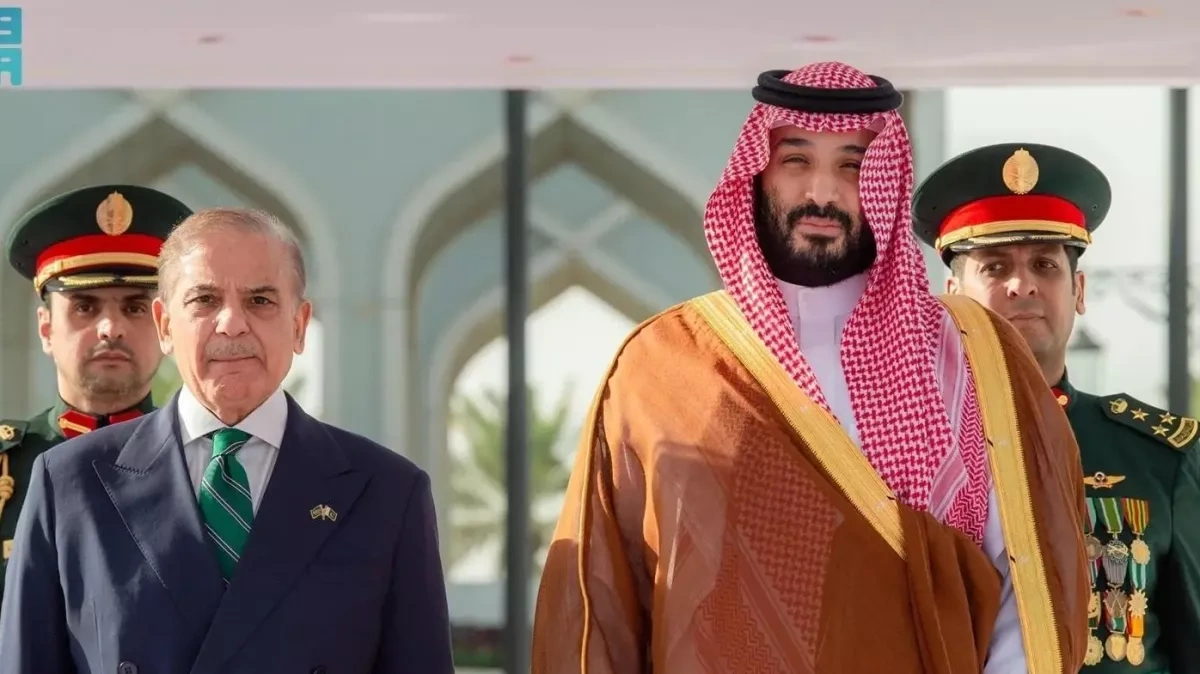
Pakistan has been a key mediating force in several conflicts over the recent months, particularly by serving as a backchannel for Washington with access to Tehran. It has also been a defense partner of Riyadh, but that relationship is now facing a difficult test by this week’s developments in Yemen.
Fighting between Yemen’s Iran-backed Houthi movement and Saudi forces represents the first major test of the mutual defense alliance signed between Pakistan, Saudi Arabia and Türkiye last month, as an analysis published by The Japan Times observes.
The deal was signed against the backdrop of a preexisting pact between Islamabad and Riyadh. Under the arrangement, an armed attack on any one of the three countries is to be regarded as an attack on all.
Pakistani officials are concerned that the Houthi threat could be more likely to draw Islamabad into a war than Iranian missile strikes on Saudi energy infrastructure earlier this year.
Pakistani soldiers are deployed near the Saudi border with Yemen, two Pakistani officials said in July, the article cites, which is increasing their direct exposure.
Defense deals with Gulf nations have been a key part of Pakistan’s plans to boost its economy after years of crisis and have often been accompanied by parallel or subsequent talks on Gulf investments.
However, the Japanese outlets notes that Pakistan also relies on oil and gas shipments through the Strait of Hormuz and the Red Sea, routes that Iran and the Houthis have shown they can disrupt. This gives Islamabad reason to avoid alienating Tehran even as it deepens ties with Gulf states.
In the past, tensions between Iran and nuclear-armed Pakistan have at times escalated into deadly clashes. Two years ago, Iranian missile and drone strikes on alleged militant hideouts in Pakistan’s Balochistan province along their shared border prompted retaliatory attacks from Islamabad. The tensions briefly raised the prospect of a new conflict but soon subsided.
This time, Pakistan is seeking to prevent an escalation before it is too late. According to sources who spoke to Reuters, Pakistan hand-delivered a warning from Saudi Arabia to Tehran this week, urging Iran to rein in its Yemeni Houthi allies.
Pakistan Army Chief Field Marshal Asim Munir also held a call with Iranian Foreign Minister Abbas Araqchi on September 11 to discuss “ways to restore diplomatic efforts to de-escalate on all fronts“, a Pakistani source told Reuters.
“Pakistan is trying to keep a low profile in the Saudi-Houthi conflict because Pakistan’s own stakes are high,” a second Pakistani government official told Reuters. “It does not want to spoil relations with Iran.”
In a briefing on September 11, Pakistani Foreign Ministry spokesman Sajjad Haider Khan said no military response to the Houthi attacks was currently under discussion.
“Iran’s leadership has consistently appreciated Pakistan’s mediation efforts,” Khan said in response to a request for comment. “Pakistan has consistently opposed escalation and advocated restraint, dialogue and diplomacy.”
Pakistan, which has the world’s seventh-largest military by active personnel, had already deployed thousands of soldiers and a squadron of fighter jets to Saudi Arabia under the earlier defense arrangement. With troops also being deployed along Pakistan’s tense border with India and the country fighting multiple insurgencies in its western provinces, Islamabad is now trying to temper demands from other Gulf states seeking similar security guarantees.
After Pakistan and Saudi Arabia signed their initial defense pact last year, Kuwait pushed for a largely identical arrangement, according to four sources familiar with the negotiations. Pakistani officials, wary of deepening military ties with another Gulf state exposed to Iranian bombardment, scaled back the discussions, the sources said.
The two countries instead signed a narrower protocol in Islamabad last month covering training, border security and capacity-building, falling short of what Kuwait had hoped for.
During the same press event, Foreign Ministry spokesman Khan said there were currently no plans to expand the broader Pakistan-Saudi-Türkiye alliance to new members.
By Nazrin Sadigova