BAKU, Azerbaijan, July 18. The total output of
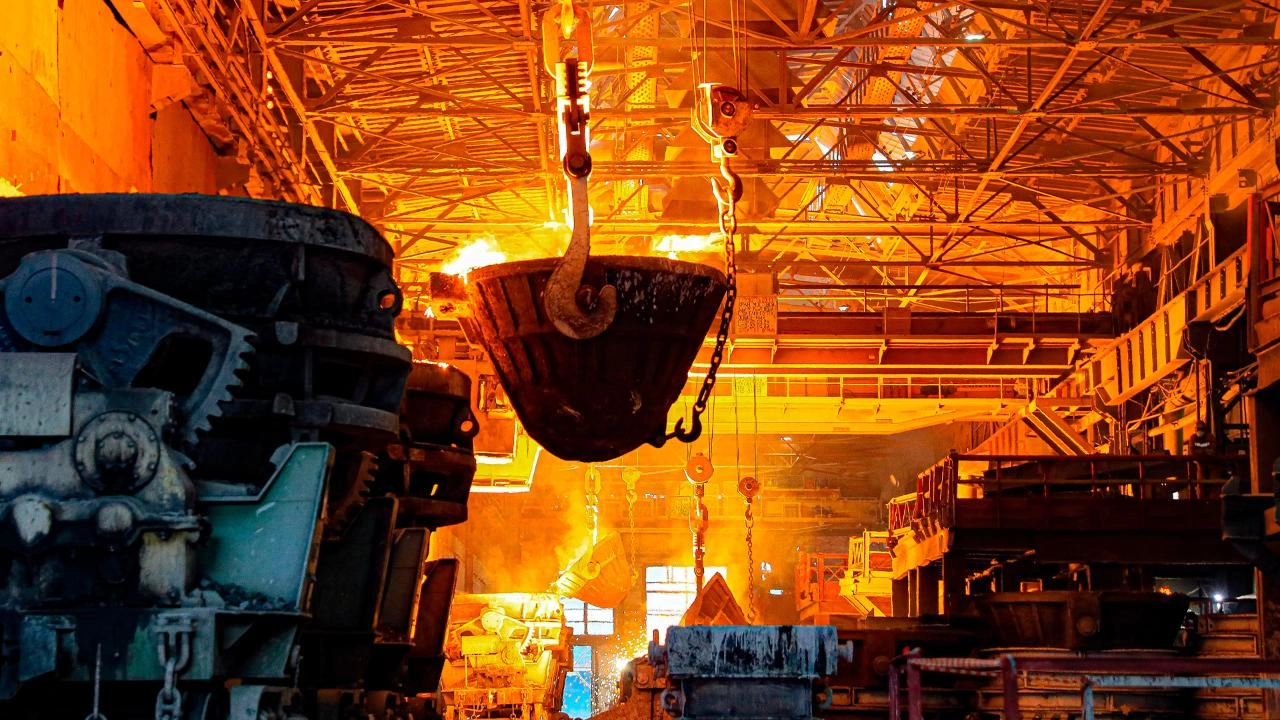
Uzbekistan’s metallurgical industry reached 151.8 trillion soums
(over $12.55 billion) during the first five months of 2026.
This is reflected in the data published by the Statistics Agency
of Uzbekistan.
According to statistics, the Navoi region emerged as the primary
hub of metallurgical production, accounting for the absolute
majority of the country's output with 100.2 trillion soums (nearly
$8.29 billion). This dominant position is followed by the Tashkent
region, which secured the second spot with an output of 38.1
trillion soums (over $3.15 billion).
The industry's geographical distribution then transitions to the
capital city, Tashkent, which generated 8 trillion soums (over
$661.98 million), followed closely by the Samarkand region with 3.7
trillion soums (nearly $306.17 million).
A mid-tier level of production was recorded in the Namangan and
Syrdarya regions, which contributed 538.1 billion soums (nearly
$44.53 million) and 477.6 billion soums (over $39.52 million),
respectively. These figures lead into a relatively close cluster of
regional outputs: the Jizzakh region registered 192 billion soums
(nearly $15.89 million), just slightly ahead of the Fergana region
at 190.8 billion soums (nearly $15.79 million) and the Bukhara
region at 132.3 billion soums (over $10.94 million).
The final tier of regional contributions begins with the
Surkhandarya region, which generated 86.8 billion soums (over $7.18
million), followed by the Republic of Karakalpakstan with 66.3
billion soums (nearly $5.49 million). The remaining output was
distributed among the Andijan region with 37.9 billion soums (over
$3.13 million), the Khorezm region with 19.6 billion soums (over
$1.62 million), and lastly, the Kashkadarya region, which concluded
the national list with 11.3 billion soums (nearly $935,014).
Trend's
analysis shows that the sector remains highly concentrated, with
the Navoi region alone accounting for around 66% of total output,
followed by the Tashkent region at roughly 25%. Together, these two
regions produce over 90% of the country’s metallurgical
products.
This heavy regional concentration highlights the
industry’s dependence on specific industrial hubs (particularly
those with access to raw materials and large enterprises). The
capital, Tashkent, and Samarkand contribute modestly, while most
other regions play marginal roles.
The data suggests continued growth in the sector,
which is one of the key pillars of Uzbekistan’s industrialization
strategy. However, the extreme geographic imbalance may pose risks
related to regional development gaps and vulnerability to local
disruptions. Further development of metallurgy in other regions
could help create more balanced economic growth across the
country.
Meanwhile, UK Export Finance (UKEF) told Trend that in accordance with
the Memorandum of Understanding signed between Uzbekistan and the
United Kingdom in February 2026, support from UK Export Finance
(UKEF) will focus on the implementation of priority projects with
high economic and social impact.
"These initiatives typically include large-scale
upgrades in transport networks, energy systems, utilities, public
infrastructure, and critical minerals," the company noted.