BAKU, Azerbaijan, July 17. Since the
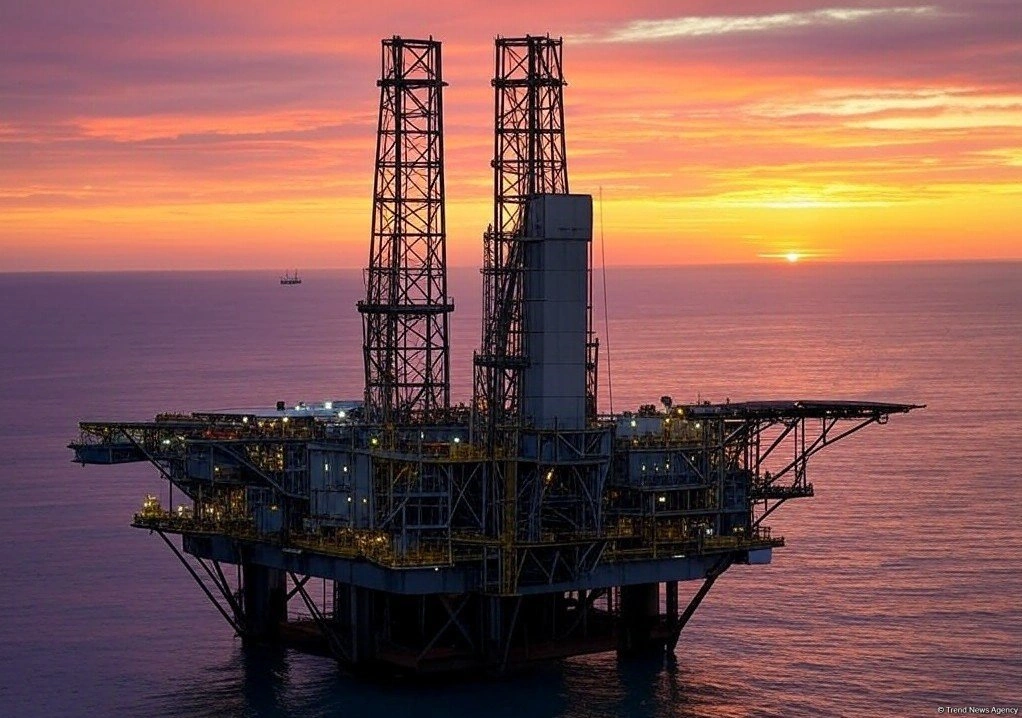
Azeri-Chirag-Guneshli and Shah Deniz fields began production,
approximately 679.8 million metric tons of oil (including gas
condensate) and 529.6 billion cubic meters of gas have been
produced up to July 1 of this year.
This was announced in a report by the Ministry of Energy of
Azerbaijan.
According to the ministry, over the reporting period, 625.6
million metric tons of oil and 251.1 billion cubic meters of gas
were produced from the Azeri-Chirag-Guneshli field, while
approximately 54.2 million metric tons of condensate and 278.5
billion cubic meters of gas were produced from the Shah Deniz
field.
The ACG project, operated by bp, is being implemented with the
participation of SOCAR, MOL, INPEX, ExxonMobil, TPAO, ITOCHU, and
ONGC Videsh.
The produced oil was transported via the Baku–Tbilisi–Ceyhan
(BTC) pipeline and the Western Export Pipeline through the
territories of Azerbaijan, Georgia, and Türkiye.
Based on the agreement “on the joint development of the ‘Azeri,’
'Chirag,‘ and the deep section of the ‘Guneshli’ fields,” signed on
September 20, 1994, production at the ACG began.
Preparations are also underway for a new phase in the
development of the “Azeri-Chirag-Gunesli” (ACG) field. bp’s
regional President for Azerbaijan, Georgia, and Türkiye, Gio
Cristofoli, told reporters during Baku Energy Week that production
from a new oil reservoir discovered in the deep layers of the ACG
is scheduled to begin in September of this year.
He noted that the company has begun drilling a production well
to determine the volume of the newly discovered oil reserves.
“Although the presence of oil in this area was initially
suspected, the exact volume of reserves was unknown. Therefore, a
well was drilled to begin production from the oil reservoir and
determine the actual figures. This well will also provide more
accurate information about the size and potential of the oil
reservoir,” he said.
Gio Cristofoli stated that production is scheduled to begin in
September, and this process will play a key role in determining the
volume of the newly discovered oil reserves.
The bp representative added that the data obtained from drilling
the well will be crucial for shaping the field’s future development
strategy.
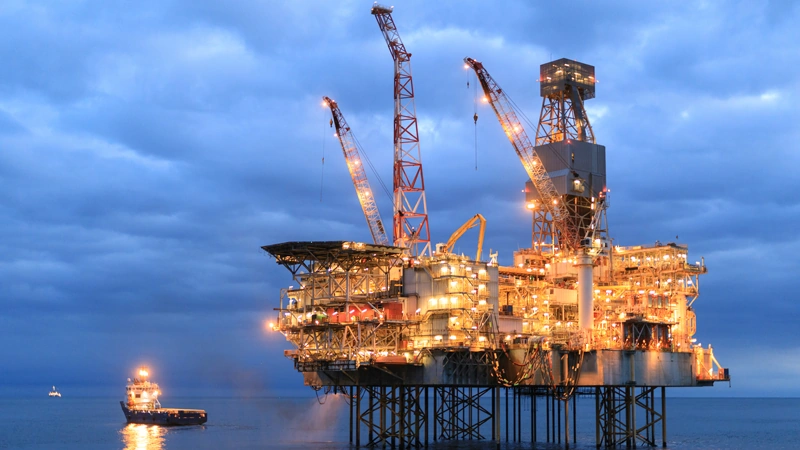
The Shah Deniz field is located on the deepwater shelf of the
Caspian Sea, 70 kilometers southeast of Baku, and covers an area of
more than 140 square kilometers. Discovered in 1999, the field is
estimated to contain approximately 1 trillion cubic meters of gas
and 2 billion barrels of condensate, according to initial
estimates.
Development of the field proceeded in phases. In 2003, the final
investment decision for the first phase was made, and commercial
production began in 2006. In 2013, the “Shah Deniz 2” project was
approved, and production began in 2018.
The project is currently in its next phase, the compressor
station project. This $2.9 billion project aims to increase
production from the field’s low-pressure gas reserves and is
expected to deliver an additional 50 billion cubic meters of
gas.
Meanwhile, the Shah Deniz project has made a significant
contribution to the development of local industrial capacity and
the training of skilled personnel in Azerbaijan. The project has
created thousands of jobs, and local construction and service
companies have been integrated into international energy
projects.