BAKU, Azerbaijan, July 16. The IMF has raised
its 2026 and 2027 economic growth forecasts for China despite
expecting the country's expansion to continue moderating.
This was reflected in the International Monetary Fund’s (IMF)
updated July 2026 report, ''World Economic Outlook'', titled ''The
Global Economy in Crosscurrents of War and Technology.''
According to the report, China's real GDP is projected to grow
by 4.6% in 2026 and 4.1% in 2027. Compared with the IMF's April
forecast, the outlook for 2026 was raised by 0.2 percentage points,
while the 2027 projection was increased by 0.1 percentage
points.
The IMF noted that China's economy expanded by 5% in both 2024
and 2025. However, growth is expected to slow in 2026 due to high
oil prices and uncertainty.
''China’s 2026 growth is projected to slow to 4.6 percent, as
higher global oil prices, together with protracted uncertainty and
structural headwinds, are expected to weigh on activity,'' the fund
stated.
More broadly, the IMF projects growth in emerging market and
developing economies to slow to 3.8% in 2026 before recovering to
4.5% in 2027. The report says growth prospects vary across
countries depending on factors including commodity dependence,
exposure to geopolitical developments, remittance and tourism
inflows, financial conditions, and participation in global
technology value chains.
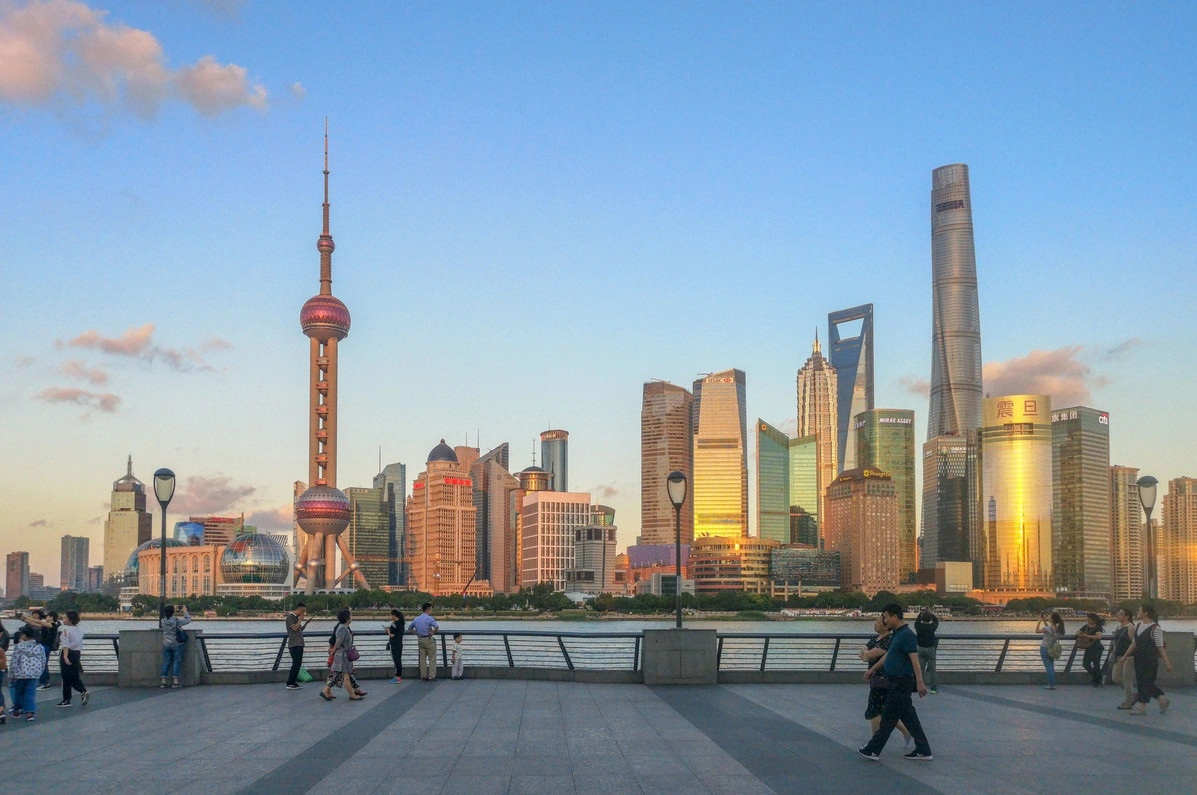
Meanwhile, China remains the world's second-largest economy and
one of the biggest contributors to global economic growth, making
its performance a key driver of demand for trade, energy, and
industrial commodities worldwide. The country's export-oriented
economy relies heavily on stable and diversified international
transport routes linking Chinese manufacturers with markets in
Europe, the Middle East, and Central Asia.
In recent years, Beijing has increasingly sought to diversify
these corridors amid geopolitical tensions and supply chain
disruptions, giving greater importance to the Middle Corridor -
also known as the Trans-Caspian International Transport Route
(TITR). The route forms part of the broader East-West connectivity
network, linking China with Europe through Central Asia, the
Caspian Sea, the South Caucasus, and Türkiye.
As China seeks to sustain export growth while diversifying its
international supply chains, the Middle Corridor continues to gain
momentum. That assessment is broadly consistent with the view of
the International Transport Forum (ITF).
In an exclusive interview with Trend, the organization said that the Middle Corridor
will retain its strategic role in Eurasian trade despite the
potential improvement of alternative routes through Iran.
''The Middle Corridor would nevertheless retain strategic value
as a diversified Asia–Europe route that avoids both Russia and
Iran. It will continue to benefit from strong political and
investment support for Eurasian connectivity,'' the organization
said.