BAKU, Azerbaijan, July 15. The countries of
Central Asia have wrapped up the first half of 2026 with results
that reveal not only the current momentum, but also the trends
likely to shape the region's economic development in the second
half of the year.
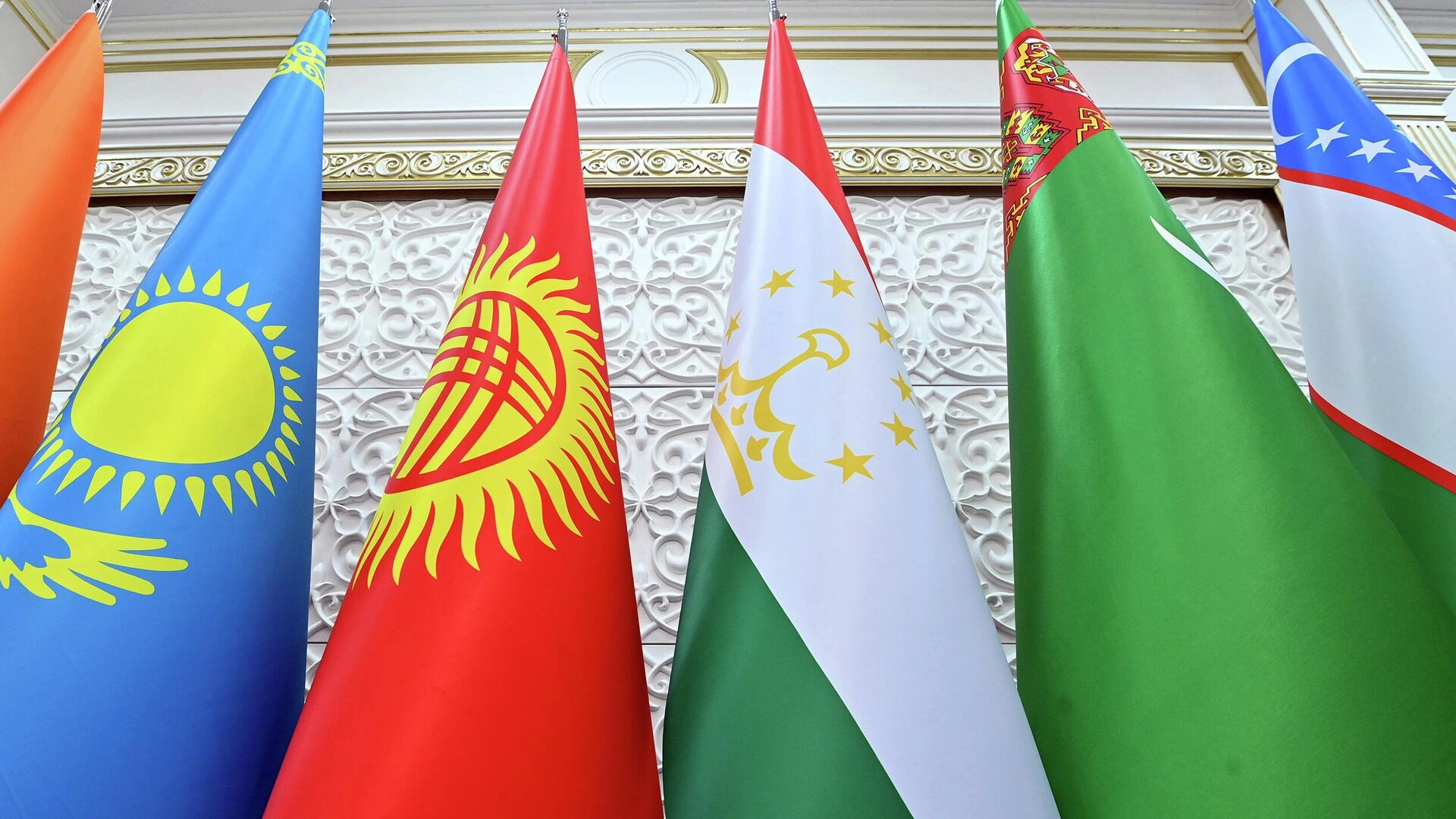
After several years of accelerated growth, the region's
economies are gradually settling into a more balanced pace. This
does not signal weaker economic activity, however. On the contrary,
the first six months of the year show that Central Asia is
increasingly drawing on several sources of growth at once -
infrastructure projects, domestic consumption, industry, transport
connectivity, and inflows of international capital.
According to the Eurasian Development Bank's forecast, the
combined size of Central Asia's economy will exceed $600 billion
for the first time in 2026, with GDP growth topping 6.5%. The
European Bank for Reconstruction and Development puts regional
growth at 5.6%, while the World Bank points to continued strong
momentum despite external headwinds, including conditions in
commodity markets and a slowdown among major trading partners. The
main drivers remain investment in infrastructure and energy,
construction, growth in services, domestic demand, and elevated
gold prices, which continue to support export revenues in several
countries across the region.
Kazakhstan remains one of the most telling examples. Although
first-quarter GDP growth came in at 4.1% - below last year's
figures due to temporary disruptions in oil production and
export-logistics constraints - fiscal results point to underlying
economic resilience. Construction, services, and investment
continue to offset the impact of the oil sector, and international
organizations still project the country's growth for the full year
at 4.6–5.5%.
The dynamics in public finances are particularly notable. In the
first half of the year, revenues to Kazakhstan's republican budget
rose 24.6%, reaching 8.5 trillion tenge (roughly $18 billion),
while tax revenues climbed more than 29%.
"The positive trend in revenues was driven by higher prices for
key export commodities and increased foreign trade activity. In
addition, according to the electronic invoicing system, sales
turnover rose almost 12%, or by 10.8 trillion tenge," Kazakhstan's
Deputy Finance Minister Yerzhan Birzhanov said at a government
meeting.
According to Birzhanov, the formal sector of the economy is also
expanding. "The number of business entities, including
self-employed individuals, reached 2.9 million, up by more than
499,000 since the start of the year. The number of VAT payers grew
by 22,300, to 158,200. This is an important result. It shows that
tax reform should be viewed not only as a fiscal tool, but also as
a mechanism for bringing economic activity out of the shadow
economy," he stressed.
These figures indicate that Kazakhstan's economy today no longer
relies solely on the raw-materials sector. A broader tax base, a
growing number of registered businesses, and the digitalization of
government processes are becoming additional sources of resilience,
particularly amid volatility in global commodity markets.
A similar trend is visible in Uzbekistan, although the structure
of growth differs there. The republic remains one of the region's
fastest-growing economies. First-quarter GDP rose 8.7%, driven by
strong domestic demand, remittances, and growth in services,
industry, and construction. The construction sector alone expanded
15.5% year-on-year. Ongoing reforms and privatization remain
important drivers of economic activity, while inflation continues
to ease gradually.
International financing figures are similarly telling. According
to the Eurasian Fund for Stabilization and Development (EFSD),
Uzbekistan received $690 million in approved sovereign financing
from international financial institutions, development agencies,
and climate funds between January and June. That placed the country
fifth among the 13 Eurasian states covered by the fund's
research.
Commenting on the updated figures, Gennady Vasiliev, the fund's
director of the partnerships department, highlighted the value of
the accumulated analytical database.
"We created the SFD as a tool to bring together scattered
information on sovereign financing across the Eurasian region into
a single analytical system. Today, the database covers operations
totaling more than $300 billion and enables analysis of long-term
trends, shifts in sector priorities, the distribution of financing
across countries, and the activity of international financial
institutions. Our goal is to provide governments, researchers, and
international organizations with open and convenient access to
objective data," he said.
For Uzbekistan, this means not only an inflow of new resources,
but also sustained interest from international institutions in
projects tied to economic modernization, infrastructure
development, and government reforms.
Kyrgyzstan illustrates yet another development model. Where
Kazakhstan is pursuing large-scale economic diversification and
Uzbekistan is leaning on reform and investment, Kyrgyzstan
continues to actively tap the potential of major infrastructure
projects. The country's economy grew 10.1% in the first quarter and
12.4% for the January–April period. The main contributions came
from construction, industry, and trade, along with projects such as
the Kambarata-1 hydropower plant and the
China–Kyrgyzstan–Uzbekistan railway. International financial
organizations expect Kyrgyzstan to retain some of the region's
highest growth rates for 2026 as a whole.
This mix of development models is becoming one of the defining
features of Central Asia today. While some economies focus on
expanding their domestic markets, others are betting on
infrastructure, exports, or attracting international capital. As a
result, the region's resilience is no longer built on a single
factor, but on several complementary drivers of economic growth
working in parallel.
Tajikistan is also maintaining strong growth. The country's
economy expanded 8% year-on-year in the first quarter. The main
sources of growth were industry, energy, transport, and a sharp
rise in fixed-capital investment, which grew 34%. Hydropower
projects continue to play a significant role, chief among them the
construction of the Rogun hydropower plant, alongside growth in the
cement and metallurgy industries. At the same time, inflation
remains among the lowest in the region, at around 4%, providing an
additional buffer of macroeconomic stability.
Authorities have already outlined the main tasks for the second
half of the year. At a board meeting of the Ministry of Energy and
Water Resources, officials reviewed the sector's performance for
January–June and set out further priorities.
"After reviewing the main report, meeting participants and
enterprise heads discussed current production issues and identified
strategic priorities for the coming quarter aimed at ensuring the
stable operation of the energy system and the effective management
of water resources," the ministry said in a statement.
Regional energy cooperation also continues to expand. Over the
first six months of the year, natural gas imports from Uzbekistan
to Tajikistan reached 126.4 million cubic meters, up 7.3 million
cubic meters compared with the same period last year - reflecting
both the economy's growing needs and deepening energy cooperation
between the two countries.
Turkmenistan also reported continued positive momentum.
According to official data, the country's GDP grew 6.3% in the
first half of the year, while natural gas output exceeded 39
billion cubic meters. Oil production over the same period totaled
more than 4.1 million tons.
Capital investment also continued to rise. According to
government data, investment aimed at developing the national
economy grew 4.3%, reaching 16.5% of GDP. Of the total investment
volume, 45.1% went to production facilities, while 54.9% was
directed toward social and cultural infrastructure projects.
Although the economic models of Central Asian countries differ,
the results of the first half of the year point to several shared
trends.
The first is that the region is investing more actively in
infrastructure. New railway routes, hydropower projects,
transport-network modernization, and expanding energy capacity are
becoming the foundation of long-term growth in nearly every
country.
The second is the growing role of domestic sources of growth.
Whereas a few years ago attention was focused mainly on commodity
exports, the contribution of construction, industry, services, and
domestic consumption is now clearly increasing. This is especially
visible in Uzbekistan and Kyrgyzstan, where these sectors account
for a significant share of economic growth, while Kazakhstan
continues to broaden its tax base and encourage the development of
non-resource industries.
The third trend is sustained strong interest from international
financial institutions in the region. Sovereign financing,
participation by development banks, and the implementation of major
infrastructure projects all point to Central Asia remaining one of
the most attractive destinations for long-term investment in
Eurasia.
At the same time, several factors will continue to shape the
economic agenda in the second half of the year. These include the
trajectory of global energy and gold prices, trade developments
with key partners such as China and Russia, and the implementation
of major infrastructure projects capable of giving additional
momentum to economic growth.
The first six months of 2026 show that Central Asia continues to
strengthen its economic position. Despite differences in the
structure of their national economies, countries across the region
are steadily increasing investment, expanding transport
connectivity, modernizing industry and the energy sector, and
attracting international financing. This combination of factors,
together with ongoing economic diversification, will largely
determine Central Asia's development in the second half of the year
and lay the groundwork for the region's continued growth.