BAKU, Azerbaijan, April 21. A new stage of
development has begun in Karabakh under the leadership of President
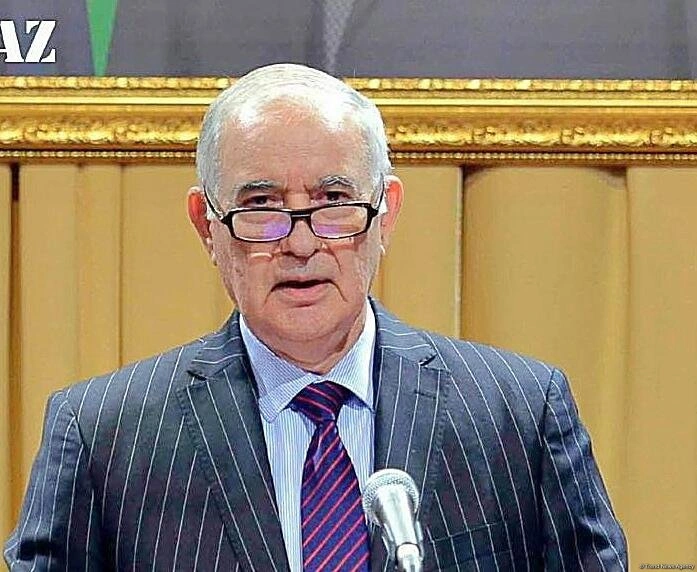
of the Republic of Azerbaijan Ilham Aliyev, political analyst Azer
Garayev told Trend.
"The Second Karabakh War, which ended in 2020, is remembered in
Azerbaijan’s modern history not only for its military victory but
also for marking the beginning of a new stage of development under
the leadership of President Ilham Aliyev. The liberation of the
Karabakh and Eastern Zangezur regions from occupation posed an
entirely different and more complex task for the country. While the
main goal during the war was the restoration of territorial
integrity, in the post-war phase, the reconstruction of life in
these lands, the return of people, and the economic revitalization
of the region became priorities for President Ilham Aliyev.
The first images of the destruction of the liberated territories
caused by the Armenians clearly demonstrated just how difficult
this task is. The cities were completely destroyed, villages were
erased from the map, and the social and economic infrastructure was
devastated. Cities like Aghdam, Fuzuli, and Jabrayil were virtually
reduced to rubble. This picture reflected not only the physical
destruction but also the result of years of halted life.
This reality compelled Azerbaijan to choose an approach
different from the classic restoration model, and this approach is
based on the development strategy put forward by President Ilham
Aliyev. The processes carried out in Karabakh are not just
reconstruction; they are, in fact, a rebuilding project from
scratch. In this regard, the work carried out in this region in
recent years is being carefully followed not only within the
country but also on the international level," he said.
According to him, one of the main problems that emerged
immediately after the war in Karabakh was the mine danger. A large
portion of the territories was contaminated with mines and
unexploded ordnance. This not only delayed the return of people but
also made it difficult to start construction and restoration
work.
"The mine problem remains one of the most serious obstacles to
the restoration of Karabakh. Every inch of land carried potential
risks, and without eliminating this risk, it was impossible to
build residential settlements or establish economic activity. For
this reason, mine clearance became one of the main directions of
state policy and continues today. At the same time, the restoration
of infrastructure in the initial phase was of vital importance.
Without electricity, water supply, and road infrastructure, no
activity could take place in the region. Therefore, the main focus
in the first years was on these areas.
Temporary electricity lines were installed, water sources were
restored, and construction of major transportation routes began.
During this period, new approaches were also applied in state
management. Special mechanisms were created to coordinate the
activities of various institutions related to the restoration of
Karabakh. Thanks to this coordination, the implementation of
projects began to be carried out in a more systematic and faster
manner," he noted.
Garayev pointed out that one of the main factors contributing to
the revival of Karabakh is the large financial resources allocated
by the state under the leadership of President Ilham Aliyev. In
recent years, more than 17 billion manat ($10 billion) has been
directed towards the restoration and development of these
territories. Specifically, 55 million manat ($32 million) was
allocated in 2020, 2.18 billion manat ($1.28 billion) in 2021, 4.3
billion manat ($2.5 billion) in 2022, 5.6 billion manat ($3.29
billion) in 2023, and 5.3 billion manat ($3.1 billion) in 2024.
This figure clearly demonstrates the scale of the projects being
carried out in the region.
"Most of these funds have been directed towards infrastructure
projects. The construction of roads, the building of bridges, the
excavation of tunnels, and the establishment of energy systems are
the main directions of these investments. In addition, the
construction of residential buildings, the creation of social
facilities, and the development of industrial sectors are also
crucial parts of this process. The restoration of Karabakh doesn't
only aim to meet current needs. This process is being carried out
on the basis of a long-term strategy. The goal is to turn this
region into one of Azerbaijan’s economic development centers in the
future. In this regard, all the projects being carried out are
planned according to the principles of sustainable development," he
noted.
According to him, Azerbaijan's friendly and partner countries
play a special role in the restoration of Karabakh.
"Here, we can mention the construction of a mosque in Fuzuli on
the initiative of the Chairman of the People’s Council of
Turkmenistan, Gurbanguly Berdymukhamedov; the establishment of the
Kurmangazy Children’s Creativity Center in Fuzuli on the initiative
of President Kassym-Jomart Tokayev; a modern school building in
Fuzuli funded by Uzbekistan; the construction of a secondary school
in Aghdam's Khidirli village, on behalf of the Kyrgyz Republic by
President Sadyr Zhaparov; the participation of Turkish companies in
dozens of projects in the region; Belarus' role in the
establishment of an agricultural village, and several other
projects. Of course, one of the key factors here is the
relationship between President Ilham Aliyev and the leaders of
these countries," he said.
The analyst emphasized that transportation infrastructure is of
special importance for the development of Karabakh. For many years,
the roads in these areas had become completely unusable. However,
after the war, large-scale work in this field began.
"Under the leadership of the President, more than 3,000
kilometers of roads are being built in the liberated areas. These
roads connect the main cities and villages of the region and ensure
Karabakh’s connectivity with other parts of Azerbaijan. The tunnels
and bridges built in the mountainous areas are complex from an
engineering perspective, but they are of vital importance for the
development of the region.
Additionally, the construction of three international airports
in Karabakh has provided further impetus to the region’s
development. The Fuzuli, Zangilan, and Lachin airports are now
operational, and these airports enhance both the economic and
tourism potential of the region. These facilities allow Karabakh to
become part of the international transportation map," Garayev
said.
According to him, one of the most striking features of the
restoration work in Karabakh is the application of modern urban
planning principles. Not only is the restoration of the old cities
taking place, but a new model of urbanization is also being
created.
"Already, master plans have been approved for eight cities, and
projects have been developed for dozens of settlements. While
preparing these plans, factors such as ecological balance, energy
efficiency, and technological development are prioritized. This
approach creates the conditions for Karabakh to become a modern and
innovative region in the future. The ‘smart village’ project
implemented in the Aghali village of Zangilan is an exemplary model
in this regard. The technologies applied within this project cover
various areas, from agriculture to energy supply. This shows that
the model being built in Karabakh is not limited to cities; modern
approaches are also being applied in rural areas.
The declaration of Karabakh and Eastern Zangezur as a green
energy zone by President Ilham Aliyev is one of the key decisions
determining the direction of the region’s development. This
approach is important both ecologically and economically.
Currently, the construction of a large solar power station in the
Jabrayil district is ongoing. The shareholders of the Shafag solar
power plant include bp, SOCAR, and the Azerbaijan Investment
Company, and it's planned to invest approximately $200 million in
the project.
Moreover, other renewable energy projects are also planned. The
restoration of small hydroelectric stations and the construction of
new energy facilities are increasing the energy potential of the
region. This strategy will enable Karabakh to play a significant
role in energy production in the future. At the same time, this
approach aligns with Azerbaijan’s overall energy policy," he
said.
The analyst noted that the increase in economic activity in
Karabakh is closely linked to the favorable business environment
created by the state. Tax and customs exemptions, credit subsidies,
and other support mechanisms for entrepreneurs are boosting the
flow of investments into the region.
"Based on the President’s instructions, several tax and customs
exemptions and exemptions have been offered to residents of the
liberated territories. Starting from January 1, 2023, these include
exemption from profit (income), property, land, and simplified
taxes for 10 years; exemption from VAT for the import of machinery,
technological equipment, and raw materials for 10 years; exemption
from customs duties for the import of machinery, technological
equipment, and raw materials for 10 years; exemption from taxes on
dividend income for shareholders (partners) of legal entities for
10 years; 30% of the VAT paid for hotel and accommodation services
paid by consumers via cashless means and 5% of VAT paid in cash are
refunded.
Besides, for entrepreneurs engaged in production activities,
from January 1, 2023, the government will provide financial
assistance to cover 20% of the costs of utility services
(electricity, natural gas, water supply, and wastewater services)
that they pay on a monthly basis. The Aghdam Industrial Park and
the Araz Valley Economic Zone have already seen the launch of
several enterprises. These enterprises are creating new jobs and
accelerating economic development in the region.
In the process of Karabakh’s reconstruction, both infrastructure
and economic projects play a crucial role, but the human factor is
equally decisive. In fact, the main goal of all these construction
works is to ensure the return of people to their homeland and
restore their normal living conditions. In this regard, the ‘Great
Return’ program, launched by President Ilham Aliyev, is at the
heart of Karabakh’s revitalization strategy. In recent years, tens
of thousands of displaced people have already returned to
Karabakh.
This return is taking place in stages, and each resettlement
process is organized based on careful planning. The return of
people is not limited to building homes. It also requires the
creation of jobs, the provision of social services, and the overall
formation of all necessary conditions for living. Looking at the
lives of the returning people, we see that this process is
progressing successfully, and the development of Karabakh is indeed
taking place in a way that corresponds to Azerbaijan’s long-term
plans for the future," he concluded.