BAKU, Azerbaijan, March 27. The European
Investment Bank (EIB) considers the signing of a Framework
Agreement with Turkmenistan a prerequisite for launching
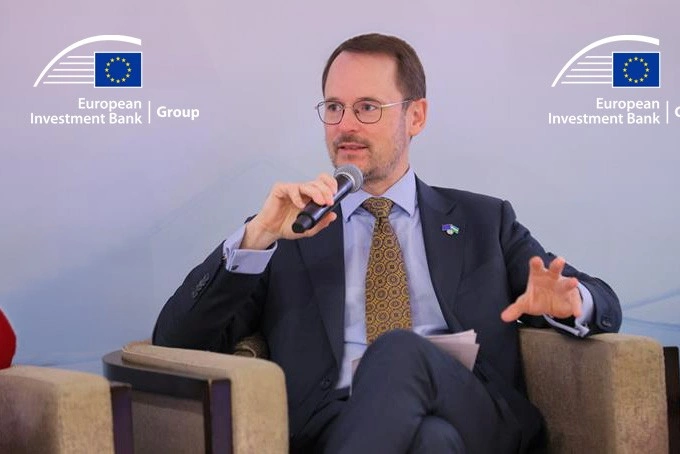
operational engagement in the country, Olivier Kueny, Head of the
EIB’s Regional Representation for Central Asia, told Trend.
"Although our operations in Turkmenistan are currently limited
until a Framework Agreement is signed, the recent mission to
Ashgabat showed a clear shared interest in future cooperation.
Projects that improve connectivity and strengthen digital
infrastructure could play an important role in that partnership,"
he said.
Kueny explained that, despite current operational limitations in
Turkmenistan, recent engagements demonstrated mutual interest and
that connectivity and digital infrastructure projects could become
a cornerstone of future cooperation once the necessary agreement is
in place.
"When we will be able to engage operationally, the EIB would
likely focus on supporting sustainable transport solutions, digital
technologies and the application of strong environmental and social
standards. Our aim is always to ensure that infrastructure projects
not only improve connectivity but also contribute to long-term
sustainable development," he said.
Kueny further emphasized that, once operational engagement
becomes possible, the Bank would prioritize sustainable transport,
digital technologies, and adherence to environmental and social
standards, ensuring infrastructure investments contribute to
long-term sustainable development.
"The EIB is also part of the TCTC Coordination Platform
established by the EU and Central Asian countries. Through this
platform, we work closely with multilateral partners to support
cross-border transport and digitalisation initiatives that can
deepen regional integration and support sustainable economic growth
across Central Asia," he said.
Kueny added that the Bank participates in the Trans-Caspian
Transport Corridor Coordination Platform, collaborating with
international partners to advance cross-border transport and
digitalisation projects aimed at strengthening regional integration
and supporting economic growth in Central Asia.
"The EIB is actively exploring ways to support initiatives
connected to the development and digitalisation of the
Trans-Caspian Transport Corridor, particularly where they align
with the EU’s Global Gateway strategy," Kueny said.
He noted that the Bank is examining potential areas of support
for corridor-related initiatives, especially those aligned with the
European Union’s Global Gateway framework.
"Water management is one of the most pressing challenges in
Central Asia, and Turkmenistan is no exception. The region faces
increasing pressure from water scarcity and environmental changes,
making climate-resilient water infrastructure particularly
important," Kueny said.
He highlighted that water management represents a key challenge
across Central Asia, including Turkmenistan, where rising water
scarcity and environmental pressures make resilient infrastructure
increasingly important.
"The EIB has gained valuable experience in this area through
projects such as the Aral Sea restoration efforts in Uzbekistan.
There, the Bank supports initiatives to rehabilitate forests and
water resources while improving sustainable irrigation systems.
These projects show how targeted investments can help restore
ecosystems while also supporting local communities and
agriculture," he said.
Kueny pointed to the EIB’s experience in Uzbekistan, where it
has supported Aral Sea restoration efforts, including ecosystem
rehabilitation and improvements in irrigation systems,
demonstrating how targeted investments can simultaneously support
environmental recovery and local livelihoods.
"Looking ahead, we believe there could be similar opportunities
for cooperation in Turkmenistan once a solid framework for
collaboration is in place. In particular, we could explore projects
related to clean power and water under the Team Europe Initiative
on Water, Energy and Climate Change," he said.
He noted that future cooperation in Turkmenistan could include
initiatives in the clean energy and water sectors under the Team
Europe Initiative, once an appropriate cooperation framework is
established.
"By building on lessons learned and best practices from across
Central Asia, such cooperation could help address climate stress
while supporting more integrated and sustainable development for
the region," he said.
Kueny concluded that leveraging regional experience and best
practices could help mitigate climate-related challenges while
promoting more integrated and sustainable development across
Central Asia.
"Turkmenistan has considerable potential when it comes to clean
energy, particularly thanks to its abundant solar and wind
resources. From the EIB’s perspective, this creates strong
opportunities for supporting the country’s transition toward more
diversified and sustainable energy systems," he said.
Kueny stressed that Turkmenistan’s significant solar and wind
potential presents strong opportunities for advancing energy
diversification and supporting a transition toward more sustainable
energy systems.
"A useful example can be seen in neighbouring Uzbekistan, where
renewable energy development has advanced rapidly over the past
five years. Since the commissioning of its first solar project in
2021, Uzbekistan now operates 15 solar photovoltaic stations and
five wind power plants with a total installed capacity of 5.5 GW.
The country is also developing a series of Battery Energy Storage
Systems (BESS) to help manage its electricity grid," he said.
Kueny referred to Uzbekistan as a regional example, noting its
rapid expansion of renewable energy capacity since 2021, including
multiple solar and wind plants as well as ongoing development of
battery storage systems to support grid stability.
"The EIB has played an important role in this progress by
financing four solar projects representing nearly 1 GW of new clean
power capacity. These investments have helped increase the share of
renewable energy in Uzbekistan’s energy mix and demonstrate that
large-scale solar deployment in the region is both feasible and
impactful," he said.
He added that the EIB has contributed to Uzbekistan’s renewable
energy expansion through financing several large solar projects,
helping increase the share of clean energy and proving the
viability of large-scale solar deployment in the region.
"Beyond solar and wind, the Bank is also actively involved in
financing large hydropower projects across the region. We are ready
to share our experience in developing transmission lines and
cross-border electricity infrastructure as well. This includes
projects such as the Tajik-Kyrgyz CASA-1000 interconnector in
Central Asia, as well as several major interconnection projects in
Europe, including EuroAsia, Adriatic Link, Bay of Biscay, Celtic,
NeuConnect and the Baltic Sea Grid," he said.
Kueny further noted that the Bank’s activities extend beyond
solar and wind to hydropower and cross-border electricity
infrastructure, highlighting its experience in financing major
interconnection projects both in Central Asia and Europe.
"The new office in Tashkent is designed to cover Central Asia,
including Turkmenistan. Once the Framework Agreement with
Turkmenistan is signed, this office will be ready to support the
Bank’s activities in the country," he said.
Kueny explained that the EIB’s regional office in Tashkent is
intended to serve Central Asia broadly, including Turkmenistan, and
will be positioned to support operations once a formal agreement is
concluded.
"We have already allocated resources to work on potential
projects. This means that once the agreement is in place, we will
be able to begin developing a pipeline of projects in Turkmenistan
quickly and in close coordination with our regional strategy," he
said.
Kueny added that resources have already been set aside to
prepare potential projects, enabling the Bank to move quickly
toward building a project pipeline in Turkmenistan once the
framework is established.
"Another important element of our approach is working closely
with local EU delegations. This cooperation strengthens our
presence on the ground and helps ensure that our activities remain
aligned with the European Union’s priorities and values," he
said.
He noted that collaboration with EU delegations is a key part of
the Bank’s approach, helping reinforce its local presence and
maintain alignment with EU priorities.
"Our close collaboration with the EU Delegation in Ashgabat will
therefore play an important role in building effective partnerships
and ensuring that future projects deliver tangible benefits for the
country and the region," he said.
Kueny concluded that close coordination with the EU Delegation
in Ashgabat will be essential for building partnerships and
ensuring that future initiatives deliver concrete benefits for
Turkmenistan and the wider region.
The European Investment Bank (EIB), founded in 1958 and
headquartered in Luxembourg, is the lending institution of the
European Union that provides long-term financing for
infrastructure, climate, energy, transport, digitalization and
other development projects in EU member states and partner
countries worldwide. The bank currently cooperates with more than
160 countries and focuses on supporting sustainable development,
climate action and economic connectivity.
Turkmenistan and the EIB have been developing dialogue in recent
years, primarily aimed at creating a legal framework that would
allow the bank to begin operations in the country. In particular,
the sides are negotiating a Framework Agreement that would
establish the legal basis for EIB financing of projects in
Turkmenistan. Potential areas of cooperation discussed between
Turkmenistan and the bank include transport infrastructure,
especially projects linked to the Trans-Caspian transport corridor,
as well as initiatives in renewable energy, digitalisation, water
management and other sustainable development sectors.