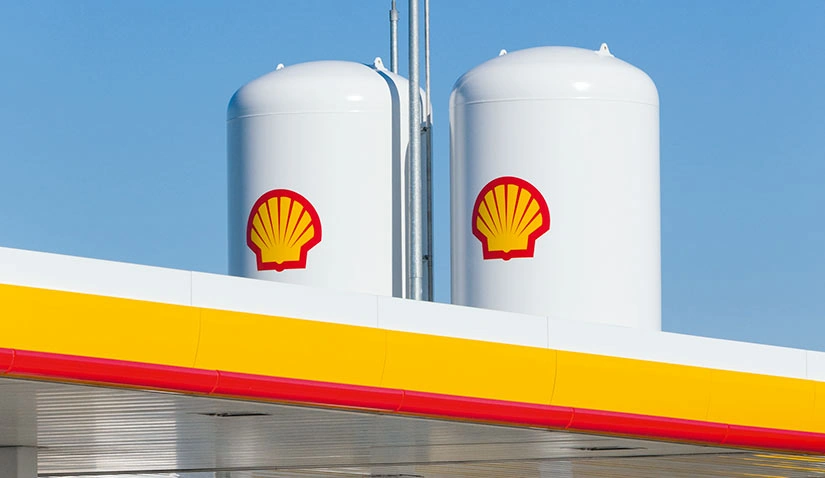
BAKU, Azerbaijan, March 20. Shell plc has
confirmed significant operational disruptions at its Qatar energy
facilities following attacks on key energy infrastructure in
Ras Laffan Industrial City, Trend reports.
The company says the safety and security of its employees and
contractors remains the highest priority as work continues with
local authorities and partners to assess the situation.
The Pearl GTL (gas‑to‑liquids) facility — a joint venture
operated by Shell and QatarEnergy — has stopped production
completely to allow a full assessment of damage after one of its
two trains was struck during the attacks on 18 March 2026. Prior to
the incident, the plant was already producing at reduced rates,
with exports constrained by broader regional disruptions.
A fire broke out within the facility as a result of the attack
but was “rapidly extinguished,” and the company reports the site is
now under control. All personnel on site at the time were accounted
for and unharmed.
Shell says it is working with QatarEnergy and relevant
authorities to understand the extent of damage not only to Pearl
GTL but also to the wider Ras Laffan energy complex.
Shell also confirmed that liquefied natural gas (LNG) production
in Qatar has been shut down since early March, following earlier
attacks on the LNG facilities in the same industrial zone. These
disruptions have led to halts in output and ongoing assessments of
damage across multiple assets.
Pearl GTL is one of the world’s largest GTL facilities, designed
to convert natural gas into liquid hydrocarbon products such as
gasoil, naphtha and other fuels. The project, developed in
partnership between Shell and QatarEnergy, is based in Ras Laffan
Industrial City — Qatar’s main energy hub and one of the world’s
biggest centers for LNG and gas‑to‑liquids production.
The plant’s two processing trains were built to handle large
volumes of natural gas from Qatar’s North Field, turning them into
high‑value liquid products that are used globally in transport,
industry and other sectors.
Ras Laffan Industrial City also hosts massive LNG export
terminals — crucial to global gas markets — as well as other
processing, refining and petrochemical facilities. The region’s
energy infrastructure has been a key driver of both Qatar’s economy
and wider global gas supply.
Shell says it is continuing detailed inspections to determine
the full scale of damage at Pearl GTL and surrounding facilities.
The company has not yet provided a timeline for restarting
production.
The situation adds to broader regional energy security concerns
after a series of strikes hit Gulf energy infrastructure, leading
to disruptions in LNG and gas‑to‑liquids production across Qatar’s
energy hub.