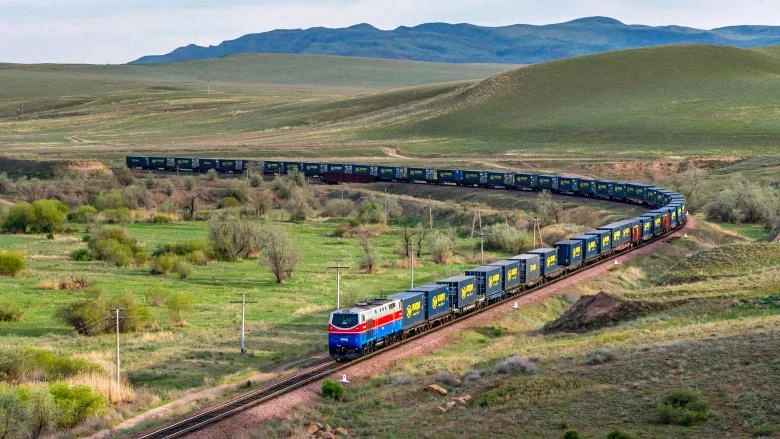
BAKU, Azerbaijan, March 16. The Middle Corridor
and TRIPP (Trump Route for International Peace and Prosperity)
routes create new geopolitical competition in Eurasian trade, reads
an article titled "Maritime Geopolitical Risks for Eurasia 2026"
published by Special Eurasia, a consulting and media agency
specializing in geopolitical intelligence and risk assessment,
Trend reports.
According to the article, maritime geopolitical risks in Eurasia
will remain high this year, and competition for trade routes in the
region will intensify. Simultaneously, the establishment of the
Middle Corridor and the TRIPP route is tipping the scales of
geopolitical balance in the region.
The article noted that by 2026, a significant geopolitical shift
had occurred in the Caspian Sea region, and as a result of the
weakening of traditional economic dependencies left over from the
Soviet era, multipolar competition for intercontinental trade
routes had formed.
Analysts noted that in this endeavor, Azerbaijan has truly
solidified its standing as a logistics hub.
"Azerbaijan has become an important logistics hub in the region
due to its integrated production and transit infrastructure, and
the South Caucasus is becoming a major transport artery connecting
Europe and Central Asia," the report emphasized.
The article pointed out that interest in the Middle Corridor has
surged as Western countries look for different paths to avoid
routes through Russia due to sanctions.
"A large part of Western capital, seeking to reduce dependence
on Russian routes subject to sanctions, is directed at the Middle
Corridor project," the article pointed out.
The article also pointed out that a key player in the
geopolitical dynamics of the region is TRIPP, which came about
through the U.S. initiative.
"TRIPP is presented as a U.S.-led initiative and includes a toll
transit zone. This project gives Washington a 74 percent stake in
the route and is seen as a direct geopolitical challenge to
Russian-Iranian influence in the region," the article
highlighted.
Caspian environmental crisis poses risk to maritime
transport
The article highlighted that the environmental situation in the
Caspian Sea also raises the stakes in terms of geopolitical and
economic risks. The report noted that the Caspian Sea is currently
on a downward trend, dropping around 20 centimeters each year, and
is anticipated to hit a historic low in 2026.
"The decline in water levels severely limits the possibilities
of ferry and tanker traffic and requires constant and costly
dredging work at key ports such as Kuryk and Anzali.
Global economic stability will also increasingly depend on the
rapid development of alternative routes such as the Middle Corridor
and TRIPP," added the article.
Stay up-to-date with more news on Trend News
Agency's WhatsApp channel