BAKU, Azerbaijan, March 16. First natural gas
production from the Absheron field in the Azerbaijani sector of the
Caspian Sea is planned to begin on September 1, 2029, as part of
the full field development project, Trend reports via TotalEnergies.
The project’s operational life is expected to last around 30
years.
According to the information, an Environmental and Social Impact
Assessment (ESIA) has been prepared for the Absheron Full Field
Development (FFD) project to be implemented by TotalEnergies
Absheron B.V.. The assessment was conducted in line with
Azerbaijani legislation, international conventions, the Absheron
Production Sharing Agreement, and international oil industry
standards.
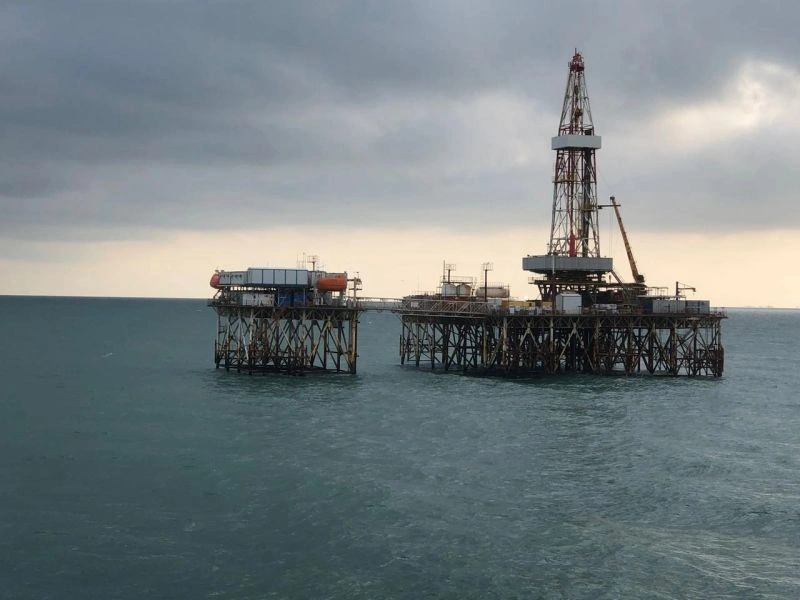
The project represents the next stage of development at the
Absheron offshore gas-condensate field, following the previously
implemented Early Production Scheme. Plans include drilling three
subsea wells, with the possibility of an additional well in the
future, as well as installing subsea infrastructure and laying
offshore and onshore pipelines. A Central Processing Facility (CPF)
will also be constructed onshore about 4 kilometers southwest of
the Sangachal Terminal.
The facility will process the extracted raw gas and liquids. The
processed gas is planned to be transported through the South
Caucasus Pipeline and Azerbaijan’s domestic gas network, while
unstabilized condensate will be delivered to the Sangachal
Terminal.
The ESIA document evaluates potential environmental, social, and
cultural heritage impacts across the drilling, construction, subsea
installation, commissioning, and operational phases of the project.
The study is based on baseline environmental and social research
conducted on land and offshore between 2024 and 2025.
According to the assessment, no major environmental or social
impacts that could prevent the project’s implementation have been
identified. Medium-level risks are mainly associated with unlikely
emergency scenarios, such as irregular gas flaring or accidental
hydrocarbon leaks. The company said these risks would be managed
through technical design, operational monitoring, and emergency
preparedness measures.
The report states that with the planned mitigation and
management measures in place, most residual impacts are expected to
remain minor or negligible. These include temporary disturbances to
marine and terrestrial wildlife, air emissions, noise, waste
generation, and resource use, which are expected to be largely
local and short-term.
Additionally, the project is expected to bring positive
socio-economic benefits, including increased local employment,
procurement opportunities for domestic companies, development of
workforce capacity, and a contribution to the country’s energy
security.
Public consultations and stakeholder discussions were also
conducted as part of the project preparation process, including
consultations with the Ministry of Ecology and Natural Resources of
Azerbaijan and the collection of public feedback.
Overall, the assessment concludes that, provided all planned
mitigation and management measures are implemented, the Absheron
Full Field Development project is considered environmentally and
socially acceptable.
Stay up-to-date with more news on Trend News
Agency's WhatsApp channel