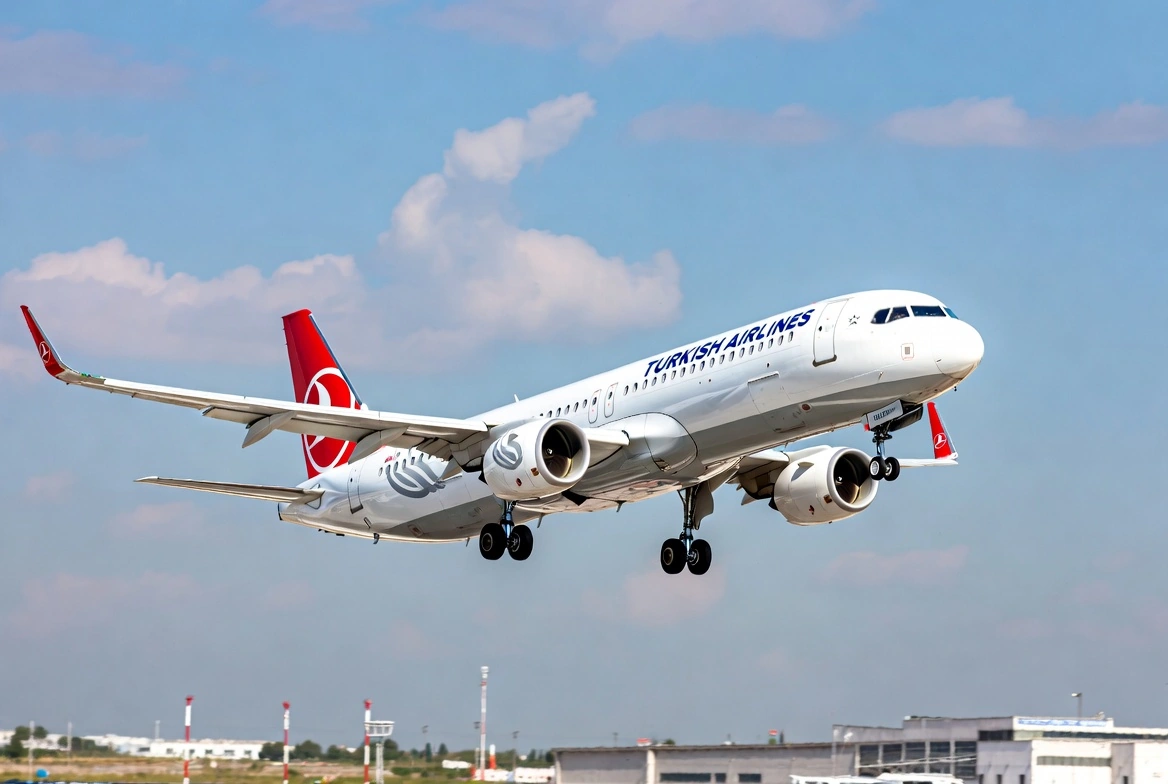
BAKU, Azerbaijan, March 6. Turkish Airlines has
suspended flights to Iran until March 20, while Pegasus Airlines
will not operate flights until March 12, whereas other carriers
have also halted services to the country at least until March 9,
said Abdulkadir Uraloğlu, Türkiye’s Minister of Transport and
Infrastructure, Trend reports.
The minister shared on his official X page that flights to Iran,
Iraq, Syria, Lebanon, and Jordan, currently operated by Turkish
Airlines, AJet, Pegasus, and SunExpress, have been suspended
through the end of March 9. Additionally, Pegasus Airlines has
removed Iran from its schedule until March 12, and Turkish Airlines
until March 20.
Uraloğlu added that the airspace over Iran, Israel, Iraq, Qatar,
Bahrain, Kuwait, and Syria (except Aleppo) remains closed.
“Partial flights continue in Oman, Jordan, and Saudi Arabia,
while air traffic in the United Arab Emirates is being managed
under controlled and limited conditions,” he noted.
This escalation followed the 3rd round of nuclear talks between
Iran and the United States, held in Geneva on February 26, 2026.
Conducted under the administration of President Donald Trump, the
negotiations were perceived as a final opportunity for a diplomatic
resolution; however, no agreements were reached.
Two days later, on February 28, the U.S. and Israel initiated a
coordinated military campaign targeting Iran's strategic military
assets and government leadership. Israel referred to the operation
as "Operation Lion's Roar," while the U.S. labeled it "Operation
Epic Fury." The attacks affected vast regions of Iran, including
major cities such as Tehran, Isfahan, Tabriz, and Qom.
In retaliation, Iran launched ballistic missiles and drone
strikes on February 28 and the following days, targeting Israeli
and U.S. military bases across the region, including facilities in
Jordan, Kuwait, Bahrain, Qatar, and Iraq.
In a significant escalation, military airstrikes conducted by
Israel and the United States the previous day have reportedly
resulted in the deaths of Iran’s Supreme Leader Seyyed Ali Khamenei
and several members of his family.
Additionally, several of Iran’s most senior military and
security officials were killed in the airstrikes, including Chief
of Staff Major General Abdolrahim Mousavi, Islamic Revolutionary
Guard Corps (IRGC) Commander-in-Chief Mohammad Pakpour, Supreme
Leader adviser and Defense Council Secretary Ali Shamkhani, and
Defense Minister Aziz Nasirzadeh.
On March 1-5, the conflict escalated to encompass various
countries in the Middle East; Iran launched hundreds of missiles
and drones, and the U.S. and Israel struck new military targets in
Iranian territory.
On March 4, a U.S. Navy nuclear submarine torpedoed the Iranian
frigate IRIS Dena in the Indian Ocean, signaling that the conflict
had entered a naval phase.
Stay up-to-date with more news on Trend News
Agency's WhatsApp channel