BAKU, Azerbaijan, March 5. Threats to
Azerbaijan's security and the lives of its citizens will be
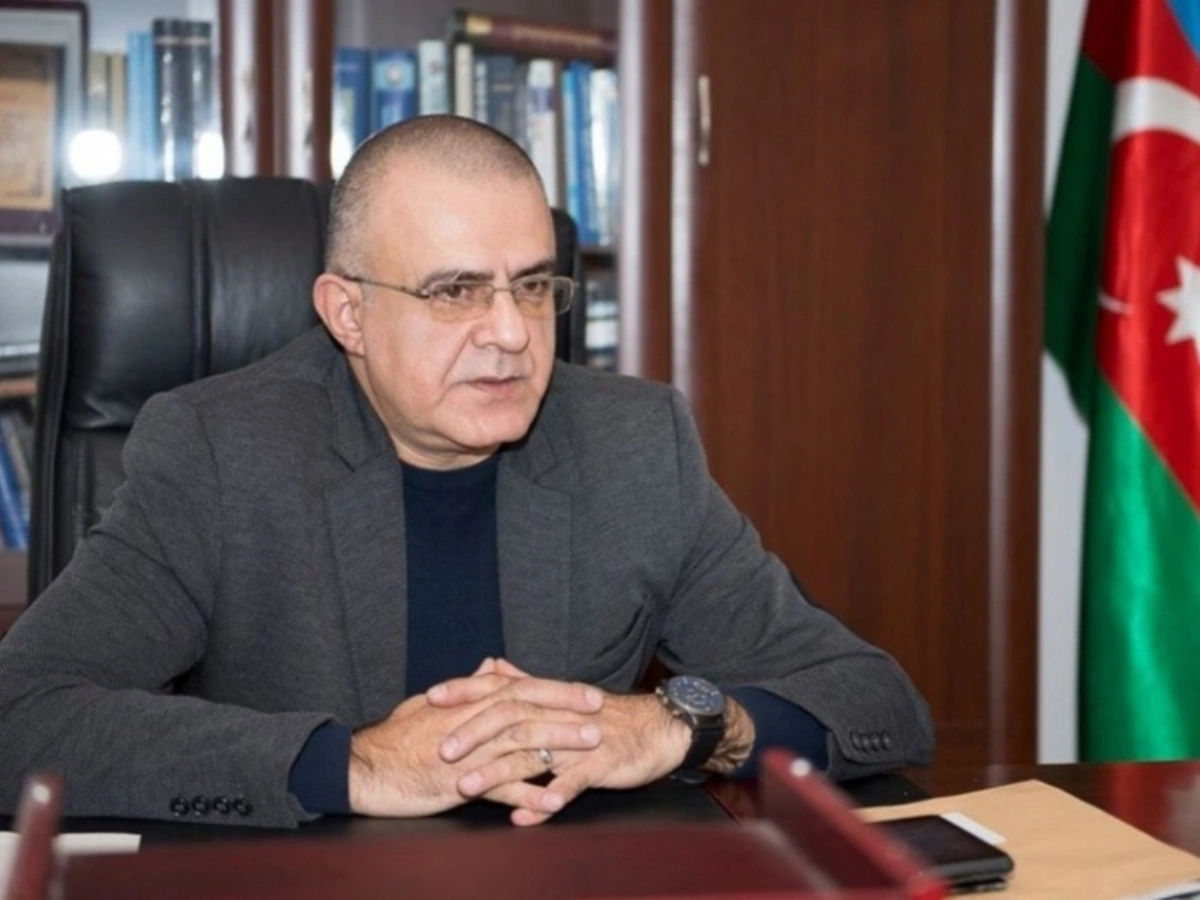
addressed, Member of the Azerbaijani Parliament's Committee on
Foreign and Interparliamentary Relations, MP Elchin Mirzabayli,
told Trend.
"The drone strike by the Iranian Armed Forces on the territory
of the Nakhchivan Autonomous Republic of Azerbaijan should be
viewed not only as a military incident but also as a clear
disrespect for the neighborly relations that have been formed in
the region for many years. This step once again reveals how
hypocritical and ungrateful the theocratic regime of Iran is,
because throughout history, the Azerbaijani state has not pursued a
confrontational path in its relations with Iran but has based its
relations on the principle of mutual respect and good
neighborliness," he explained.
The MP highlighted that a key focus of Azerbaijan's foreign
policy has consistently been the development of stable and mutually
beneficial relationships with its neighboring countries.
"Azerbaijan has never posed a threat to Iran or any other state
from its territory. On the contrary, official Baku has always taken
steps that contribute to maintaining stability in the region and
has remained committed to the principle of non-interference in the
internal affairs of neighboring countries. This is a clear
indication of Azerbaijan's commitment to international law and the
fundamental principles of interstate relations," Mirzabayli
noted.
According to the MP, despite all this, the Iranian side's
targeting of civilian infrastructure in the Nakhchivan region,
especially the airport used by civilians, raises serious
questions.
"Such an attack cannot be justified by military necessity or
security arguments. A drone attack on civilian infrastructure is
unacceptable from the point of view of international humanitarian
law, and such steps should be clearly assessed as a terrorist act.
Targeting facilities used by civilians is, first of all, an
indicator of dangerous and inhumane behavior directed against the
civilian population," he pointed out.
Mirzabayli added that this incident also raises the question of
why Iran targeted Nakhchivan Airport.
"The land connection between the main part of Azerbaijan and the
Nakhchivan Autonomous Republic has been blocked for many years. One
of the main reasons for this blockade was the occupation and
isolation policy implemented by Armenia in the region, and this
policy has been indirectly supported by various regional actors for
a long time. As a result, the most stable and operational
connection between Nakhchivan and other regions of Azerbaijan is
provided precisely through air transport. Therefore, targeting the
airport should be assessed as an attempt to paralyze the vital
communication line between the main part of Azerbaijan and
Nakhchivan and isolate the region.
This tactic is not new to the region. In the 1990s, Armenia used
the same strategy when it occupied Azerbaijani territories, trying
to keep the country under economic and logistical pressure by
targeting transport and communication lines. In this regard, Iran's
resort to such a method is a continuation of the blockade and
isolation policy previously applied in the region. It seems like a
repeat of the previous one," he also said.
The MP noted that organizing a drone attack on civilian
infrastructure is not a demonstration of military power.
"On the contrary, such steps are a clear indication of political
and military impotence, as well as cowardice. States with military
superiority do not target civilian objects. The shooting down of a
civilian airport shows that the goal is not to achieve a military
result but to create psychological pressure and disrupt
stability.
History shows that the forces that took aggressive steps against
Azerbaijan eventually faced the grave consequences of their
mistakes. Any threat directed against the sovereignty and security
of the Azerbaijani state, sooner or later, received an adequate
response, and the parties that took these steps regretted it.
Official Baku continues to adhere to international law, the
territorial integrity of states, and the principles of good
neighborliness. However, this doesn't mean that threats to the
country's security and the lives of its citizens will remain
unanswered.
The path to peace and stability in the region lies not through
confrontation but through mutual respect and responsible politics.
The sooner the 'mullah regime' understands this, the better," he
concluded.
Stay up-to-date with more news on Trend News
Agency's WhatsApp channel