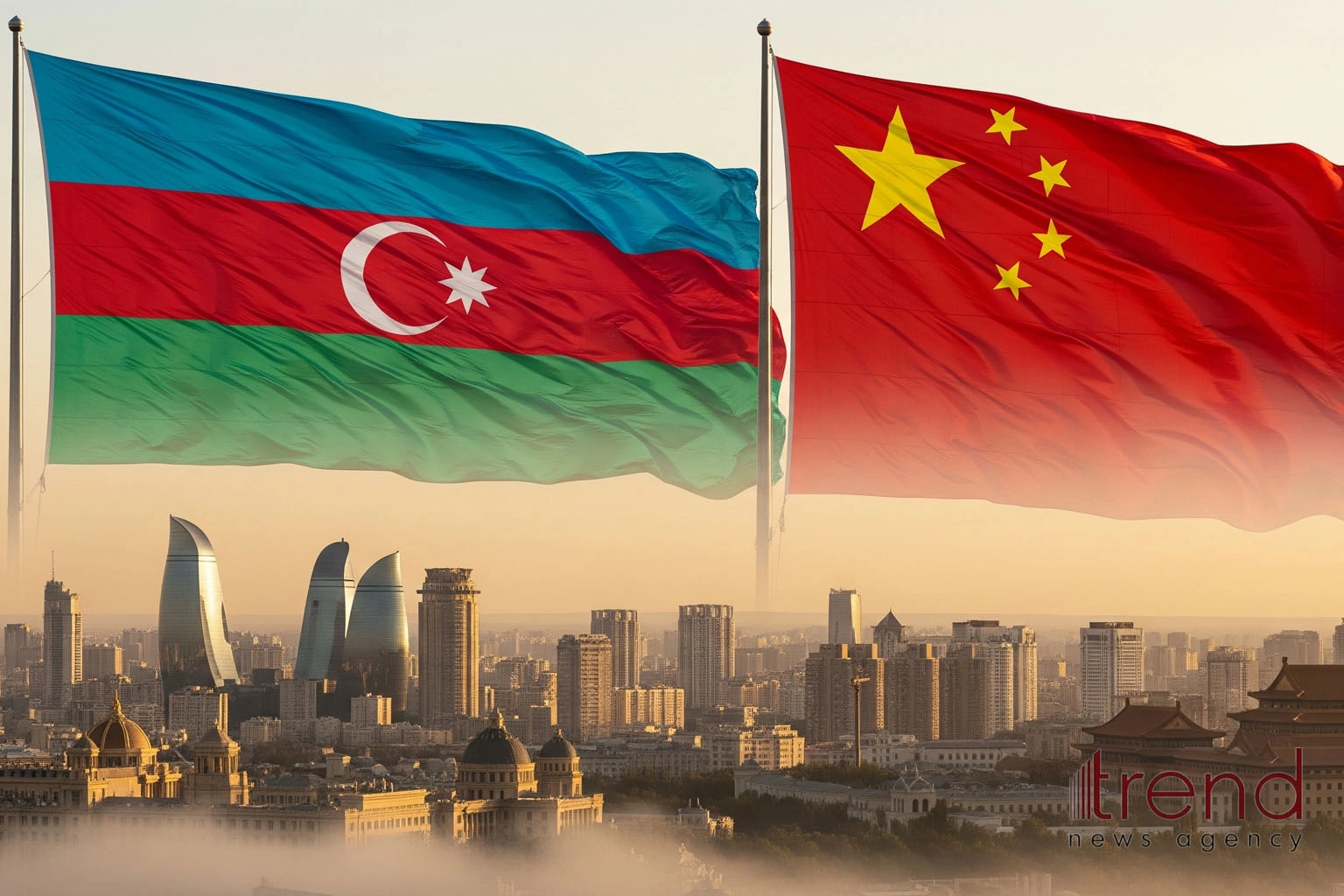
BAKU, Azerbaijan, February 4. As of February
2026, the Digital Silk Way project, anchored by the Trans-Caspian
Fiber Optic Line (TCFO) connecting Azerbaijan and Kazakhstan, is
entering its final construction phase. The deepwater cable has
already been produced, and laying operations are underway,
signaling a pivotal moment for Eurasia’s digital infrastructure.
The corridor is expected to become operational in the third quarter
of 2026, with full completion by the end of the year, positioning
the route as a strategic alternative for high-capacity data flows
between Asia and Europe.
The TCFO corridor aligns strategically with China’s broader
objectives under the Belt and Road Initiative, aiming to diversify
its data transit routes. Historically, reliance on the Malacca
Strait and other undersea cables traversing the Indian and Pacific
Oceans, many of which are controlled by Western entities, leaves
China vulnerable to potential disruptions. By establishing a data
route across the Caspian Sea through Azerbaijan and Kazakhstan,
China secures a more neutral and sanctions-resistant path,
bypassing sensitive geopolitical zones such as the South China Sea
and the Taiwan Strait. This route is poised to offer a “seamless”
connection to European data centers, ensuring high-speed,
low-latency access for cloud computing, artificial intelligence
applications, and financial services.
Although official sources have not confirmed the direct
involvement of Huawei or China Telecom in the TCFO project, these
companies are known for supplying optical equipment and coherent
400G/800G systems in similar Belt and Road ventures. The TCFO
corridor is designed to support transmission speeds of up to 400
terabits per second, positioning it as one of the highest-capacity
regional cables relative to its length.
This technological backbone, combined with terrestrial
integration through Azerbaijan and Kazakhstan, underscores China’s
strategic interest in embedding its infrastructure expertise within
Eurasia.
For Azerbaijan, TCFO is more than a cable - it is a step toward
establishing Baku as a major digital hub. The city is being
developed as an Internet Exchange Point, channeling traffic between
Asia, Central Asia, and Europe. AzerTelecom, part of NEQSOL
Holding, leads the project, turning the country’s geographic
position into tangible digital capital. By linking TCFO to
terrestrial networks through Georgia and Türkiye, the corridor
offers significantly lower latency compared with alternative
northern and southern routes, making it attractive for
international cloud providers, AI-driven services, and financial
transactions requiring high-speed connections.
The TCFO cable spans between 380 and 391 kilometers for its
primary route, with a supplementary reserve path measuring
approximately 341 kilometers. It establishes a direct connection
between Sumgayit in Azerbaijan and Aktau in Kazakhstan. The
project, with an investment exceeding $50.6 million, is primarily
financed by AzerTelecom and Kazakhtelecom. Designed for high
capacity and exceptional reliability, the corridor ensures
uninterrupted East–West data flows, even in the face of regional
geopolitical tensions.
The construction phase progressed through the completion of
desktop studies in June 2025, followed by marine surveys in August
2025. Since then, deepwater cable installation has been actively
underway.
From a geopolitical perspective, the TCFO corridor offers a
low-risk alternative to traditional northern and southern data
routes. While Russian northern corridors remain operational, they
require longer terrestrial and undersea routes, rendering them
susceptible to Western sanctions, regulatory obstacles, and
potential service disruptions.
Southern routes through Iran or via the Persian Gulf, including
projects like PEACE (Pakistan & East Africa Connecting Europe),
face even higher risks due to sanctions, regional instability, and
longer distances, which increase latency. By contrast, the Caspian
route is shorter, offers higher capacity relative to its length,
and maintains stable regulatory conditions, making it an attractive
option for China and Central Asian nations seeking secure European
connectivity.
The corridor also positions Azerbaijan as a central player in
the emerging Middle Corridor for digital traffic, enhancing
regional connectivity and reducing dependence on traditional
Russian-controlled pathways. This low-latency, high-capacity route
allows data to bypass both politically sensitive areas and aging
infrastructure, creating a more resilient digital ecosystem across
Eurasia.
In sum, the Trans-Caspian Fiber Optic Line exemplifies the
convergence of technology, finance, and geopolitics. For
Azerbaijan, it cements the country’s role as a critical digital
hub, transforming geography into a strategic advantage. For China,
it ensures direct, high-speed access to European markets,
mitigating reliance on undersea cables in the Indian Ocean and
Western-controlled nodes. As the corridor comes online later this
year, the TCFO project offers a glimpse of a digitally resilient
Eurasia, leaving observers to assess its broader implications for
regional power dynamics and global data flows.