BAKU, Azerbaijan, January 30. Azerbaijan’s GDP
growth is expected to remain positive in 2025, although it will
slow to approximately 2.0–3.5% compared to a higher growth of 4.1%
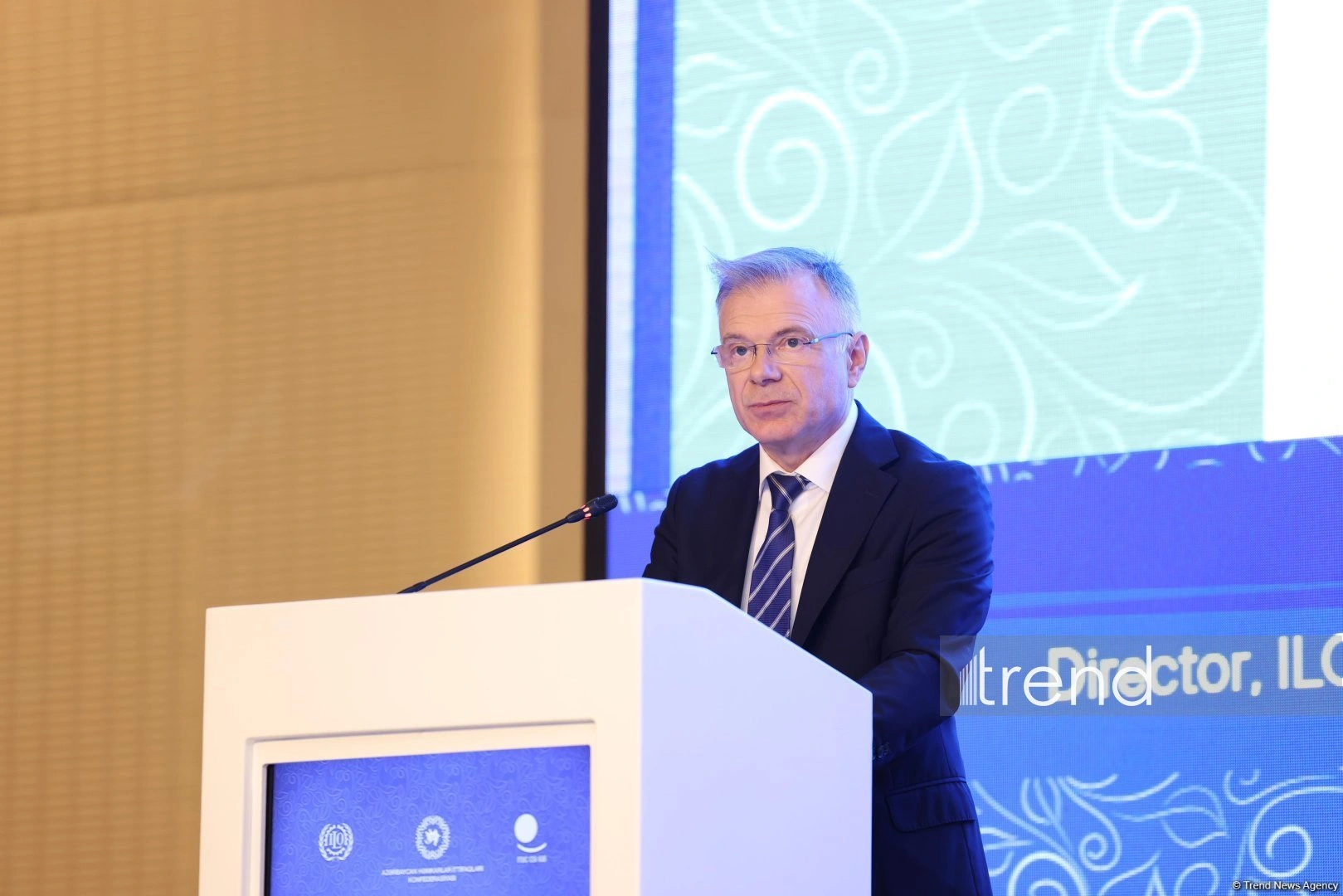
in 2024, partly due to reduced oil and gas production, Mikhail
Pushkin, Director of the Eastern European and Central Asian Office
of the International Labour Organization (ILO), said in an
interview with Trend.
According to Pushkin, the non-oil sector of the economy
continues to expand, reflecting the country’s diversification
policies. He emphasized that the construction sector, the
information and communication technology (ICT) industry, transport,
and tourism performed particularly well throughout the year.
"Since the annual labor market statistics for 2025 have not yet
been published, it is premature to draw final conclusions about its
state. Nevertheless, the labor market in 2025 is expected to
generally reflect the economic results of the year and recent
employment trends. Data published in September show stable
employment growth in the services sector. Overall, employment
growth rates in 2025 may be lower than in 2024," Pushkin said.
Joint ILO-Azerbaijan Initiatives in Maritime Sector and
Digital Labour Relations
Pushkin noted that following recent high-level and technical
discussions with the Ministry of Digital Development and Transport,
as well as the State Maritime and Port Transport Agency of
Azerbaijan, the ILO and its national partners (including the
government and employer and worker organizations) have identified
priority areas for cooperation, particularly in the maritime
sector.
He added that support is planned for Azerbaijan’s preparation to
join the Maritime Labour Convention of 2006.
"Discussions also focused on the digital transformation of labor
management in the maritime sector, including training in management
standards, the use of digital tools, and developing skills needed
for the changing world of maritime work. These cooperation
initiatives are being implemented under the Decent Work Programme
for Azerbaijan for 2025–2029, signed in November 2025, and will be
carried out in close coordination with the government and social
partners," he added.
International Labour Standards and the ILO’s Role in
Azerbaijan’s Digital Labour Transformation
Pushkin emphasized that, in the context of digital
transformation and the future of work, existing international labor
standards remain fully relevant.
He also noted that standards relating to fundamental principles
and rights at work, employment relations, occupational safety and
health, working time, and skills development form a crucial
regulatory framework to ensure technological changes contribute to
decent work.
"This approach is reflected in the ILO Centenary Declaration on
the Future of Work, which highlights the importance of a
human-centered approach to technological change, supported by
social dialogue, lifelong learning, and effective labor market
institutions. The ILO continues to support its constituents in
applying these standards in line with national priorities and
conditions," Pushkin concluded.
The Republic of Azerbaijan has been an ILO member since May
1992, ratifying 59 conventions and one protocol. Key milestones
include the adoption of the Labour Code in 1999 and active
tripartite cooperation, with a delegation comprising government,
employers, and workers. Azerbaijan was elected as a titular member
of the ILO Governing Body for 2017-2020 and continues to
collaborate on projects focusing on labor market issues and safe
working conditions, exemplified by the signing of the "Decent Work
Country Programme for 2025–2029" in November 2025.
Stay up-to-date with more news on Trend News
Agency's WhatsApp channel