BAKU, Azerbaijan, January 4. Accelerating
operational work within the North-South and East-West international
transport corridors is of great importance for Iran, Iranian
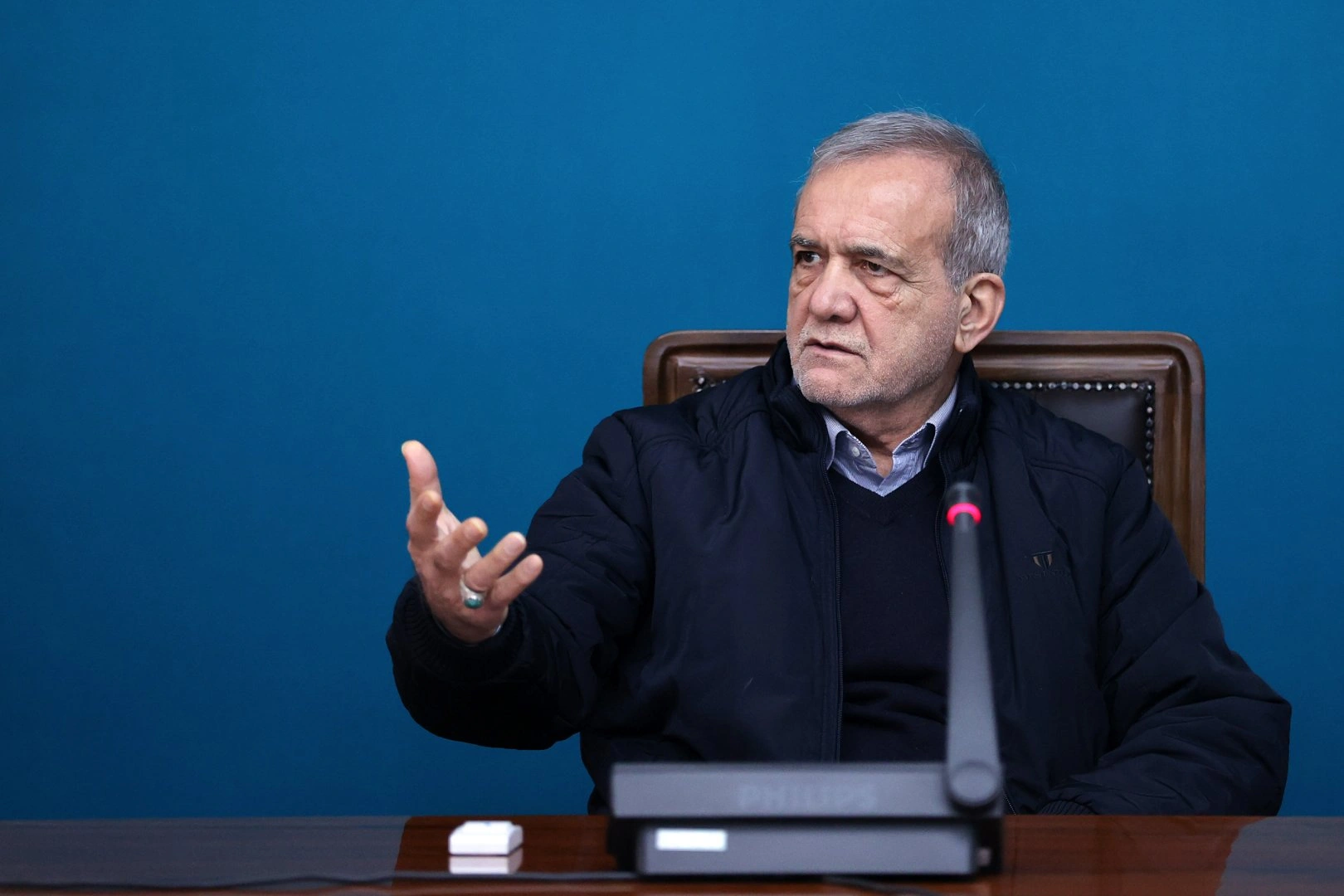
President Masoud Pezeshkian said on January 4 at a meeting in
Tehran dedicated to international transport corridors and the
development of a railway line in Tehran Province, Trend reports.
According to him, Iran’s Minister of Roads and Urban
Development, Farzana Sadeq, is actively working to attract domestic
and foreign loans and channel these funds into the construction of
the North-South and East-West international transport corridors,
the development of railway infrastructure in Tehran Province, and
the completion of ongoing railway projects.
The president noted that the current Iranian government, which
has been in power since August 2024, is working to remove a number
of taboos and restrictions in the construction sector. He stressed
that the main objective is to eliminate existing barriers in order
to simplify and accelerate the implementation of infrastructure
projects.
Pezeshkian recalled that the foundation of the North-South
International Transport Corridor was laid by an intergovernmental
agreement signed by Russia, Iran, and India on September 12, 2000.
The agreement was later ratified by Azerbaijan, Belarus, Bulgaria,
India, Iran, Kazakhstan, Kyrgyzstan, Oman, Russia, Tajikistan,
Turkey, and Ukraine. The corridor is aimed at reducing cargo
delivery times from India to Russia, as well as to Northern and
Western Europe, from more than six weeks to about three weeks.
As part of the corridor, the 175-kilometer Qazvin–Rasht railway
was commissioned on March 6, 2019, linking Azerbaijan’s railways
with the Iranian railway network. The Rasht–Astara railway project
is planned for implementation in Iran.
Within Iran, the North-South corridor includes three routes: the
eastern route through Turkmenistan and Central Asian countries, the
central route via the Caspian Sea to Russia and other states, and
the western route through Azerbaijan, Georgia, Russia, and Eastern
European countries.
In addition, on May 17, 2023, Russia and Iran signed an
agreement to construct the Rasht–Astara railway in Iran’s northern
Gilan Province. The approximately 163-kilometer line will include
nine stations. Once completed, the project is expected to
significantly strengthen the North-South International Transport
Corridor and connect Iran’s railway network with the Caucasus,
Russia, and Northern Europe. Under the agreement, Russia plans to
invest 1.6 billion euros in the project, with completion scheduled
within 48 months.