BAKU, Azerbaijan, December 27 The IDEA Public
Union was created with the clear purpose to respond to
environmental challenges in Azerbaijan and around the world, said
Leyla Aliyeva, Vice-President of the Heydar Aliyev Foundation,
founder and head of the IDEA Public Union, in an interview with
Euronews, Trend
reports.
The channel prepared a reportage on IDEA's activities in the
field of environment, climate change, and biodiversity
protection.
“From the very beginning we understood that ecology is much more
than saving species or addressing climate issues. It is about the
way we live, our lifestyle, our culture, and the impact each of us
has on the environment. While unfortunately many countries are
losing their reserves. Azerbaijan continues to increase them. Two
new national parks have opened in recent years, and others have
been expanded.
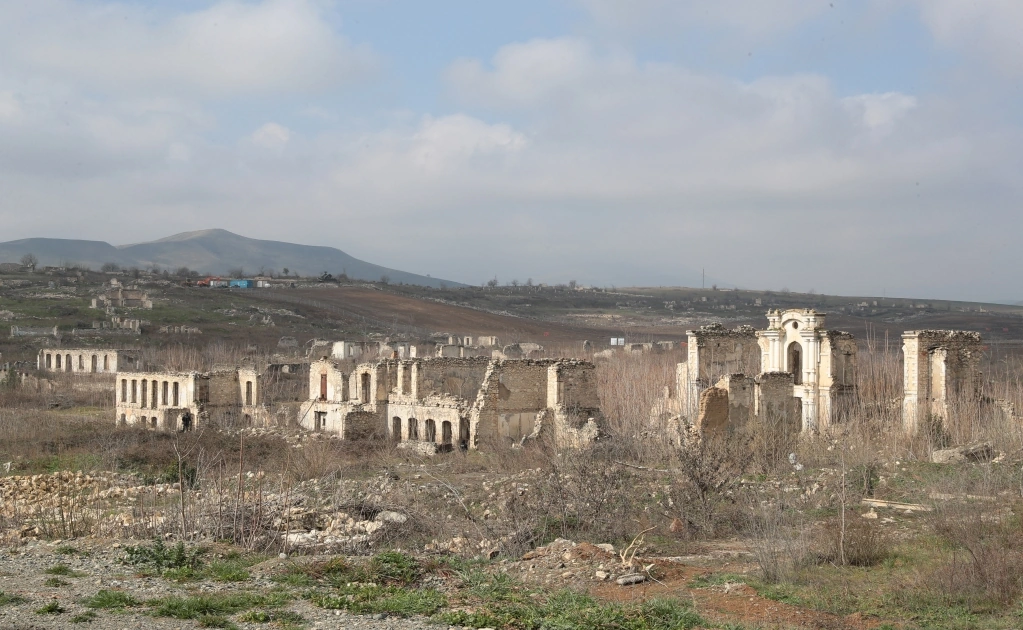
Next year, we are expecting to open the Garabagh National Park,
which will bring the country’s protected areas to around 30 percent
of its territory. Today, we are focusing on new urgent challenges,
especially the situation in the Caspian Sea - declining water
levels, pollution, and growing threats to marine life, including
the Caspian seal. This is a crisis no single country can solve
alone. We must work together and value the Caspian Sea as the
shared national treasure.
I think, now, we have reached the stage where environment is
much more about action. We spoke about it enough, of course, it is
important, but nature doesn't need us to speak any more, it needs
us to act. The most important thing is to stay positive and
understand that you by yourself can make a huge difference.
Together, we can achieve miracles,” Leyla Aliyeva said.
The article emphasized that environmental protection measures in
Azerbaijan extend far beyond biodiversity conservation. It noted
that national institutions and companies, particularly IDEA, are
working to protect the environment both on land and at sea. One of
the most visible results of this work is the expansion and
protection of national parks across the country.
Speaking to Euronews, Arzu Babayeva, Deputy Head of the
Biodiversity Conservation Service at Azerbaijan’s Ministry of
Ecology and Natural Resources, said: “There are many environmental
problems in the world, including biodiversity loss, climate change,
and ecological pressure. Now is the time to act. The work we do is
not for ourselves, but for the world, nature, and future
generations.”
She noted that the first protected area was established in 1910,
after which the network of such areas expanded: “Currently, we have
12 national parks, 9 state nature reserves, and 24 state wildlife
sanctuaries. These areas are home to endangered and rare species
such as the imperial eagle, mountain gazelles, brown bears,
white-tailed eagles, and others.
The reportage highlighted that while the government works on
establishing national parks, the efforts of local organizations
such as IDEA are particularly impactful. The organization has
contributed to the reintroduction of bison to northern regions of
Azerbaijan, as well as to the protection of the Caspian Sea, one of
the country’s most important natural assets.
In his comments, Elshad Asgarov, Director of WWF Azerbaijan,
said that the bison, a symbol of the Caucasus region, lived in
Azerbaijan in ancient times: “We started the project in 2018, and
Ismayilli district was selected as one of the places where the
bison could still be restored. We then found animals in European
zoos that still carried Caucasian bison genes. Therefore, we
brought here only individuals with the genetic traits of the
Caucasian mountain bison. They now live in the wild - spending
summers in the alpine zone and descending into forested areas
during the cold season to overwinter.”
The author noted that IDEA has used the same approach working on
projects in the Caspian Sea. “Microplastic pollution is another
major issue facing the Caspian Sea. Large amounts of plastic
pollution originate from other countries and are carried to the
Caspian shores by currents. Under IDEA’s leadership, a number of
initiatives are being implemented to clean plastic waste from the
Caspian coastline,” said Elnur Safarov, coordinator of the Caspian
Integrated Scientific Network (CASPISNET) program at the Institute
of Geography.
The author concluded saying that these environmental threats are
raising increasingly broader issues - from partnership and
responsibility to the future of the planet itself.