BAKU, Azerbaijan, September 19. On September
19, 2023, local anti-terror measures carried out by the Azerbaijani
Armed Forces in Karabakh significantly weakened the remaining
Armenian armed formations and separatists, resulting in the
disintegration of their resistance. This illustrated Azerbaijan's
robust standing in both military and diplomatic strategic domains.
Consequently, the Armenian forces capitulated after less than 24
hours of anti-terror measures, incurring significant casualties.
The cessation of Armenian separatism in Karabakh resulted in
Azerbaijan achieving complete territorial integrity.
On November 10, 2020, a trilateral statement following the
Second Karabakh War established new realities in the region. The
agreement called for the withdrawal of Armenian armed forces from
Karabakh, a requirement Armenia failed to meet. Specifically,
Article 4 of the trilateral statement stipulated the withdrawal of
Armenian forces from Azerbaijani territories. Armenia's failure to
fulfill this obligation became an obstacle to lasting peace.
Yerevan sought to delay its commitments, ignoring Azerbaijan's
genuine calls for peace. Furthermore, Armenia's revanchist claims
and the maintenance of the status quo hindered the realization of a
peace agreement.
The Armenian armed forces continued provocations, transporting
weapons and ammunition through the Lachin-Khankendi road.
Azerbaijan took concrete steps to prevent these provocations. The
establishment of the Lachin border checkpoint in April 2023, as
well as the proposal to use the Aghdam-Khankendi road for
humanitarian purposes, disrupted Armenia's plans. Armenia tried to
accuse Azerbaijan on the international stage of allegedly creating
a "blockade" and "humanitarian crisis," but these claims were
baseless, as Azerbaijan was clearly providing humanitarian
assistance.
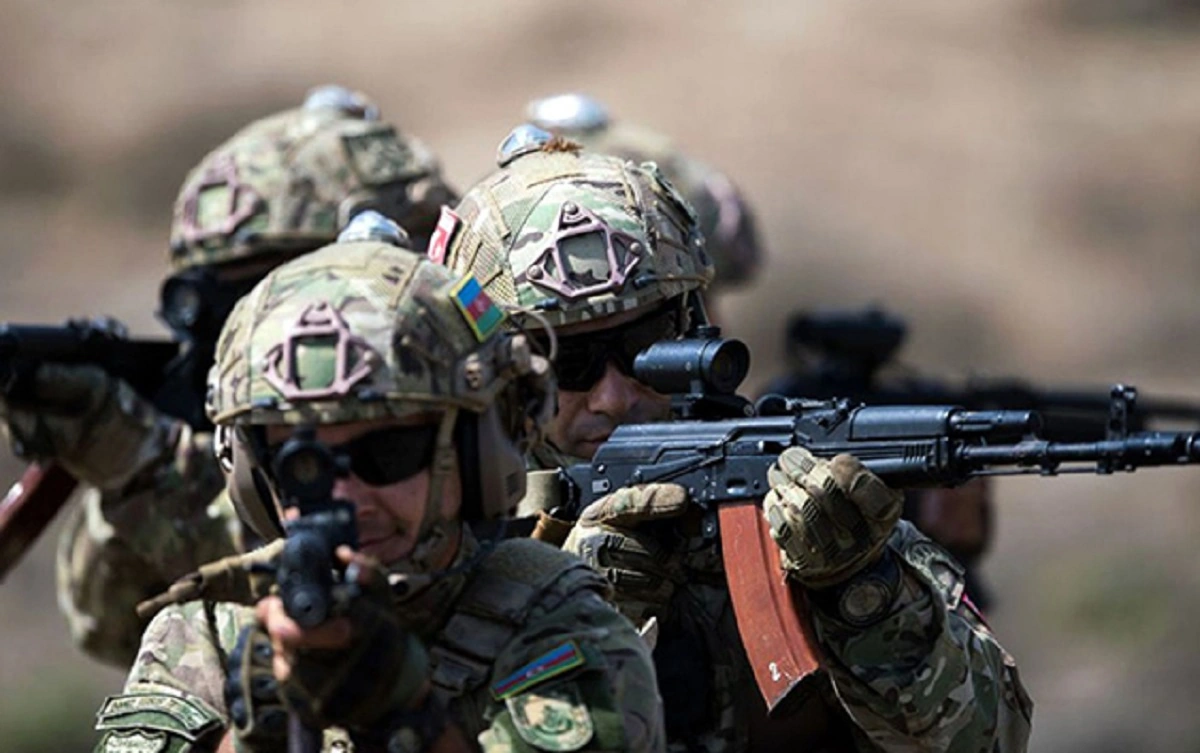
The Azerbaijani Armed Forces fully respected international
humanitarian law during their anti-terror measures. The targets
were illegal military facilities and infrastructure, with no harm
to civilians. The Azerbaijani Army's high-tech capabilities and
professionalism enabled them to successfully complete the
anti-terror measures in a short time. At the same time, the
government of Azerbaijan, in the face of false accusations by
Armenia of "blockade" and "genocide," informed the international
community of the real situation in the region.
The illegal Armenian armed formations withstood for only 23
hours and 43 minutes before surrendering. This Victory created the
conditions for the complete restoration of Azerbaijan's territorial
integrity and ended separatism in Karabakh.
This Victory, achieved under the leadership of President Ilham
Aliyev, was the result of Azerbaijan's military strength and
political will. The professionalism and power of the Azerbaijani
Army thwarted Armenia's military, political, and ideological plans
in the region. This Victory also once again demonstrated to the
international community the strength and determination of
Azerbaijan.
The successful anti-terror measures in Karabakh prevented
further Armenian provocations and illegal actions that had been
ongoing in the region for years. These measures fully restored
Azerbaijan's territorial integrity and sovereignty, thereby ending
Armenian separatism in the region.