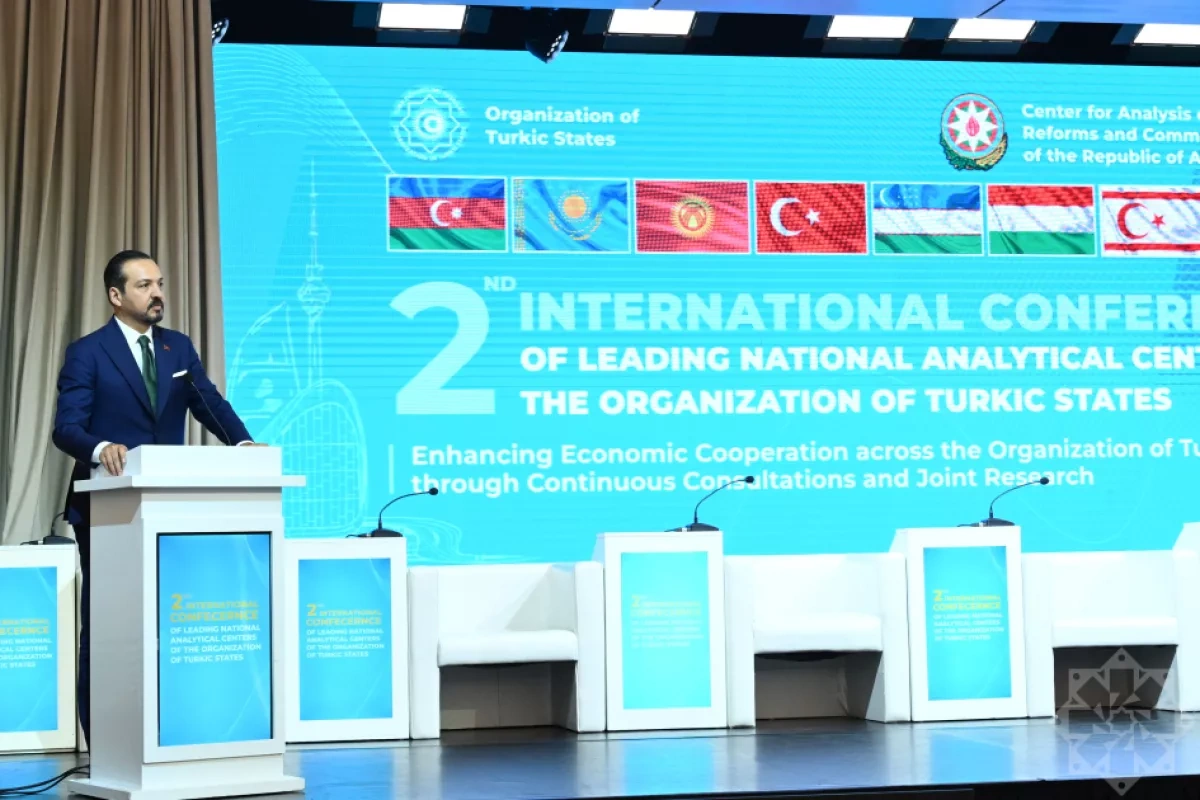
The growing importance of the Middle Corridor to the international community was underscored once again at the recent 2nd International Conference of Leading National Analytical Centres of the Organisation of Turkic States (OTS), held in Baku, where the corridor’s development, prospects and potential were among the key topics discussed.
At the conference, Kürşad Zorlu, Deputy Chairman of Türkiye’s ruling Justice and Development Party (AK Party), put forward a package of proposals that could be implemented in the near future. Among them was a project to establish a joint Development Bank of the Turkic States, which, he said, could help turn the Middle Corridor into an investment platform.
“To have greater weight in the global financial market, we need to establish a joint Development Bank. At the direction of our President, we, together with the Financial Office of the Presidency, have also prepared a relevant project. We will present it to the other Turkic states, as well as to the Secretariat General of our Organisation,” he said.
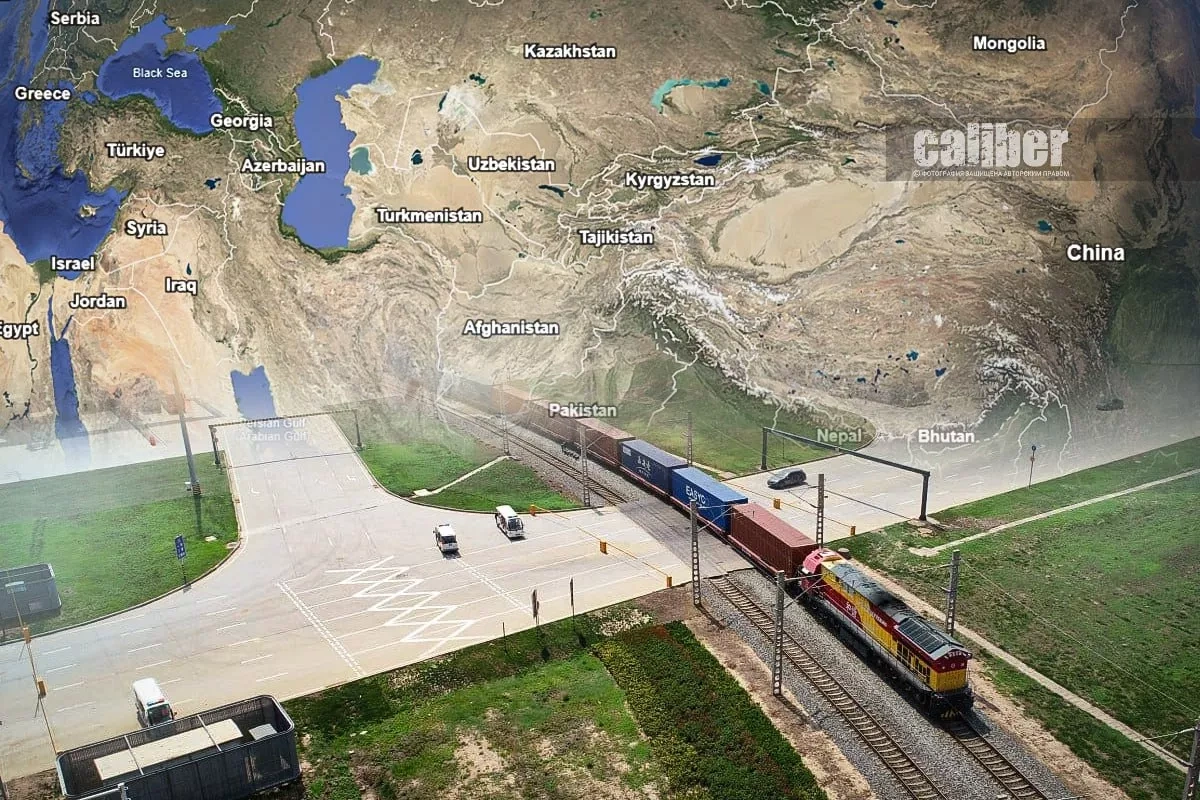
Zorlu also stressed that Türkiye was seeking to open a new route linking the Middle Corridor with the Persian Gulf.
“Our vision is not limited to using the Caspian Sea as a transit route. We have signed a preliminary protocol of an agreement with Iraq on the Development Road project. This route will pass through Türkiye towards the Persian Gulf,” Kürşad Zorlu said.
How exactly could the Development Road enhance the potential of the Middle Corridor? And what could Türkiye’s proposals bring to the member states of the Organisation of Turkic States more broadly?
Caliber.Az put these questions to Turkish and Kazakh analysts.
According to Göktuğ Çalışkan, a specialist in international relations at the Ankara Center for Crisis and Policy Studies (ANKASAM), the discussions at the 2nd International Conference of Leading National Analytical Centres of the Organisation of Turkic States focused on a more comprehensive model of transport connectivity than the geography of the Middle Corridor alone.
“Until now, we have primarily viewed the Middle Corridor as an east-west route that starts in China and Central Asia and runs through the Caspian Sea, Azerbaijan, Georgia and Türkiye to Europe. However, the Turkish project seeks to integrate a strong north-south component into this east-west system. In this way, cargo arriving in Türkiye from Azerbaijan via the Middle Corridor could be redirected southwards through Türkiye’s transport network. It is then planned to transport it to the Ovaköy border crossing via the major industrial and logistics hub of Gaziantep and the transit point of Şanlıurfa. From there, the route would cross Iraq from north to south via Mosul and Baghdad, ending in Basra and connecting the inland network to the facilities of Al-Faw, which is expected to soon become the largest deep-water port in the Middle East. From there, cargo would gain access to the waterways of the Persian Gulf and the Indian Ocean.
Thus, this communications branch extending southwards from the Middle Corridor would operate as follows: cargo from Central Asia and the South Caucasus would be able to reach Iraq and the Persian Gulf via Türkiye, while, conversely, cargo arriving at Al-Faw port from countries in the Persian Gulf or the Indian Ocean basin could be transported to Europe through Türkiye or enter the markets of the South Caucasus and Central Asia. As a result, Ankara is strengthening its position as a logistics hub where east-west and north-south trade flows intersect,” he stressed.
The political analyst also highlighted the importance of the Kars–Iğdır–Dilucu railway project in strengthening transport links between Azerbaijan and Türkiye in the context of the Middle Corridor and facilitating the delivery of cargo via alternative routes through Türkiye to the Mediterranean, Europe, and southwards to Iraq and the Persian Gulf.
“However, although the idea is sufficiently clear from both a policy and implementation perspective, the final technical route and operational model for all the logistics links have yet to be approved. The financing of the Development Road in Iraq, its connection to Ovaköy, and Türkiye’s involvement are among the project’s critical elements and therefore must not be disrupted or delayed. In addition, the Middle Corridor itself has areas that require attention, such as insufficient shipping capacity in the Caspian Sea, shortages of railcars and containers, customs-related issues, and so on. These problems were highlighted particularly clearly during the recent consultations on this issue in Azerbaijan’s capital.
In my view, another highly important point, apart from the key issue of the Middle Corridor, is the proposal to establish a joint Development Bank of the Turkic States. The Turkic Investment Fund already exists, but a broader financial mechanism is now being considered that could secure financing on international financial markets, provide loans, and support major infrastructure investments, particularly projects such as the Middle Corridor. If this idea receives the support of the member states of the Organisation, continued economic cooperation within the OTS could become significantly more important. Thus, the main point that caught my attention at the meeting in Baku was this: cooperation among the Turkic states is increasingly acquiring a concrete economic dimension based on transport, customs, finance, digitalisation and joint investment,” Çalışkan said.
Meanwhile, Farhad Kasenov, head of the A+Analytics research centre and a Kazakh political analyst, noted that the Development Road in Iraq, once connected to Türkiye’s logistics routes, would make it possible to transport cargo along the Middle Corridor directly to the Persian Gulf and the Indian Ocean.
“Global logistics is undergoing major changes today, primarily because, as recent military conflicts have demonstrated, maritime routes are exposed to very serious risks, with the situation in the Strait of Hormuz being a case in point. I believe this is because maritime routes are relatively narrow and can be blocked fairly easily using missiles and warships, making land routes appear more reliable. In this case, we are talking about the construction of a new route that could, to some extent, unblock transport flows or, so to speak, reduce dependence on maritime arteries. It would also provide an additional route for delivering cargo from the Persian Gulf countries to Europe and complement the Middle Corridor,” he said.
The expert stressed that the new route is highly important for Iraq, as major ports inherently require corresponding cargo flows.
“The Al-Faw port has been actively developed and could handle up to 100 million tonnes of cargo, but it needs sufficient throughput, meaning cargo that will arrive there and continue onwards. Therefore, additional routes are very important for Iraq.
As for Kazakhstan’s position, Astana is guided by the following strategy: anything that makes the region more stable, strengthens the influence of friendly countries and ensures additional cargo flows through the Middle Corridor is unequivocally welcomed. Another aspect is that all of this was discussed within the framework of the Organisation of Turkic States, and this is by no means accidental. Ankara undoubtedly plays an important role in this regard, and strengthening Türkiye and expanding its logistics capabilities benefits all the countries of the Turkic world because, overall, this increases the interest of global powers in our countries and expands our opportunities,” Kasenov concluded.