BAKU, Azerbaijan, September 17. The creation of
a unified database and digital map of historical and religious
architectural monuments could serve as one of the starting points
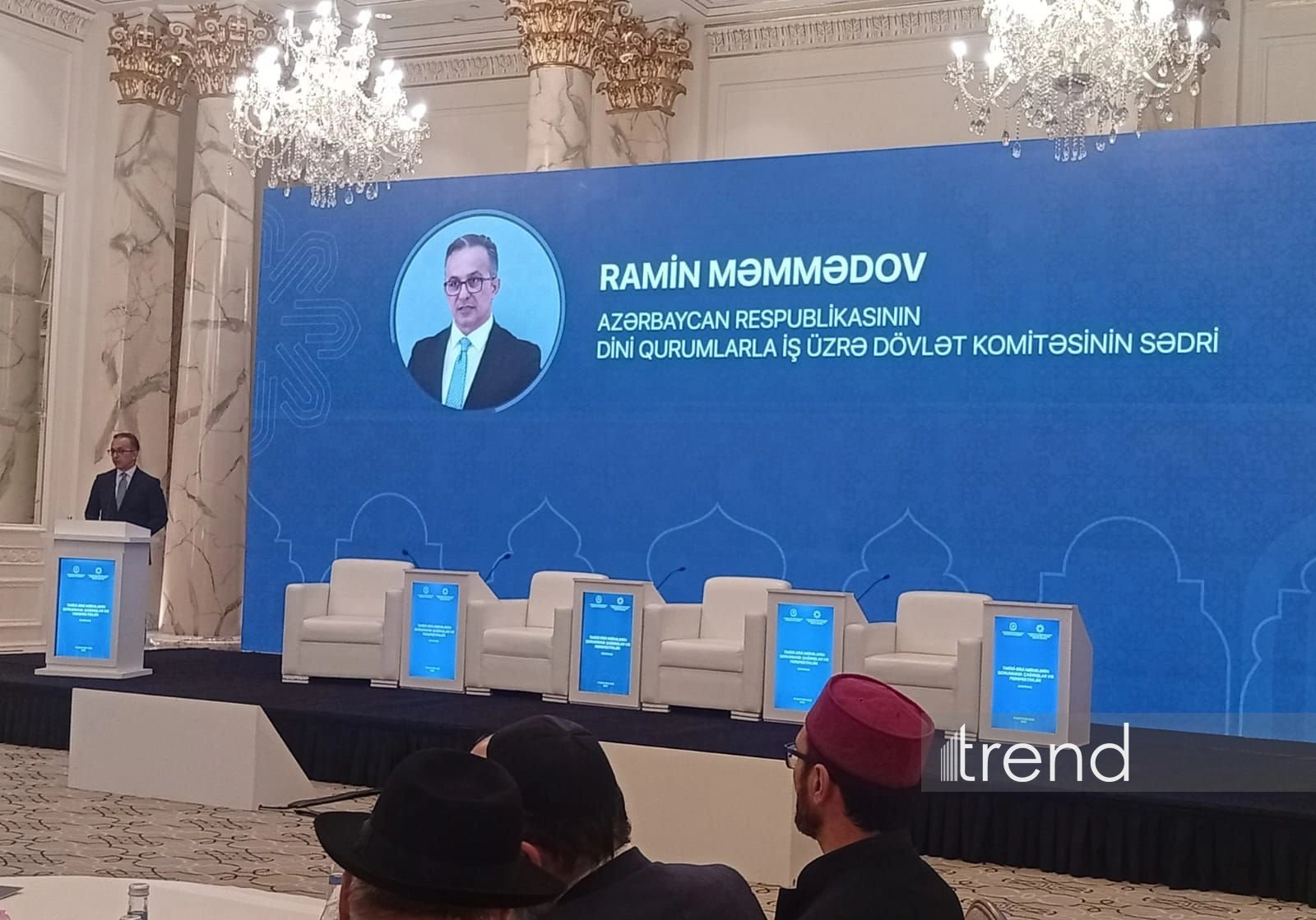
for joint activities, Ramin Mammadov, chairman of the State
Committee for Relations with Religious Organizations, said,
Trend's correspondent
reports from the event.
Mammadov made the remark at a conference titled “Preservation of
Historical and Religious Monuments: Challenges and Prospects.”
He noted that every religious architectural site has a unique
structure, its own history of origin and development, as well as
traditions of use and worship that have evolved at that location
over the centuries.
“In this regard, when necessary, alongside specialists in
architecture, history, archaeology, and restoration and
conservation, it would be beneficial to also involve theological
experts in the process. After all, when restoring any religious
monument, we must strive to preserve its historical authenticity,
religious and spiritual significance, and unique characteristics to
the greatest extent possible,” Mammadov said.
The committee chairman noted that the restoration of religious
monuments is an expression of respect for the past, a commitment to
national memory, and a sense of responsibility toward future
generations.
Mammadov emphasized that one of the key areas of the large-scale
construction effort underway in the liberated territories is the
restoration of historical and religious monuments.
“The goal here is not merely to rebuild destroyed buildings. The
restoration of cultural heritage sites that were destroyed,
desecrated, or whose historical appearance was altered during the
occupation represents the revival of our people’s spiritual
memory,” he added.
The committee chairman noted that the restoration of a
historical and religious monument is not the end of the process,
but the beginning of a new phase. At this stage, coordinated
efforts by the relevant government agencies, experts, and religious
communities are essential.
In addition, Mammadov added that close cooperation and a track
record of collaboration in the field of protecting historical and
religious heritage have developed between the Ministry of Culture
and the State Committee for Work with Religious Organizations. The
prompt exchange of information regarding the legal status,
technical condition, current use, and existing problems of
monuments allows for the proper identification of priorities and
more effective planning of future work.
A conference on “Preservation of Historical and Religious
Monuments: Challenges and Prospects,” organized jointly by the
Ministry of Culture and the State Committee for Relations with
Religious Organizations, has begun in Baku.
The conference is attended by Minister of Culture Adil Karimli,
Chairman of the State Committee for Relations with Religious
Organizations Ramin Mammadov, members of the Azerbaijani
parliament, rectors of higher education institutions,
representatives of government agencies, and experts in the
field.
The main topics of discussion at the conference will include the
preservation, protection, and restoration of historical and
religious monuments in Azerbaijan; the identification of existing
challenges in this area; and ongoing efforts to preserve the
national, cultural, and religious heritage for future
generations.
The conference will feature an exchange of views on cooperation
among government agencies, religious communities, and scientific
and educational institutions in the preservation of historical and
religious monuments, the application of modern approaches to their
study and restoration, and the prospects for further work in this
area.