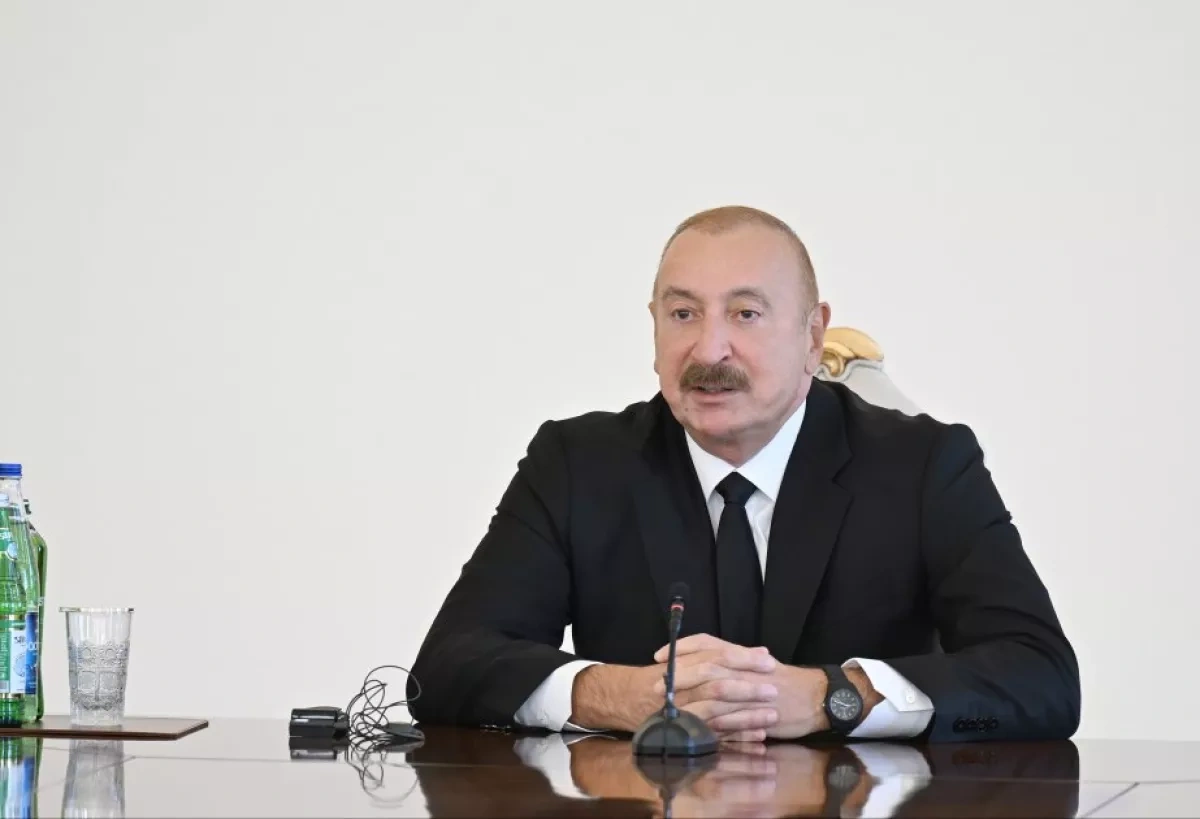
Azerbaijani President Ilham Aliyev has called for stronger security cooperation among the member states of the Organization of Turkic States (OTS), saying growing global threats require closer coordination.
Speaking to participants of the Fifth Meeting of the Secretaries of the Security Councils of OTS member states in Baku, Aliyev said the meeting was particularly significant as it was being held in Azerbaijan for the first time, Azertag reports.
“Common ethnic roots, language, culture, and traditions unite our brotherly peoples as one strong family,” Aliyev said, describing the OTS as an example of “the unity and effective cooperation” of its member states.
He said the Turkic world had entered “a period of development”, citing peace, stability and development processes in member states.
Aliyev also highlighted Azerbaijan’s Karabakh Victory six years ago, calling it “our shared source of pride and honor” and saying it had created “a new geopolitical reality in the region”.
According to the president, the victory had also paved the way for the realisation of the Zangezur Corridor, which he described as “a historical gateway connecting our countries economically, logistically, and strategically”.
He thanked OTS member states for their support for the reconstruction and restoration of Azerbaijan’s liberated territories.
Aliyev noted that, Azerbaijan, which currently holds the OTS chairmanship, was working to strengthen unity among member states and expand cooperation in political, economic, energy, humanitarian, military and security fields.
He also highlighted the development of the Middle Corridor, a transport and logistics route linking Europe and Asia, including through the Zangezur Corridor and other transport links.
Turning to security issues, Aliyev said new challenges, including cyber threats, emerging areas of instability and what he described as a “crisis of international law”, made it necessary for OTS members to coordinate their positions and activities.
“Cooperation between the security councils of the member states of the Organization of Turkic States demonstrates that the integration process of the Turkic world is not limited merely to the political, economic, and cultural spheres, but also has a long-term strategic character,” he said.
Aliyev said regular meetings of security officials were important for identifying common regional and global threats and finding ways to address them.
He listed international terrorism, transboundary organised crime, illicit drug trafficking, religious extremism, hybrid threats and the protection of critical infrastructure among the challenges that required joint action.
“Indeed, issues such as combating international terrorism, transboundary organized crime, illicit drug trafficking, religious extremism, hybrid threats, and protecting critical infrastructure are matters that no single state can resolve alone,” Aliyev said.
He expressed confidence that the Baku meeting would contribute to the security of OTS member states and help build what he called “a common security architecture” across the organisation.
By Aghakazim Guliyev