BAKU, Azerbaijan, September 17. The ability to
adapt to different circumstances and act flexibly will be the most
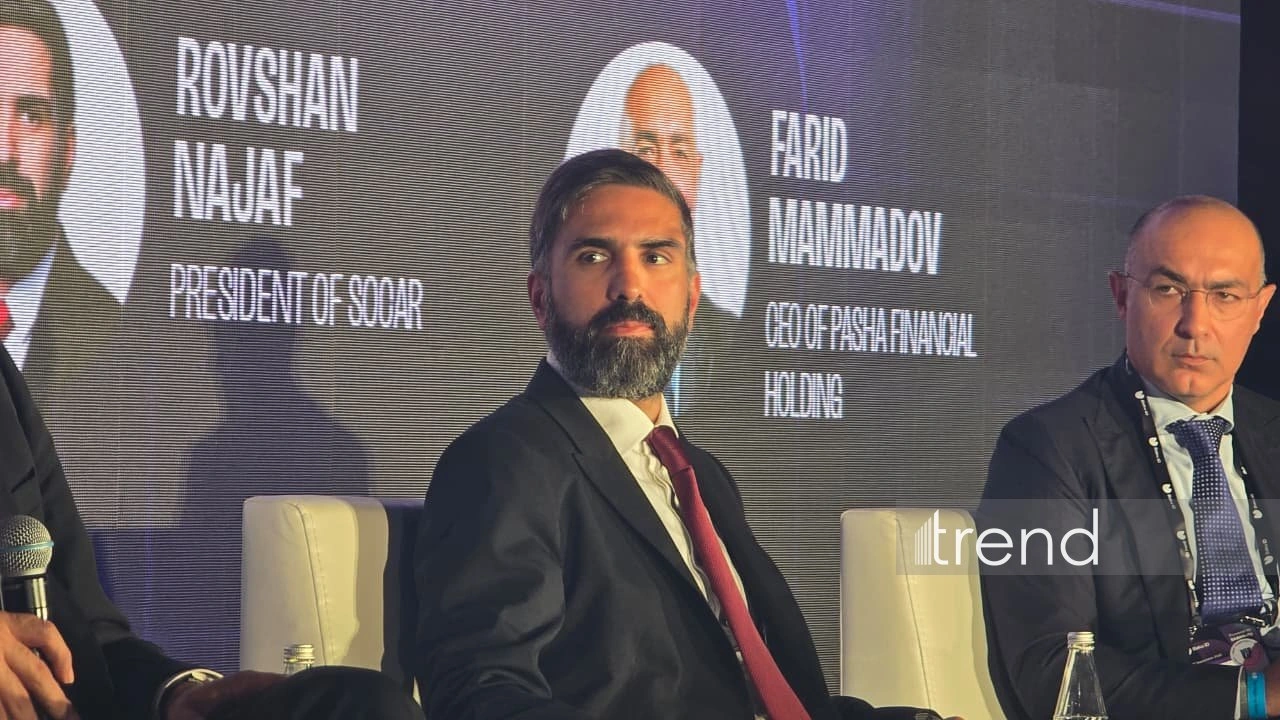
important skill in the future labor market, SOCAR President Rovshan
Najaf said at the opening ceremony of the Baku ID 2026 innovation
festival held at the SABAH. City Innovation Campus, Trend's correspondent reports
from the event.
He said that the concepts of the short, medium, and long term
are changing, making lifelong learning particularly important. "In
the world of the future, the concept of lifelong learning will be
of crucial importance," Najaf said.
According to him, the importance of such areas as automation,
robotics, artificial intelligence and cybersecurity is growing
every day. "We still cannot fully grasp the scale of this issue.
The most important skill of the future is adaptability. Thinking
differently in different circumstances and acting flexibly are
becoming essential," the SOCAR president stressed.
Najaf noted that alongside the growing use of artificial
intelligence, it is also necessary to be prepared for scenarios in
which these technologies may become unavailable. "What if one day
these technologies become unavailable? Will we be able to continue
our work without them?" he stressed.
According to him, traditional professions and fundamental skills
should therefore retain their relevance, while managers in both the
public and private sectors should have A, B and C plans covering
different possible scenarios. "Vocational schools should teach
traditional skills and the ability to teach others alongside
artificial intelligence and robotics. Throughout history, there
have been many highly talented people who, however, were unable to
pass their knowledge on to the next generations," Najaf said.
The SOCAR president said he hoped that the SABAH. City
Innovation Campus would eventually become not only a space for
infrastructure and technological innovation, but also a creative
environment for people who think freely and put forward different
ideas. "I hope that this space will first and foremost be a ‘home’
for free-thinking minds that go beyond established boundaries and
come up with bold and different ideas. There are many places with
coffee and good facilities, but there are few spaces where people
feel as comfortable and creative as they do at home," he said.
Najaf said that through its vocational education programs, SOCAR
seeks to meet not only its own needs but also those of other
companies.
He added that it is difficult to accurately predict the changes
that will occur in the future, and even leading experts in
artificial intelligence cannot determine precisely what the next
five to 15 years will look like. "Throughout human history, we have
forgotten many fundamental skills. Most of us no longer know how to
navigate by the stars, make fire naturally, or treat illnesses with
plants. If we also delegate our critical thinking ability to
artificial intelligence and lose it, this could become an
irreversible process," Najaf stressed.
The SOCAR president noted that the key goal should be to develop
human thinking and adaptability alongside technological
progress.
The Baku ID 2026 innovation festival is being held in Baku on
September 17–18, organized by SABAH.HUB Innovation Center, with the
support of government agencies and private-sector partners.
Baku ID brings together investors, startups and leading
representatives of the innovation ecosystem. The festival is being
held for the first time this year at the SABAH. city innovation
campus, one of Azerbaijan’s emerging centers for future
technological development. Bringing together industry, science,
capital and the public sector in a single environment, SABAH.city
is being developed as a modern ecosystem aimed at strengthening the
country’s innovation potential.
The two-day festival program includes keynote speeches, panel
discussions, startup presentations and networking sessions.
Discussions will cover key trends shaping the future of technology
and business, including artificial intelligence, venture capital,
angel investment, and financial, healthcare, education, green, and
property technologies.
As part of the festival, local and international startups will
present their solutions to investors representing Azerbaijan,
Kazakhstan, Uzbekistan, Türkiye, Georgia, the Middle East and North
Africa, and other international markets.