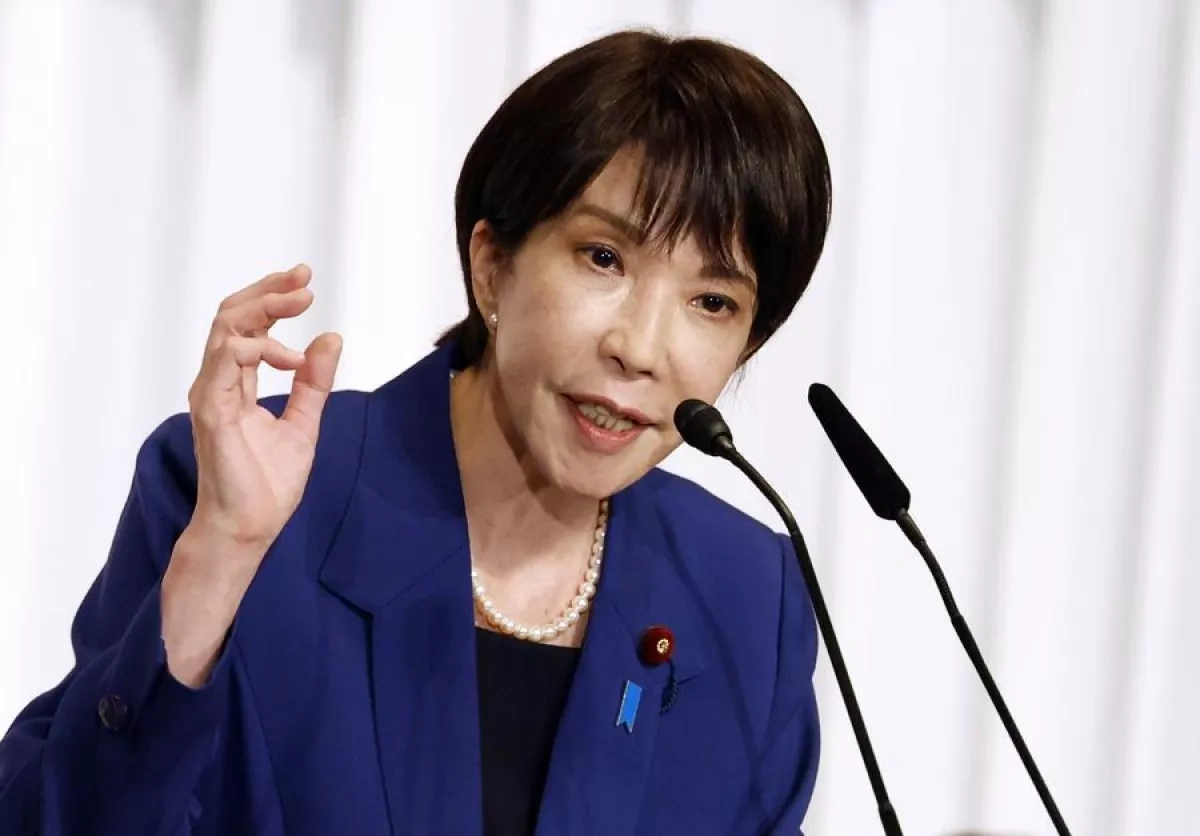
Japanese Prime Minister Sanae Takaichi reshuffled her Cabinet on September 17, retaining several key ministers as she seeks continuity ahead of an extraordinary parliamentary session expected to begin in October.
The reshuffle is the first since Takaichi became prime minister last year. Chief Cabinet Secretary Minoru Kihara, Foreign Minister Toshimitsu Motegi, Finance Minister Satsuki Katayama, Defence Minister Shinjiro Koizumi, and Economic and Fiscal Policy Minister Minoru Kiuchi all kept their positions, Caliber.Az reports, citing Japanese media.
Internal Affairs Minister Yoshimasa Hayashi was replaced by Hisayuki Fujii, a Liberal Democratic Party (LDP) member of the House of Representatives.
Hayashi, 65, previously served as foreign and defence minister and was a senior aide to former Prime Minister Fumio Kishida. He is also viewed as a potential contender in next year’s LDP leadership race.
Hayashi, Motegi, 70, and Koizumi, 45, all lost to Takaichi, 65, in the previous LDP leadership election. The decision to retain two of her former rivals in the Cabinet could help maintain continuity within the government.
Hiroshi Nakatsuka, formerly secretary general of the Japan Innovation Party (JIP), was appointed minister responsible for regulatory reform, administrative reform and child-related policies. He becomes the first Cabinet minister from the LDP’s junior coalition partner.
The JIP, which is based in Osaka Prefecture, had supported the LDP from outside the Cabinet after the two conservative parties formed a coalition on October 20. The alliance helped Takaichi secure the premiership in a parliamentary vote the following day.
Public support for Takaichi’s government, Japan’s first led by a woman prime minister, has remained around 50 per cent in recent months, down from about 70 per cent when she first took office.
Takaichi also reshuffled the LDP leadership on September 16, retaining influential figures including Vice President Taro Aso, a former prime minister, and Secretary General Shunichi Suzuki.
The government and the LDP are now preparing for an extraordinary Diet session expected to begin around October 5.
Among the issues expected to be debated is a proposal to cut the consumption tax on food and beverages from 8 per cent to 1 per cent for two years starting in April.
The session is also expected to consider a controversial political reform bill that would reduce the number of seats in the lower house. The legislation was carried over for further discussion after its introduction by the ruling coalition during the previous Diet session drew strong criticism from opposition parties.
By Sabina Mammadli