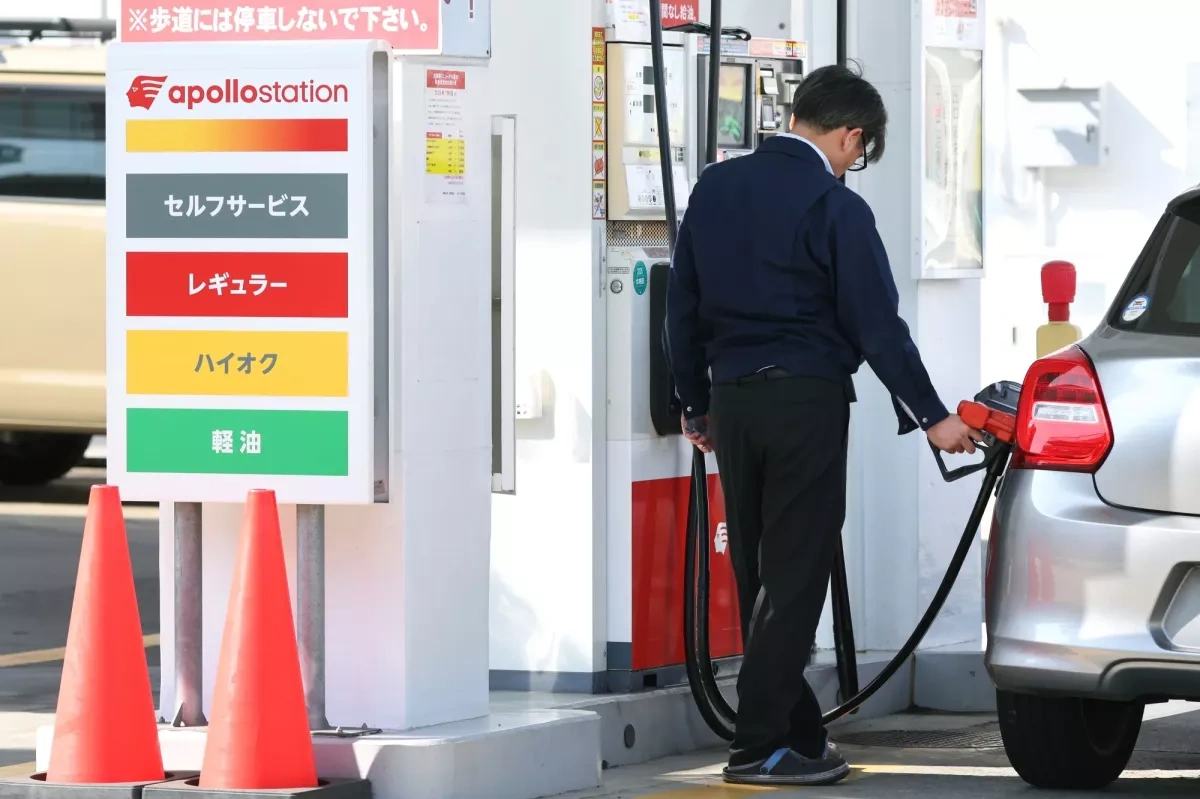
Japan will maintain subsidies aimed at keeping petrol prices at around 170 yen ($1.06) per litre as the government seeks to shield households from rising costs amid the continuing conflict in the Middle East.
Prime Minister Sanae Takaichi said she had instructed officials to secure the funding needed to continue the programme, citing uncertainty over future crude oil prices, Caliber.Az reports, citing Japanese media.
“We will protect the people and their livelihoods and prevent disruptions to economic activity,” Takaichi told reporters in Tokyo.
Japan, which relies heavily on energy imports from the Middle East, has faced increased supply risks following the effective closure of the Strait of Hormuz amid the US war on Iran, which began in late February.
Takaichi also instructed Industry Minister Ryosei Akazawa to use part of about 2.5 trillion yen in reserve funds to respond to the Middle East crisis and other contingencies covered by a supplementary budget enacted in June.
The subsidies have come under criticism from lawmakers in both the ruling and opposition parties, who have raised concerns about Japan’s fiscal position as the government pursues expansionary economic measures.
The Ministry of Economy, Trade and Industry said about 80% of the roughly 1.16 trillion yen allocated for the petrol subsidies had been spent by the end of July.
The government has recently been providing subsidies of about 20 yen per litre to keep petrol prices near 170 yen. The subsidy reached about 50 yen per litre at its peak in early April.
The nationwide average retail petrol price was 169.80 yen per litre on August 17, according to the ministry.
Takaichi said the government would closely monitor the impact of the Middle East conflict and would “flexibly consider how the support should be provided”, including when the measures should end.
The subsidies also cover diesel, heavy oil and kerosene.
By Aghakazim Guliyev