BAKU, Azerbaijan, July 29. Over the past month,
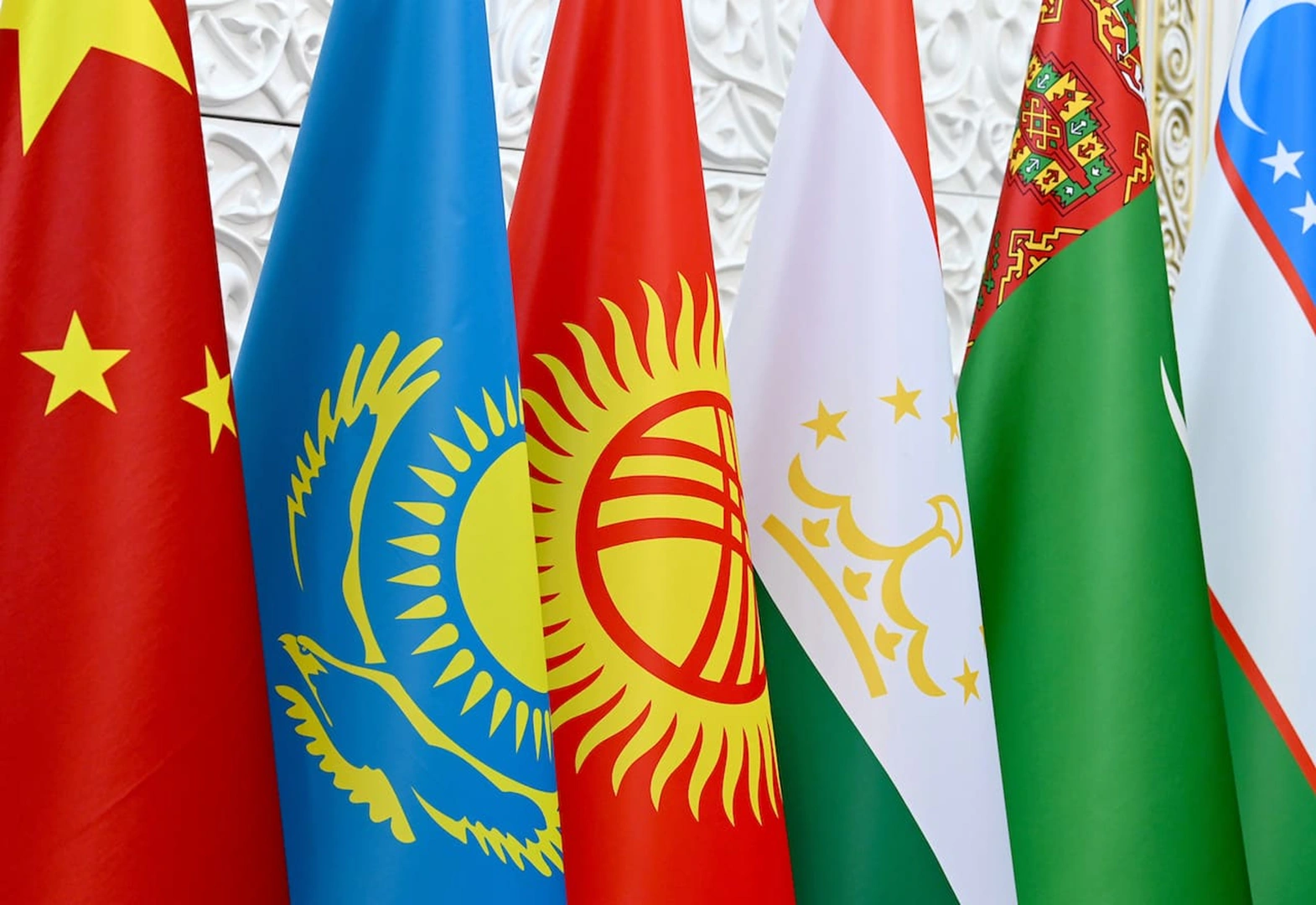
Beijing has stepped up engagement with every country in Central
Asia, underscoring the region's growing importance in China's
foreign economic strategy.
From late June through late July, the region saw a flurry of
high-level meetings, investment agreements, and new policy
initiatives. The agenda has expanded well beyond the traditional
Belt and Road focus on infrastructure to include the digital
economy, artificial intelligence, industrial cooperation, and
logistics. While China's engagement with Central Asia was once
primarily associated with transport corridors and energy projects,
the relationship has become considerably broader in scope.
The month's most significant event was Kazakhstan President
Kassym-Jomart Tokayev's working visit to Shanghai. His talks with
Chinese President Xi Jinping resulted in the signing of a Trade and
Economic Cooperation Program and a Roadmap for 2027-2030, along
with more than 70 commercial agreements worth over $15 billion.
Implementation of these agreements began almost immediately. On
July 28, Kazakhstan announced preparations for three major
investment projects with China's Xinjiang Sanbao Industrial Group,
valued at approximately $2.5 billion. The projects include the
construction of two aluminum plants with a combined annual
production capacity of 600,000 tons, renewable energy facilities
totaling 2.5 GW, and the creation of around 2,000 permanent
jobs.
In addition, following a June visit by a delegation from
Kazakhstan's Abai Region to China, memorandums worth another $4
billion were signed, while the region also opened an investment
office in Urumqi.
The visit also carried a strong political message. Speaking at
the World Artificial Intelligence Conference (WAIC), Tokayev
proposed launching the Kazakhstan-China Digital Bridge initiative,
which he said could serve as a new platform for digital integration
between the two countries. "For us, it would be an
honor to host the inaugural meeting of the World Artificial
Intelligence Cooperation Organization in Astana.We also propose
establishing a regional representative office of the Organization
for Central Asia in Kazakhstan," the president said.
Equally significant was another of Tokayev's remarks:
"No country should remain just a consumer of AI.
Every state must have the opportunity to build its own human
capital, digital infrastructure, and institutional
capacity."
In effect, Kazakhstan is proposing a shift from conventional
investment cooperation toward jointly shaping the region's
technological architecture with China.
Economic data suggest that this strategy is already delivering
tangible results. According to Kazakhstan's Bureau of National
Statistics, China accounted for nearly 20% of the country's total
exports in January-May 2026, with exports reaching approximately $6
billion, making China Kazakhstan's largest export market.
A similar trend is evident in Uzbekistan. According to the
National Statistics Committee, bilateral trade with China reached
$7.7 billion in January-May, making China the country's largest
trading partner. Imports of Chinese goods exceeded $5.3 billion,
while total bilateral trade increased by more than 53%.
At the same time, work continues on one of the region's most
strategically important infrastructure projects - the
China-Kyrgyzstan-Uzbekistan railway. Throughout July, progress on
the project was discussed both at the ministerial level and during
meetings held alongside the Shanghai Cooperation Organization (SCO)
Council of Foreign Ministers in Cholpon-Ata.
During talks with Chinese Foreign Minister Wang Yi, Kyrgyz
President Sadyr Japarov reaffirmed Bishkek's commitment to
expanding cooperation with China. "Kyrgyzstan regards China as one
of its key partners and remains committed to deepening mutually
beneficial cooperation. The country will continue to provide
favorable conditions for investors while expecting foreign
companies to comply with national legislation, operate
transparently, and respect local traditions," he said.
According to Kyrgyzstan's National Statistical Committee, trade
with China totaled $2.09 billion in January-May 2026, accounting
for 33.4% of the country's total foreign trade and making China its
largest trading partner. Imports from China reached $2.06 billion,
while Kyrgyz exports to China remained modest at $32.9 million.
During the talks, both sides also emphasized the need to deepen
cooperation in agriculture, energy, mineral resources, as well as
emerging sectors such as artificial intelligence and the digital
economy.
Tajikistan has also maintained steady momentum in its
cooperation with China. According to the Agency on Statistics under
the President of Tajikistan, bilateral trade reached $1.4 billion
during the first five months of 2026, including exports worth $359
million and imports totaling $1.1 billion. In July, Dushanbe held a
series of meetings with the China International Development
Cooperation Agency (CIDCA) focused on infrastructure, scientific
cooperation, and waste management. At the same time, the two
countries intensified cooperation in the energy sector. On July 24,
Tajikistan's Ministry of Energy and Water Resources and China
Gezhouba Group International Engineering discussed the
implementation of the 160-MW Ayni hydropower plant and the 100-MW
Yavan hydropower plant in the Zarafshan River basin. Three days
later, similar talks were held with China Energy Overseas
Investment, focusing on the construction of a 200-MW solar power
plant in northern Tajikistan. Meanwhile, Dushanbe and China's
Guangdong Province continue discussions on establishing an
industrial park in Tajikistan's Sughd Region, reflecting expanding
cooperation across manufacturing, infrastructure, and energy.
Turkmenistan, which has traditionally focused its relationship
with China on the energy sector, remains one of Beijing's most
important economic partners in Central Asia. According to China's
General Administration of Customs, bilateral trade reached $2.2
billion in the first quarter of 2026 and exceeded $3 billion in
January-April. Turkmenistan continues to maintain a strong trade
surplus - the only Central Asian country to do so on a sustained
basis - thanks to exports of natural gas, which remain the
cornerstone of the energy partnership between Ashgabat and Beijing.
In April 2026, Turkmengas and China National Petroleum Corporation
(CNPC) signed an agreement to implement the fourth phase of
development at the Galkynysh gas field. The project, valued at
approximately $5.1 billion, includes facilities to process an
additional 10 billion cubic meters of marketable natural gas
annually, as well as the drilling of new wells. The work is being
financed by the Turkmen side, and the fourth phase is regarded as
an important step toward increasing gas exports to China to the
target level of 65 billion cubic meters per year.
The past month has demonstrated that China is steadily taking
its relations with Central Asia to a new level. While energy and
transport infrastructure once formed the backbone of cooperation,
they are now being complemented by the digital economy, artificial
intelligence, industrial localization, and joint technology
development. This transformation has the potential to reshape the
region's role in the global economy. Central Asia is emerging not
only as a transit bridge between East and West but also as a
growing center for manufacturing, logistics, and innovation. For
China, this means a more resilient network of economic partners
along its western frontier. For the countries of Central Asia, it
creates new opportunities to diversify their economies and attract
long-term investment.