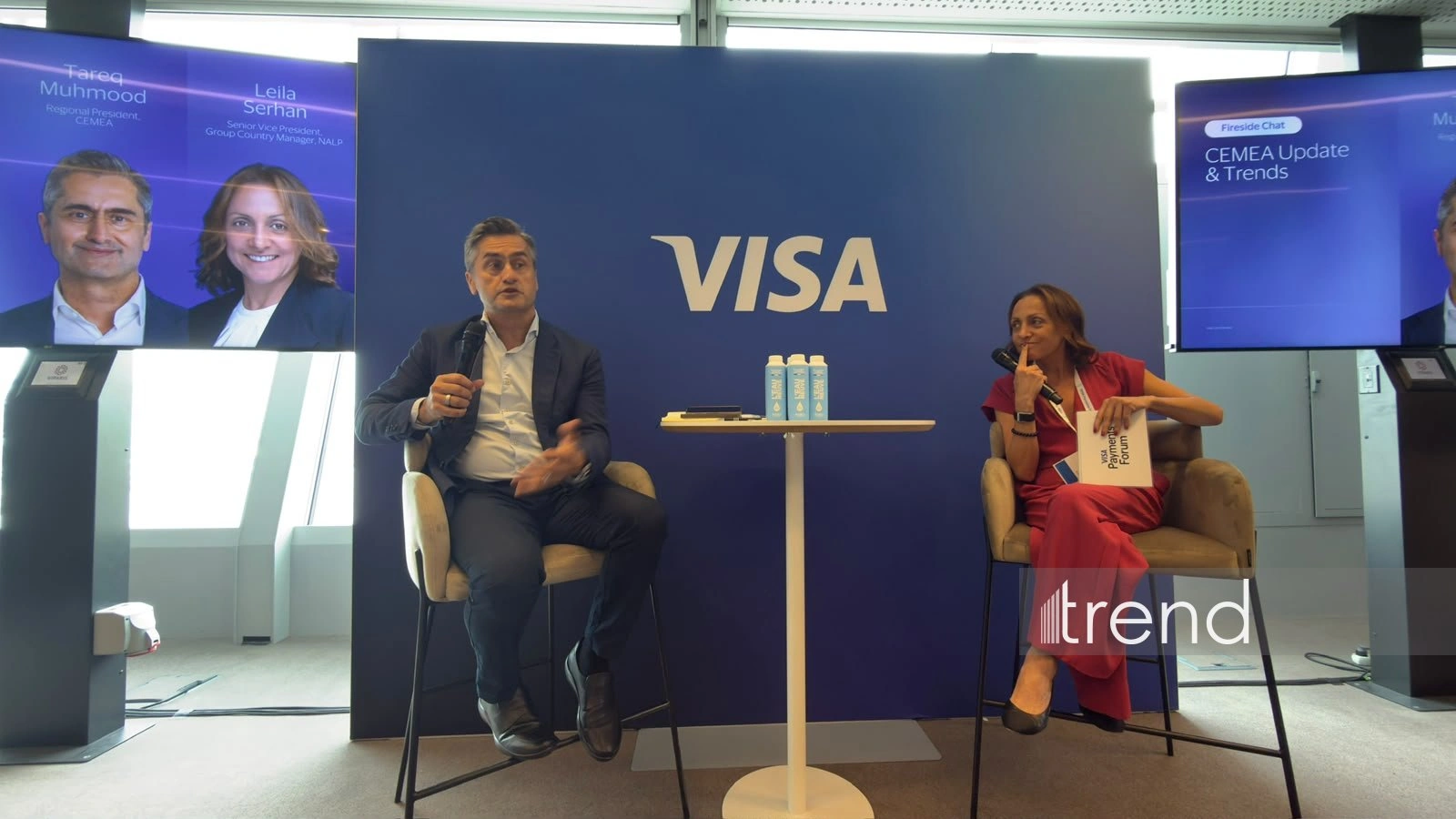
PARIS, France, June 30. The share of cash in
the Central and Eastern Europe, Middle East and Africa (CEMEA)
region has fallen to 50%, Visa President for the CEMEA region,
Tareq Muhmood, said during an information session at the Visa
Payments Forum in Paris, Trend's special correspondent reports from the
event.
"Cash usage in the CEMEA region continues to decline rapidly,"
he explained.
According to him, the key indicator of the transformation of the
payments market remains the decline in cash usage. Just a few years
ago, before the COVID-19 pandemic, approximately 70% of
transactions in the region were cash payments. Today, this figure
has dropped to approximately 50%.
"Looking at the region as a whole, four to five years ago,
approximately 70% of transactions were cash payments. Now, this
figure has dropped to approximately 50%," noted Muhmood.
At the same time, the pace of the transition to digital payments
varies significantly across countries. In markets such as Ukraine
and Nigeria, the share of cash has dropped to below 20%, while in
Egypt, Pakistan, and several other countries, it remains at
60-70%.
According to him, Visa is significantly contributing to the
decline in the share of cash through collaboration with banks and
fintech companies operating in local markets.
Muhmood also notes the growth of his payment ecosystem in the
region. The number of Visa cardholders has increased from 350
million to 480 million over the past two years, and the number of
payment acceptance points has grown from 11 million to 21 million
over the past three years.
Special attention is being paid to the development of
tokenization technology, which is becoming one of the key drivers
of digital payments in the region.
According to him, tokenization allows for the replacement of a
16-digit bank card number with a secure digital identifier for
online purchases and adding cards to mobile devices.
"When you make an online purchase or link a card to your phone,
it is tokenized," he noted. The technology, they say, improves
payment security, as the token can be easily blocked even if
compromised, and also improves user convenience by eliminating the
need to re-enter card details or physically use the card when
paying," he added.